
Changing table topper Build your own IKEA changing tables
Some DIY projects start with a simple idea – and that’s exactly how our homemade changing table topper for the IKEA chest of drawers came
about
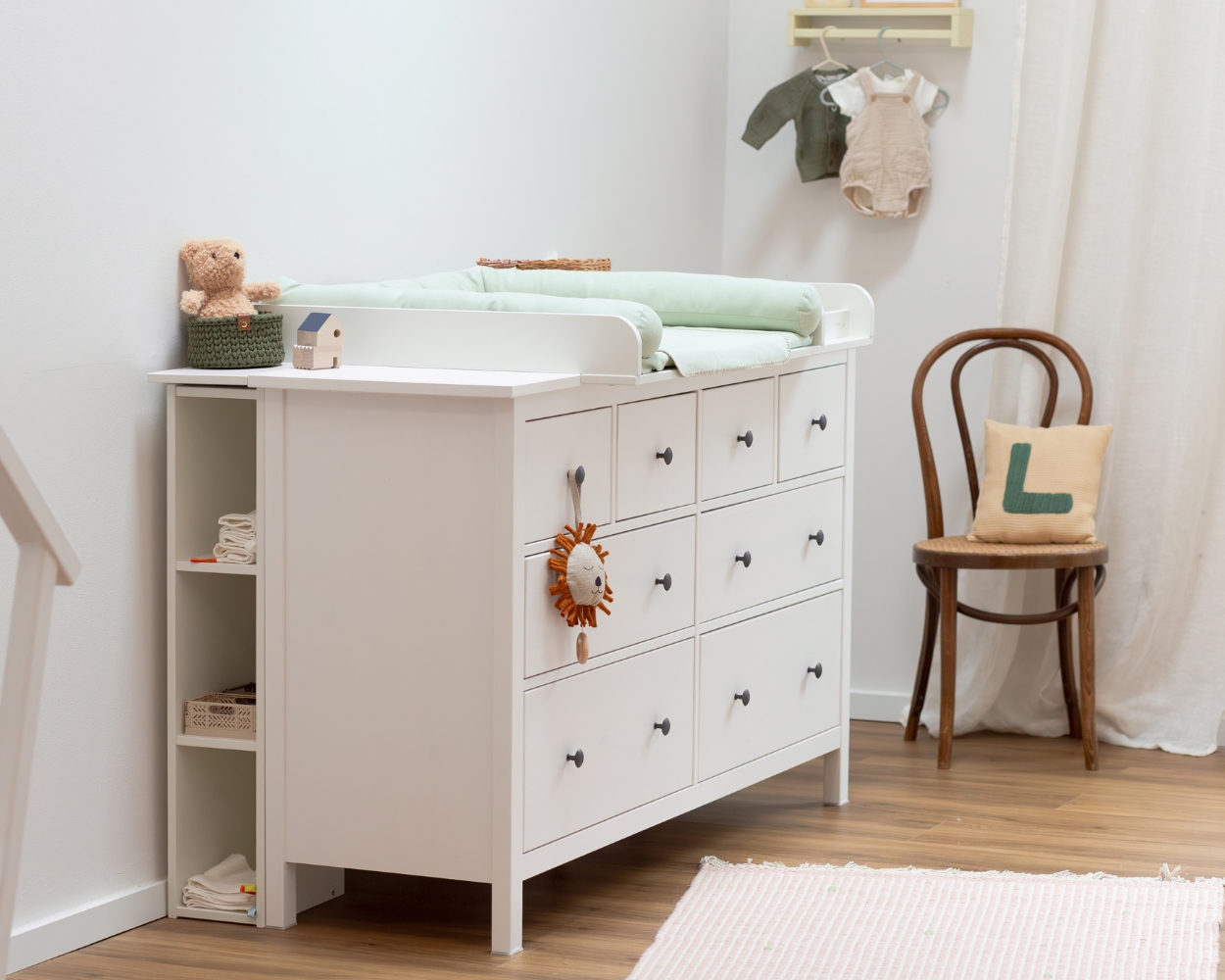
. Our friends Sanja & Franz were faced with the challenge of creating a practical and safe changing station in their small flat. As Franz is a real DIY expert, he decided without further ado to build the perfect changing table topper for the IKEA SONGESAND chest of drawers himself. With great attention to detail and clever solutions, he created a functional DIY changing table with extra storage space. However, the idea also works for other changing tables. So you can also build a changing table topper for the IKEA HEMNES or MALM chest of drawers. Here we show you how they did it – and whether building it yourself is really worth it!
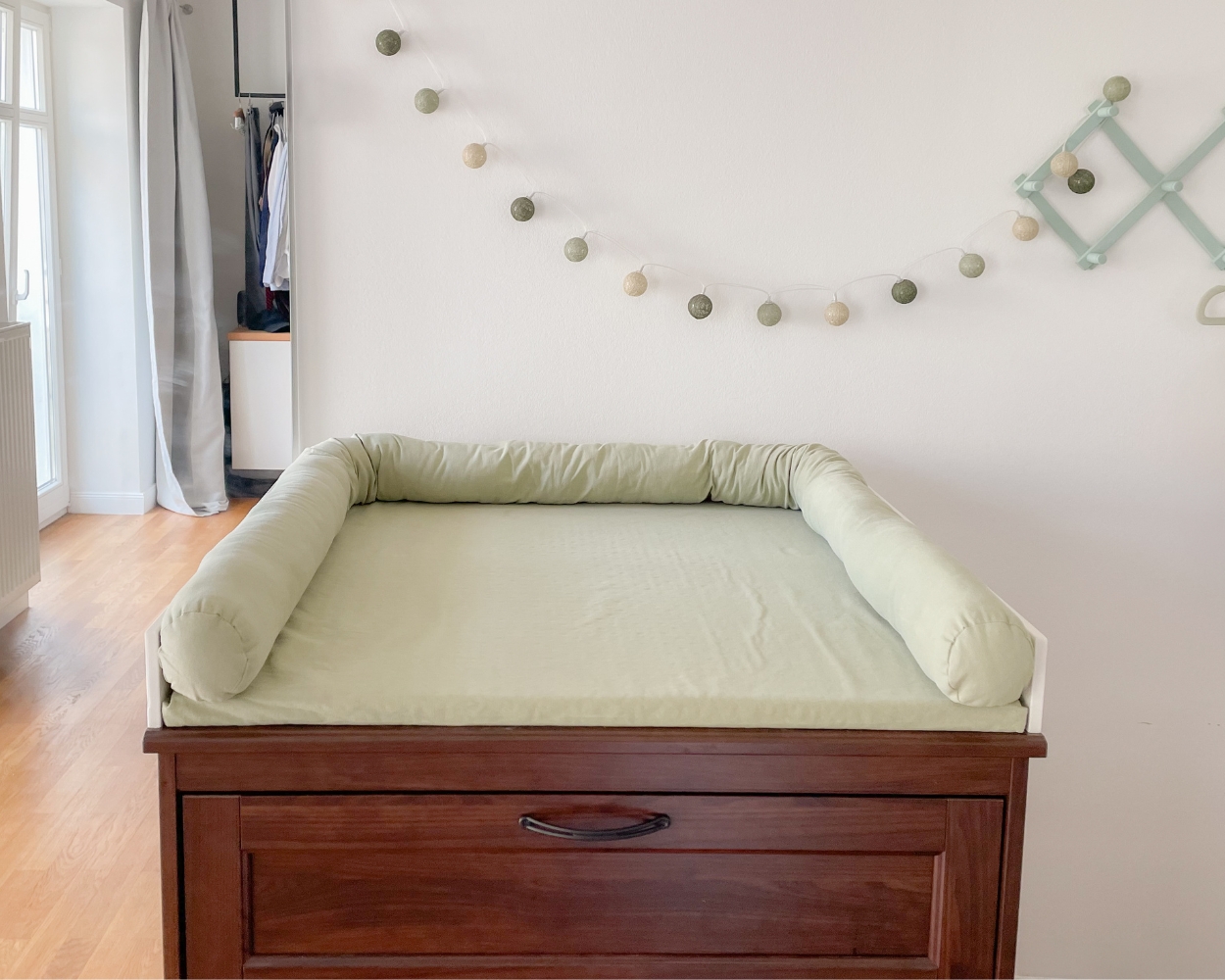
DIY guide: How to build a ‘ changing table topper’ for your IKEA ‘ chest of drawers’
Materials & tools required:
- IKEA chest of drawers: Sanja and Franz used their SONGESAND chest of drawers with four drawer. However, the design can easily be adapted to other IKEA chests of drawers.
- MDF boards for the changing table topper: In total, Sanja and Franz spent just over 100 euros at the DIY store on the cut-to-size fibreboards.
- Screws & drill bits
- Sandpaper or router
- Cordless screwdriver & saw
- Brackets for extra stability


Dimensions for the MDF boards
- A (WxH) 76.2 x 9 cm, 12 mm thick; 2 pieces
- B (W x H) 79.1 x 9 cm, 12 mm thick; 1 piece
- C (WxH) 79.6 x 101.3 cm, 8 mm thick; 1 piece
- D (WxH) 79.6 x 91.1 cm, 8 mm thick; 1 piece
- E (WxH) 81.5 x 27.5 cm x 19 mm thick; 1 piece
- F (WxH) 77.2 x 10 cm x 12 mm thick; 1 piece
- G (WxH) 52.2 x 10 cm x 12 mm thick; 1 piece
- H (WxH) 79.6 x 26.9 cm x 12 mm thick; 3 pieces
💡 Tip :
If you want to paint the changing table topper, it’s worth painting the individual parts before putting them together. This makes painting easier and ensures a more even coat of paint. You can match the colour to your chest of drawers or use a contrasting colour.
Changing nappies comfortably starts with getting the height of your changing table just right!
Before you start using your new changing unit, you should make sure that its height and position are just right for you. The right height and positioning are crucial for a relaxed and ergonomic nappy-changing experience. In our nappy changing unit guide, you’ll find out what the ideal dimensions are and what else you should bear in mind!
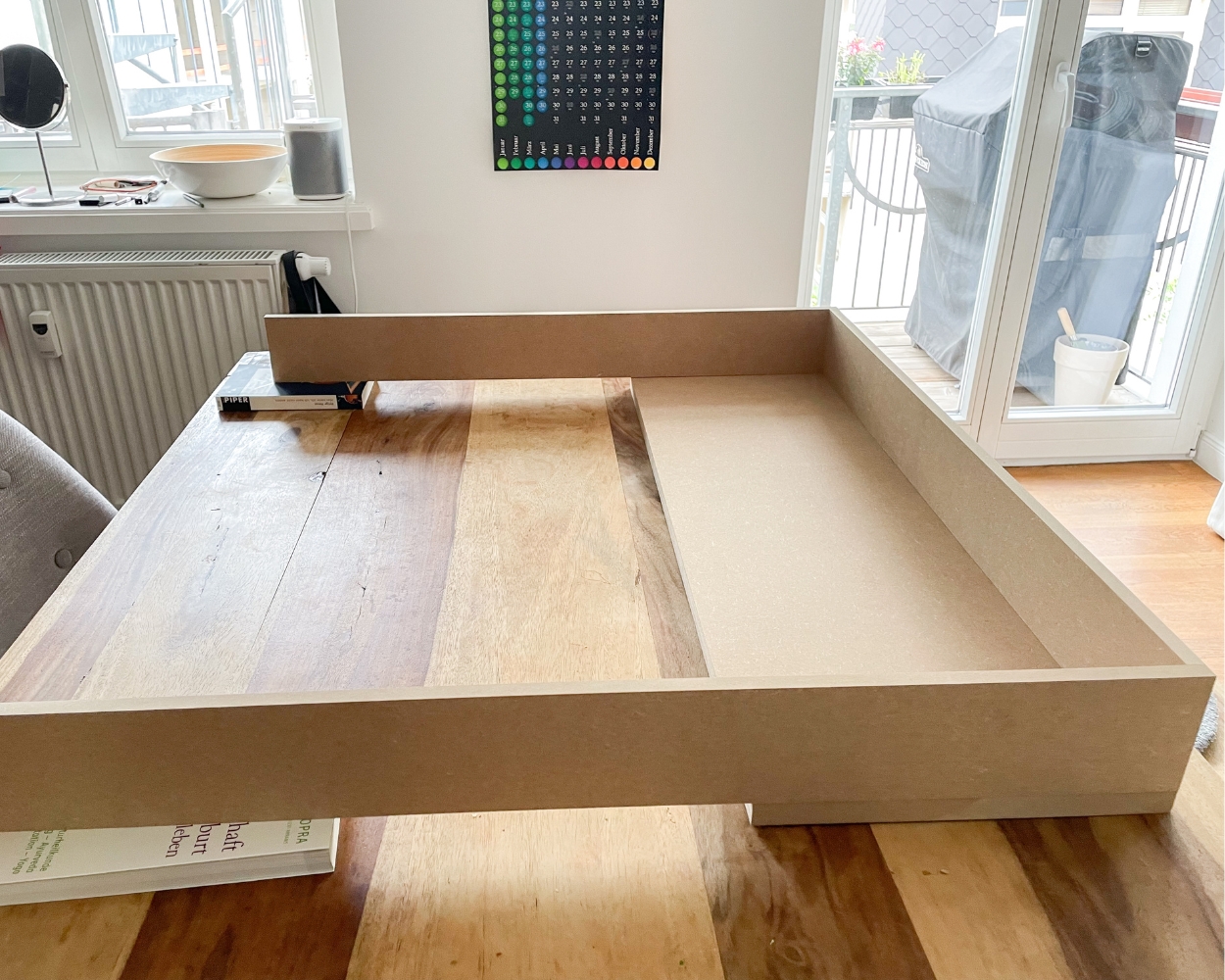
Step 1: Assembling the Changing pad’s frame
The plan: The changing table topper should not only be sturdy, but also safe and comfortable for your baby. Franz and Sanja also wanted to attach an extra shelf with storage space to the back side of the chest of drawers, so that wet wipes and other essentials are always within easy reach.
- Assemble the frame : Screw the two side panels (A) to the backsplash (B) to form a U-shaped frame.
- Stabilisation: Attach the extension of the base (E) to the frame from below to ensure additional stability.
- Rounding off & smoothing: To avoid unsightly edges, round off the corners with sandpaper or a router.
Tip: Pre-drilling is important to prevent the wood from splintering!
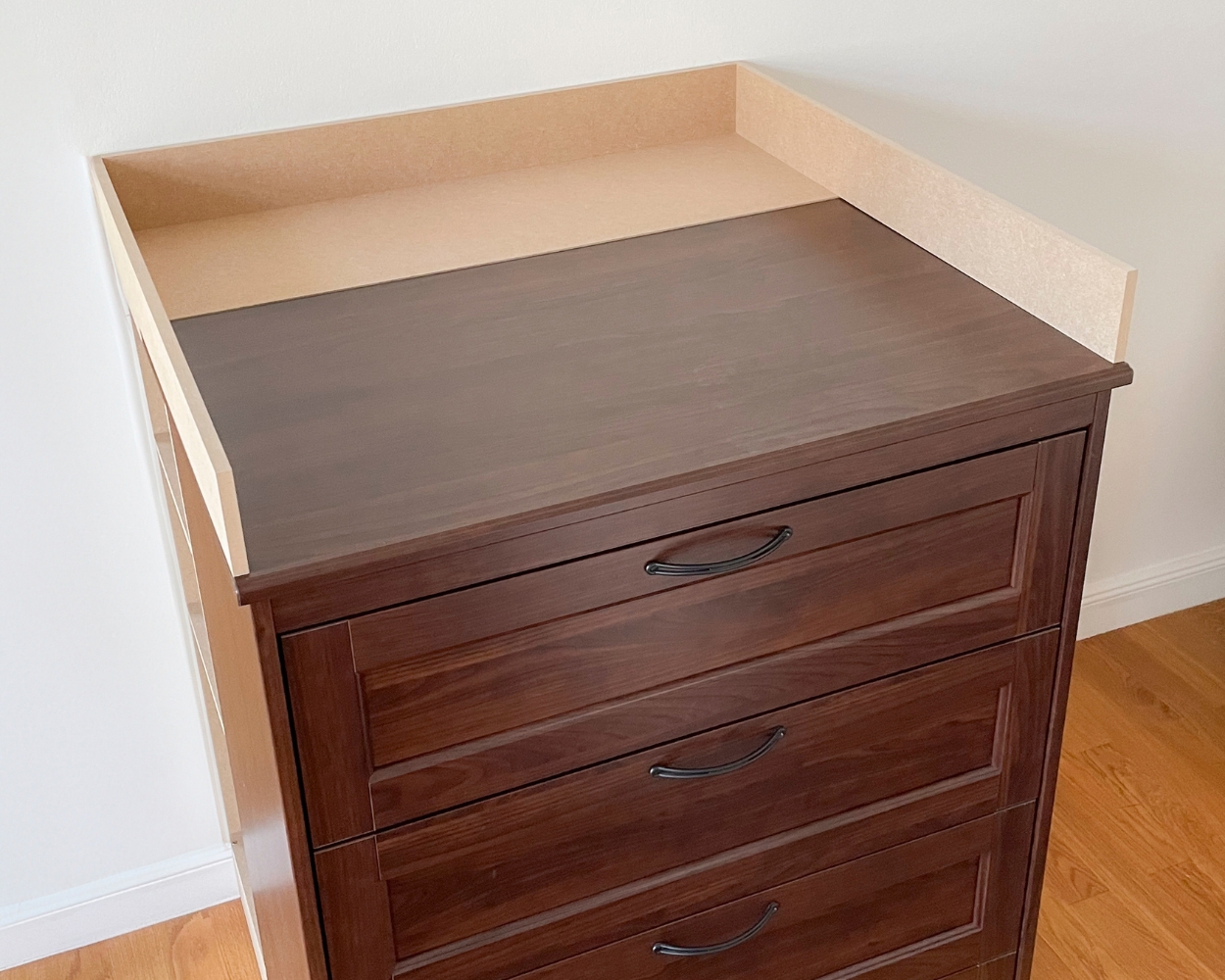
Step 2: Fitting to the chest of drawers
Now all that remained was to attach the changing table topper to the IKEA SONGESAND chest of drawers.
- Removing the IKEA lid from the : The lid of the IKEA chest of drawers must first be removed. To do this, follow the instructions on the IKEA website chest of drawers.
- Attaching the changing unit : Screw the side panels (A) of the changing unit directly onto the lid from below.
Please note: Do not refit the lid until the rear shelf has been attached!
Step 3: Back shelf for extra storage space
- Assemble the shelf base : Screw the side panels (G & F) together to form a sturdy U-shaped base.
- Fitting the shelves: Insert the shelves (H) at the desired height and screw them to the backsplash (D) and the wall (C).
- Assembly on the chest of drawers : Screw the finished shelf securely to the chest of drawers before refitting the IKEA top panel with changing table topper.


Changing table topper Is building it yourself a bit too much for you?
Is building it yourself too much of a faff? Discover our changing table accessories for IKEA chests of drawers such as HEMNES or MALM and set up your changing table in no time at all. Our ready-made changing units offer a safe, ready-to-use solution – no sawing, no screwing!
Complete your chest of drawers with changing mats, drawer organisers, baby accessories and chest-of-drawers-friendly handles, so you can create a beautiful and practical changing station for your nursery.
Step 4:
- Assemble
the changing table
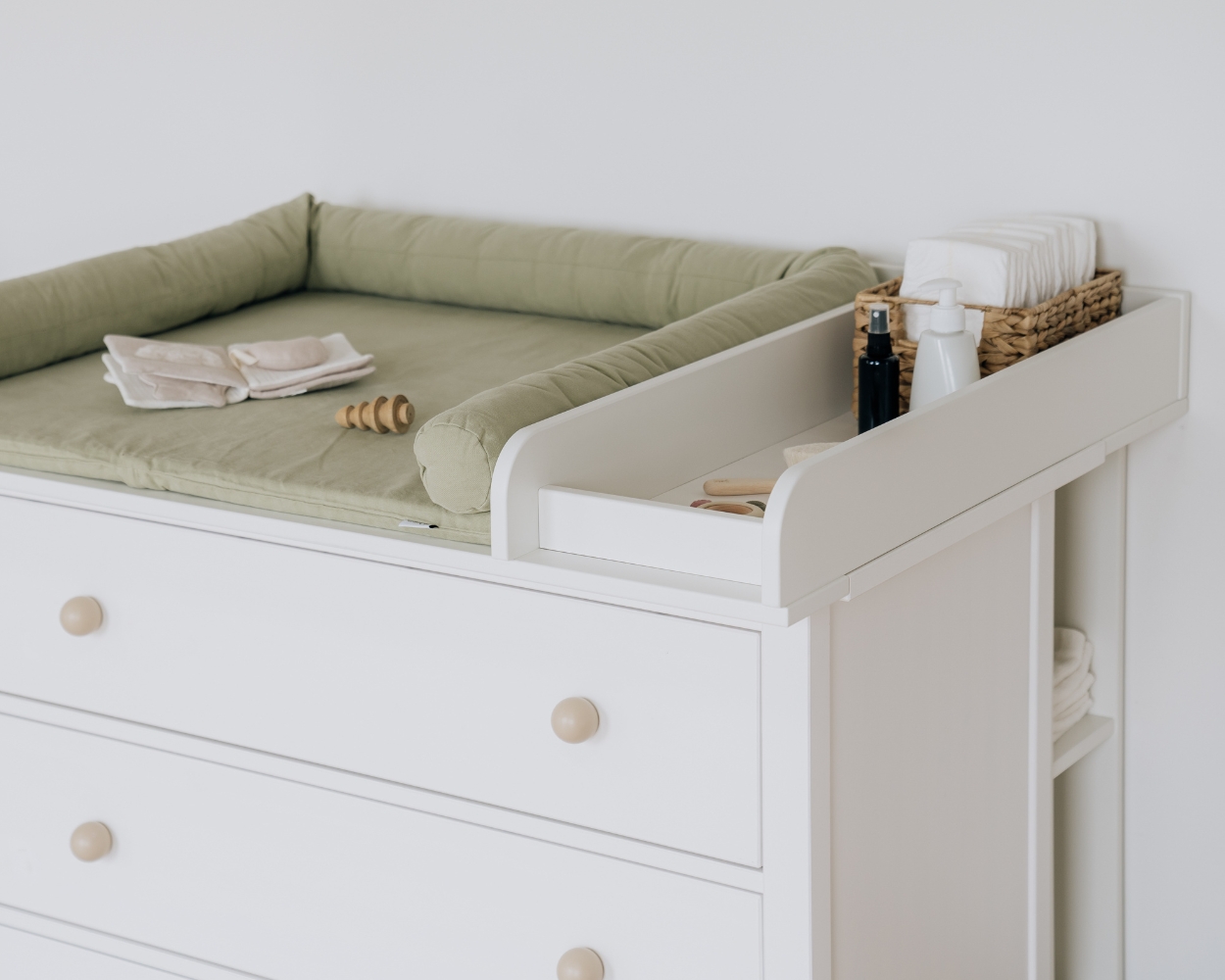
- Changing table topper: Reattach the top of the IKEA chest of drawers together with the changing table topper to the chest of drawers.
- Changing pad: Complete the changing table topper with a comfortable Changing pad. Sanja and Franz used the Changing pad and the edging from LIMMALAND. It fits perfectly on the DIY changing table topper.
- Einrichten and Decorating: Now all that’s left is to fill the drawer of the chest of drawers and attach accessories such as mobiles or drawer handles. And the changing table is ready to use.
Although building it yourself requires a bit of planning and some DIY skills, Sanja and Franz really enjoyed creating a bespoke solution for their home. Anyone who likes to get stuck in and wants to design their own changing table will find plenty of inspiration here.
Got your changing table set up? Now it’s time to organise it
A DIY nappy changing unit ( changing table topper) is a great start – but a well-organised nappy changing unit makes all the difference in everyday life! Find out here how to cleverly store nappies, baby care products and more, so that everything is within easy reach when changing nappies.
More on changing tables

Alternatives to a changing table
Comparison: Which IKEA ‘ chest of drawers’ is the best changing table?

Setting up and organising a changing table

Decorations for your changing table
