









Smart nappy changing: tips from midwife Meike
The changing area is a central part of family life during the first few months. It’s not just a place for changing nappies, but also for laughter and bonding. And because this space plays such an important role, it should be one thing above all else: practical, safe and cosy – for both parents and baby.
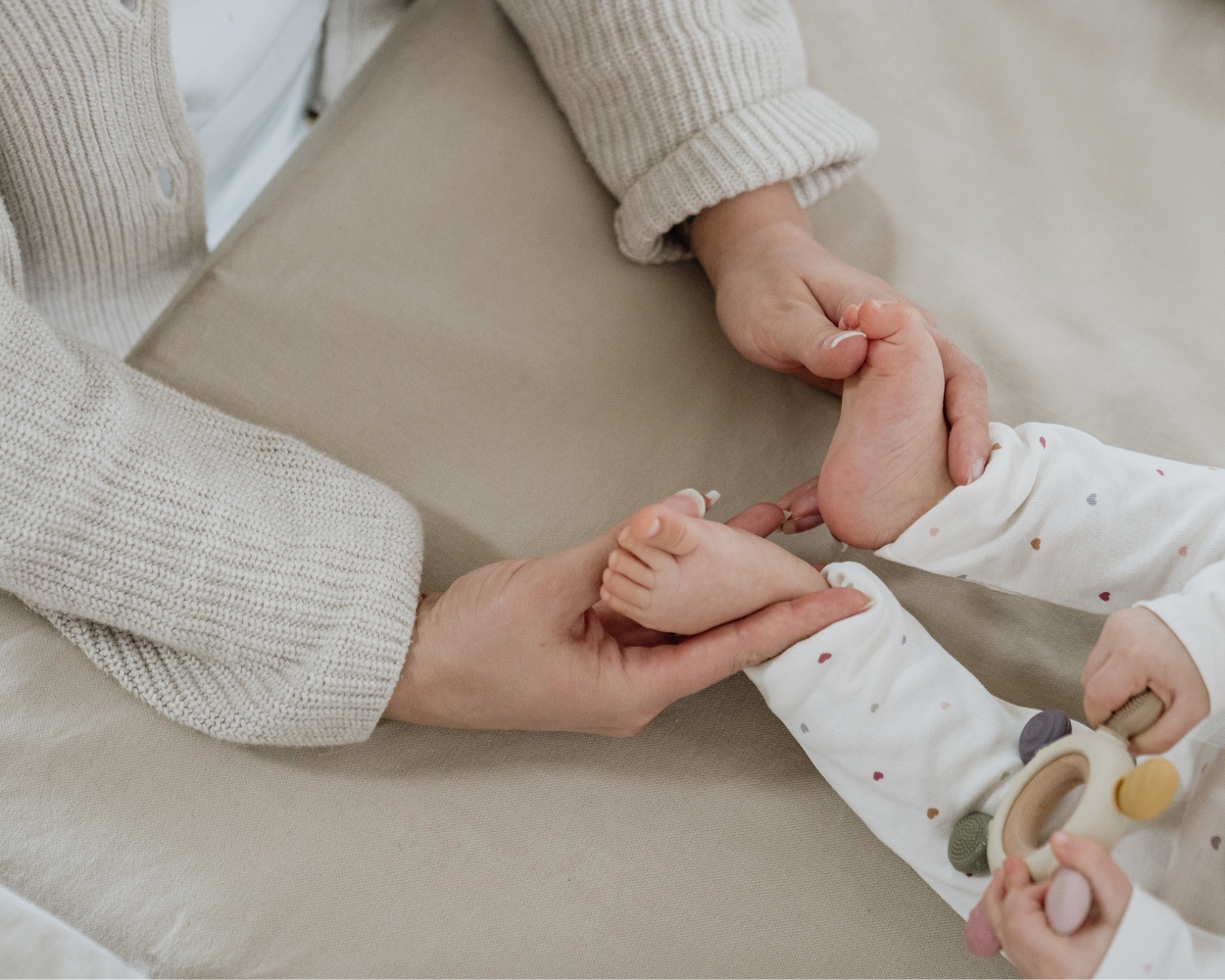

We spoke to Meike, a midwife from Berlin, who has not only been supporting families for many years but is also a co-founder and product developer at My Ephelia. Meike knows exactly what matters when it comes to nappy changing and creating a good changing area – and she’s shared her top tips with us.
1. Getting everything ready
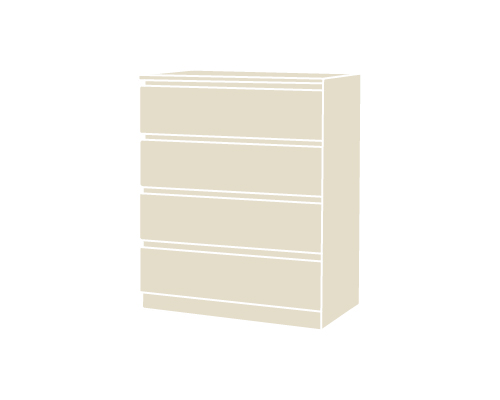
Before you actually start changing nappies, good preparation is half the battle. According to Meike, the changing table should be stable and offer enough space for your baby as well as all your changing essentials. With our ‘ changing table topper’ for the HEMNES chest of drawers from IKEA and the matching storage shelf, you can transform the chest of drawers into a real storage wonder for changing essentials and baby clothes.
Another point that many parents underestimate: the correct height of the chest of drawers. Meike recommends a back-friendly position so that daily nappy changes don’t put a strain on your body. This is particularly important in the first few months, when countless nappies need changing. We’ll show you how to find the right height and location for your changing table.
💡 Meike’s tip
Your nappy-changing supplies should always be on the side where you can reach them intuitively. For right-handers, this is usually the right-hand side; for left-handers, the left-hand side – this way, you avoid having to bend over your baby or contort yourself.
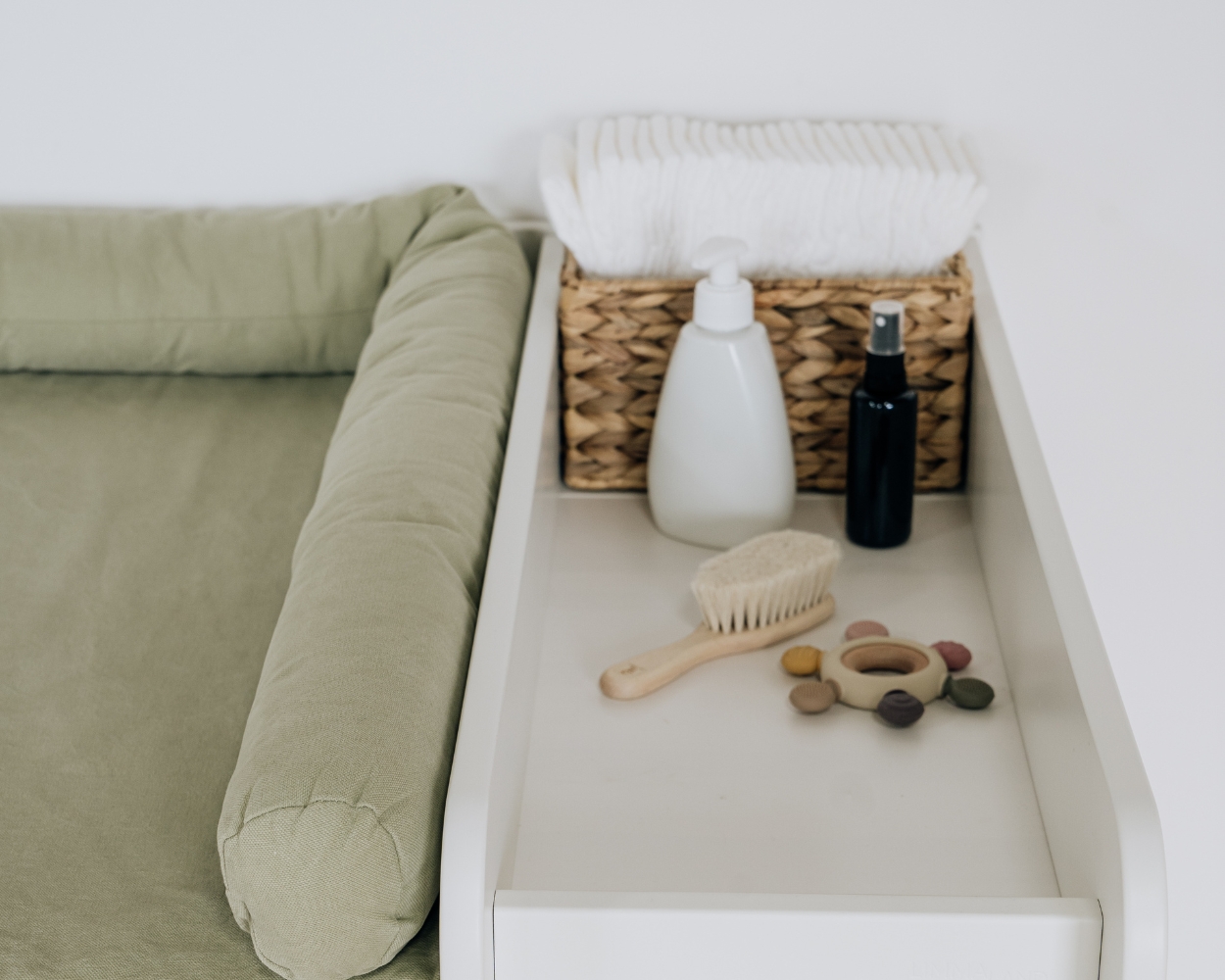
2. These are the nappy-changing essentials you really need
Parents often tend to clutter up the nappy-changing area – but less is more, says Meike. The basic kit should be straightforward and easy to look after. According to the midwife, this is what you really need:
- Nappies – whether cloth nappies or disposable ones
- Wipes, plain water or oil for cleaning
- A cream or oil for skincare – please choose fragrance-free and alcohol-free options
- Soft muslin nappies or disposable nappies as a changing mat
💡 Meike’s tip
Make sure your skincare products are as natural as possible. Your little ones’ skin is delicate and doesn’t need any irritants.

3. Hygiene and organisation at the nappy-changing station
A clean nappy-changing station is not only hygienic, but also a sign of loving care. Make sure you don’t leave used nappies lying around at the baby’s head height; instead, dispose of them straight away in the nappy bin. The changing mat or covers should be washed or changed regularly. This is particularly easy with our waterproof changing mat covers, which ensure the changing mat doesn’t get dirty in the first place.
And very importantly: wash your hands after every nappy change or, alternatively, provide hand sanitiser. This ensures the changing area remains a place where everyone feels comfortable.
4. Changing nappies with care: how to do it properly
Changing nappies shouldn’t be a quick task, but a mindful moment of care. Take your time, stay calm and talk to your baby – this provides reassurance and strengthens the bond. Instead of lifting your child completely at every nappy change, it’s gentler to turn them onto their side. Important: Never lift by the feet! This puts strain on the delicate joints. Instead, gently lift your baby by the hip joint.
💡 A tip from a midwife’s daily routine
Lay the fresh nappy out flat and keep it within easy reach – this makes changing nappies as quick and tidy as possible.

5. Why midwife Meike loves Limmaland’s changing solution
As a midwife, Meike knows countless changing stations. She told us what she loves so much about Limmaland’s ‘ changing table topper’ :
Limmaland’s changing pads fit perfectly on IKEA chests of drawers such as HEMNES. In just a few simple steps, they transform into a functional and safe changing area. Particularly handy: you can attach the side shelf either on the left or right – depending on which hand you use. That way, you don’t have to keep reaching over your baby.
Meike is also impressed by Limmaland’s materials: the covers for the changing pads and bumpers are made from Oeko-Tex certified fabrics and can be easily washed in the washing machine. And for anyone wanting to make the most of their space, there’s a matching shelf that fills the gap between the wall and the ‘ chest of drawers’ – providing extra storage space without wasting any room.
We’ll show you how to design the perfect changing table for your needs.
Discover the world of nappy changing
A well-designed nappy-changing area not only makes everyday life with a baby easier, but also more enjoyable. With Meike’s midwife tips, a bit of planning and the right accessories, the changing table will quickly become a favourite spot for little ones and grown-ups alike. Want to design or optimise your nappy-changing area? Then be sure to check out our nappy-changing solutions.
More inspiration on changing tables

The Nappy-Changing Station Guide: Dimensions, Location and More

Setting up and organising a changing table

