Montessori: DIY weekly planner for children
Do you often find it a challenge to make your little explorers’ daily lives both structured and exciting? Whether at home or at nursery, we’ll show you how to bring structure to your children’s daily lives in a playful way.
Why do children need a weekly schedule?
A fixed daily routine is particularly important for children. Structure in everyday life gives children a sense of security and comfort, and provides a rhythm and stability for the family.
A weekly schedule not only provides a clear overview of the days ahead, but also encourages your little ones’ independence and sense of responsibility.
Fun and organisation with the RÜTMUS weekly calendar
Children love it when everyday life is colourful and exciting. Our ‘RÜTMUS’ weekly calendar offers both at the same time! With the help of the cute, colourful symbol cards, even your little ones who can’t read yet can get actively involved. This makes every day a shared adventure! So what are you waiting for?
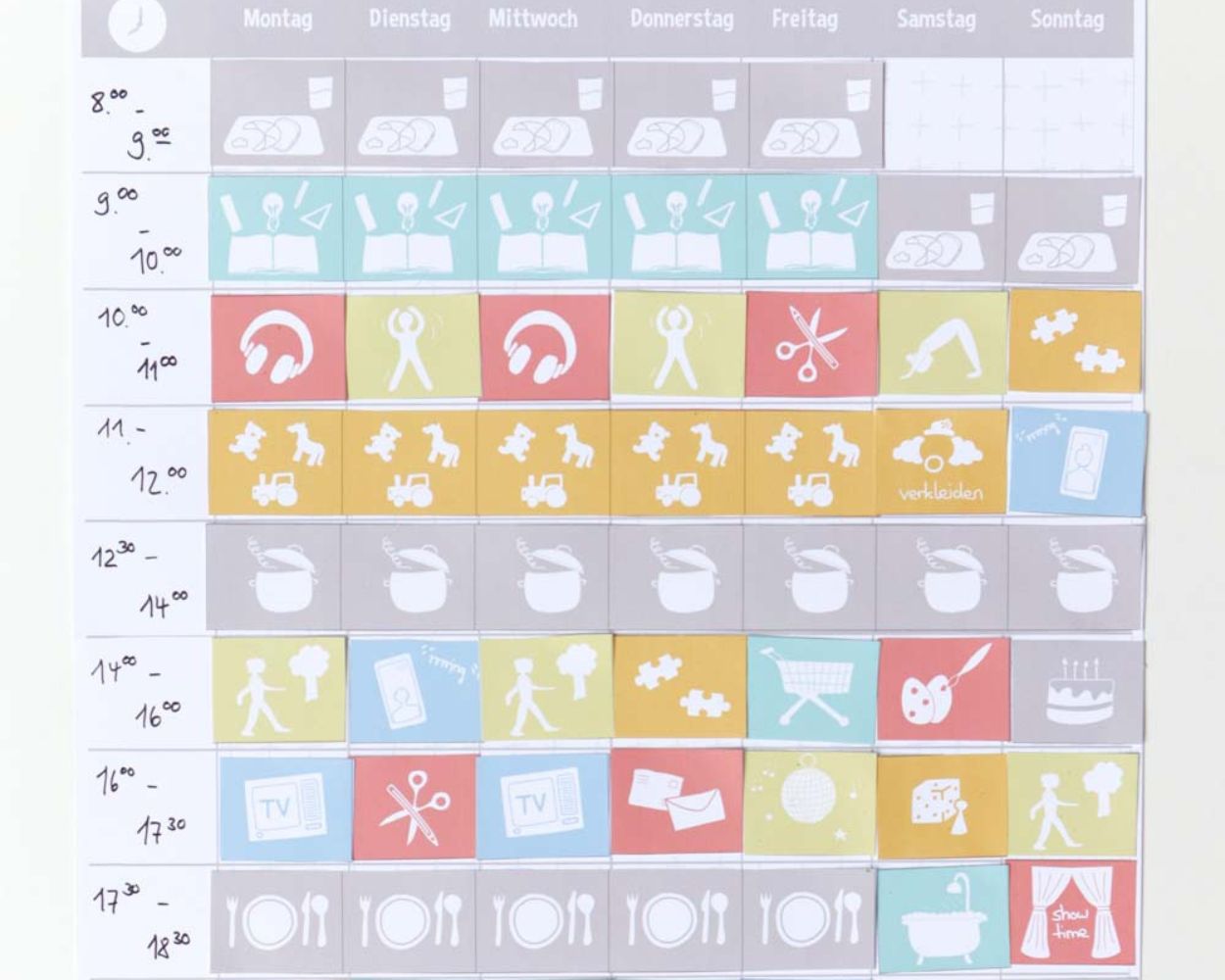
Planning with colourful symbol cards
- Grey: Food & drink
- Mint: Things we all have to do…
- Coral: Creative activities
- Light yellow: Exercise & sport
- Mustard: Everything to do with play
- Mint: Digital media
- Blue: Mum’s Day/Dad’s Day (for separated parents)
Step-by-step guide
You’ll need the following craft supplies:
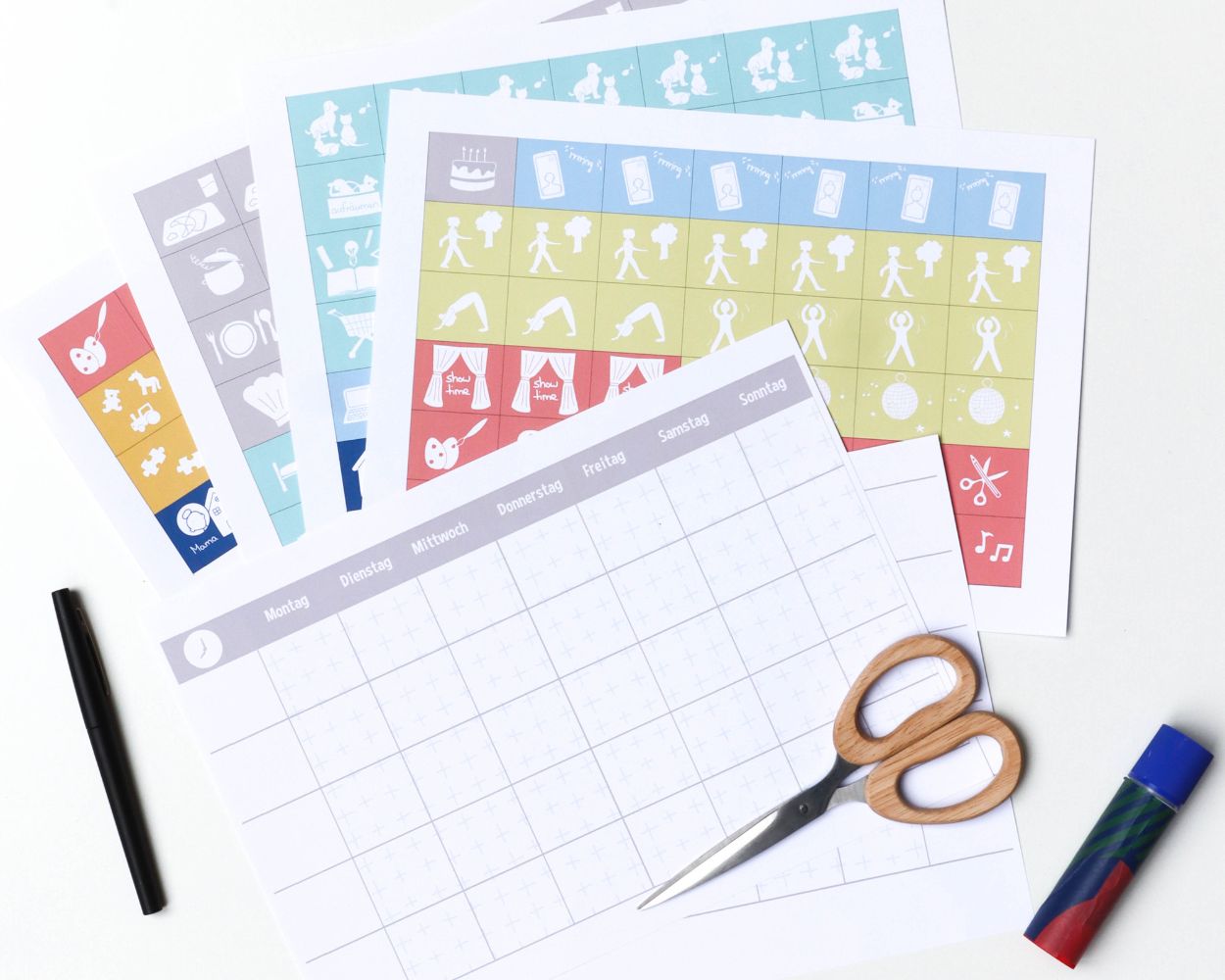
Making the calendar is really easy and all you need is:
1. Our free craft template “RÜTMUS”
2. A pair of craft scissors and glue
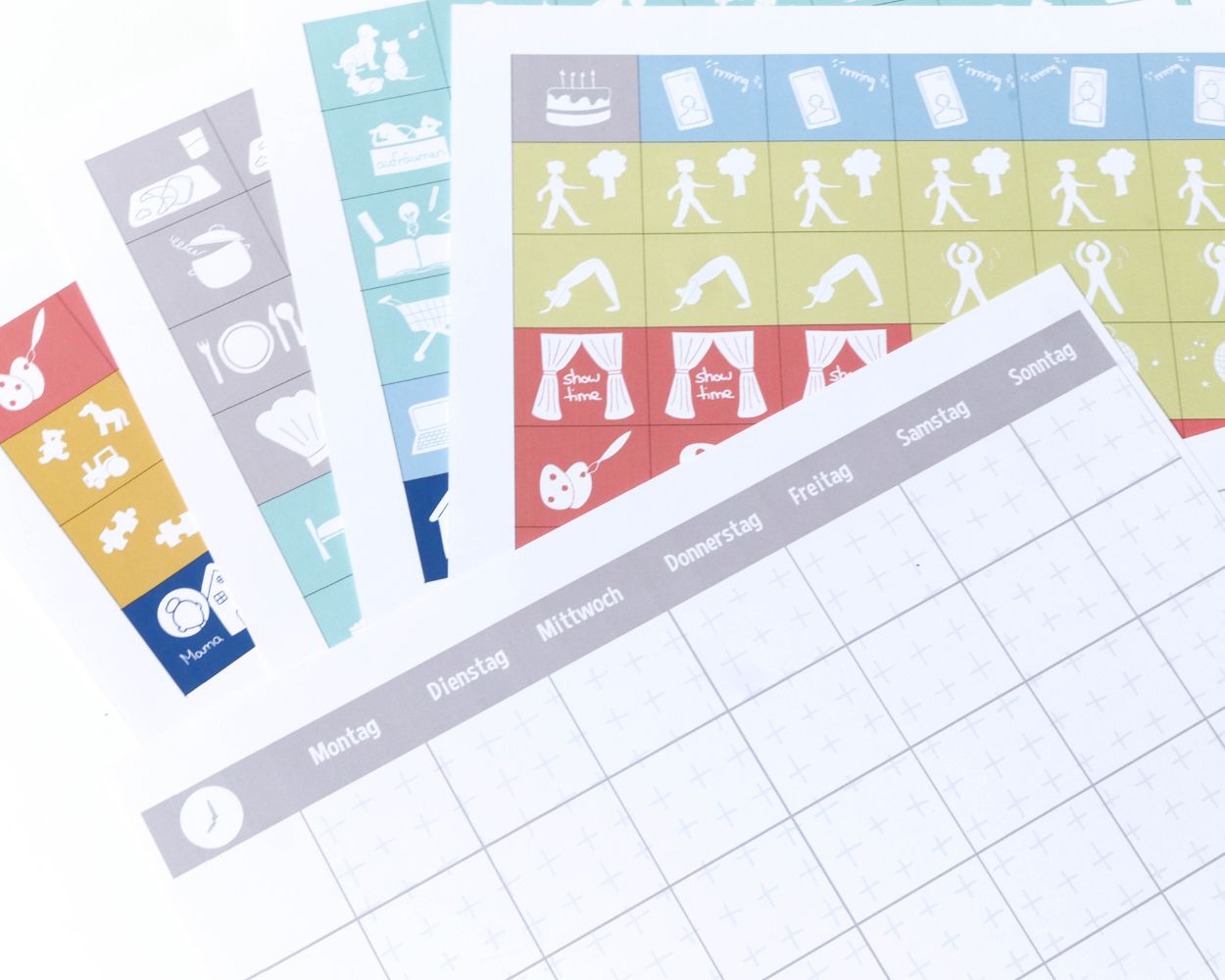
Step 1: Print out the template
With this free download, you’ll receive a 6-page PDF file containing a weekly planner and a total of 168 symbol cards to print out.
Tip: If you have a laminator, you can also laminate the planner and the activity cards. This makes the weekly planner more robust and longer-lasting! You can also print out RÜTMUS again and again once you’ve downloaded the template.
Step 2: Cut out the symbol cards
Once you’ve printed out the template, you can now start crafting: Use your craft scissors and carefully cut out the symbol cards (ideally from sturdier paper) along the marked lines.
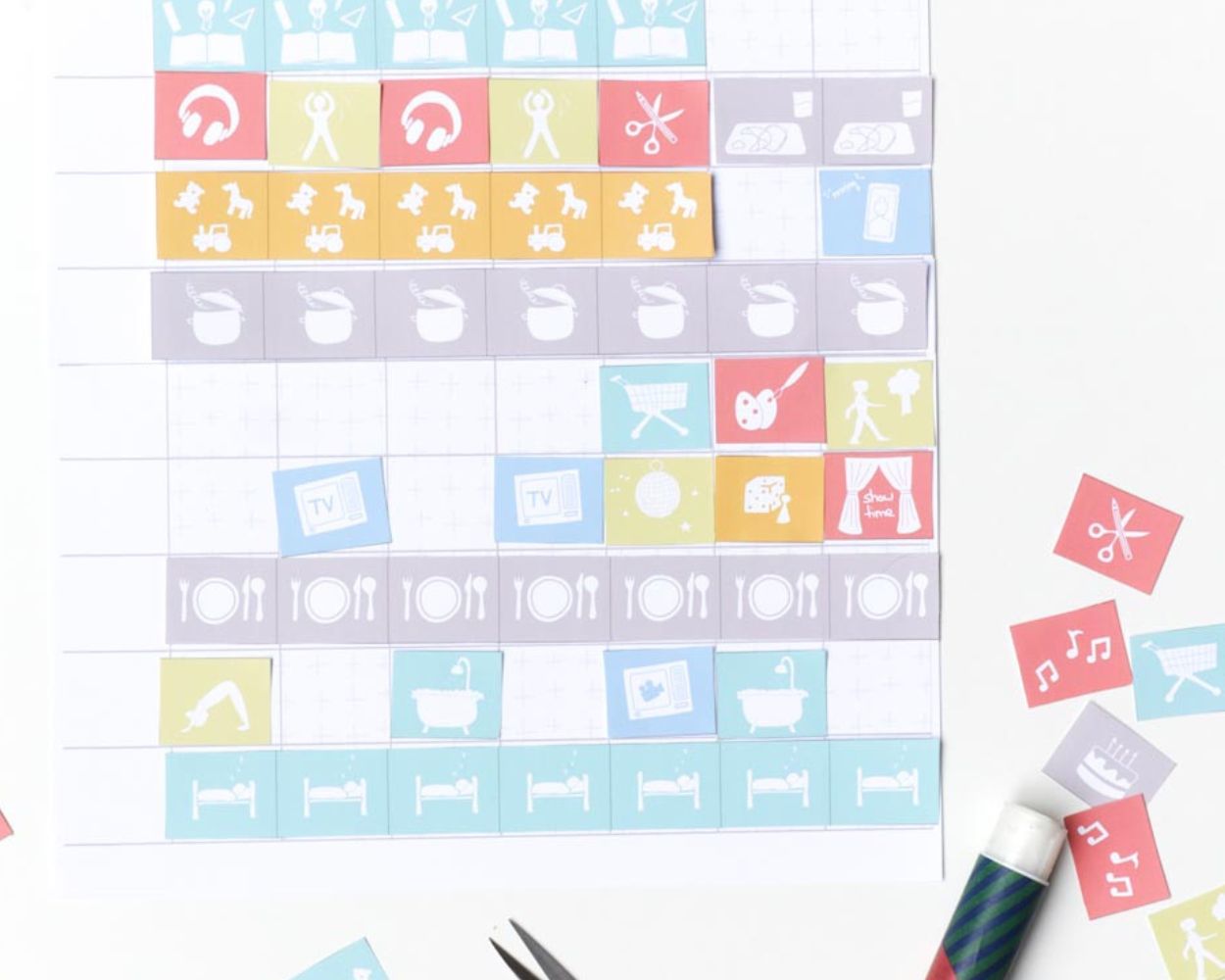
Step 3: Plan your daily routine
Have you finished cutting out the pieces? Then it’s time to plan together. Write the times in the empty boxes on the left-hand side of the planner.
Tip: If your child can’t read numbers yet, you can also draw a clock to show the time. Now stick the cut-out cards into the corresponding boxes to complete the weekly schedule with your children.
Step 4: Put your weekly plan up where you can see it
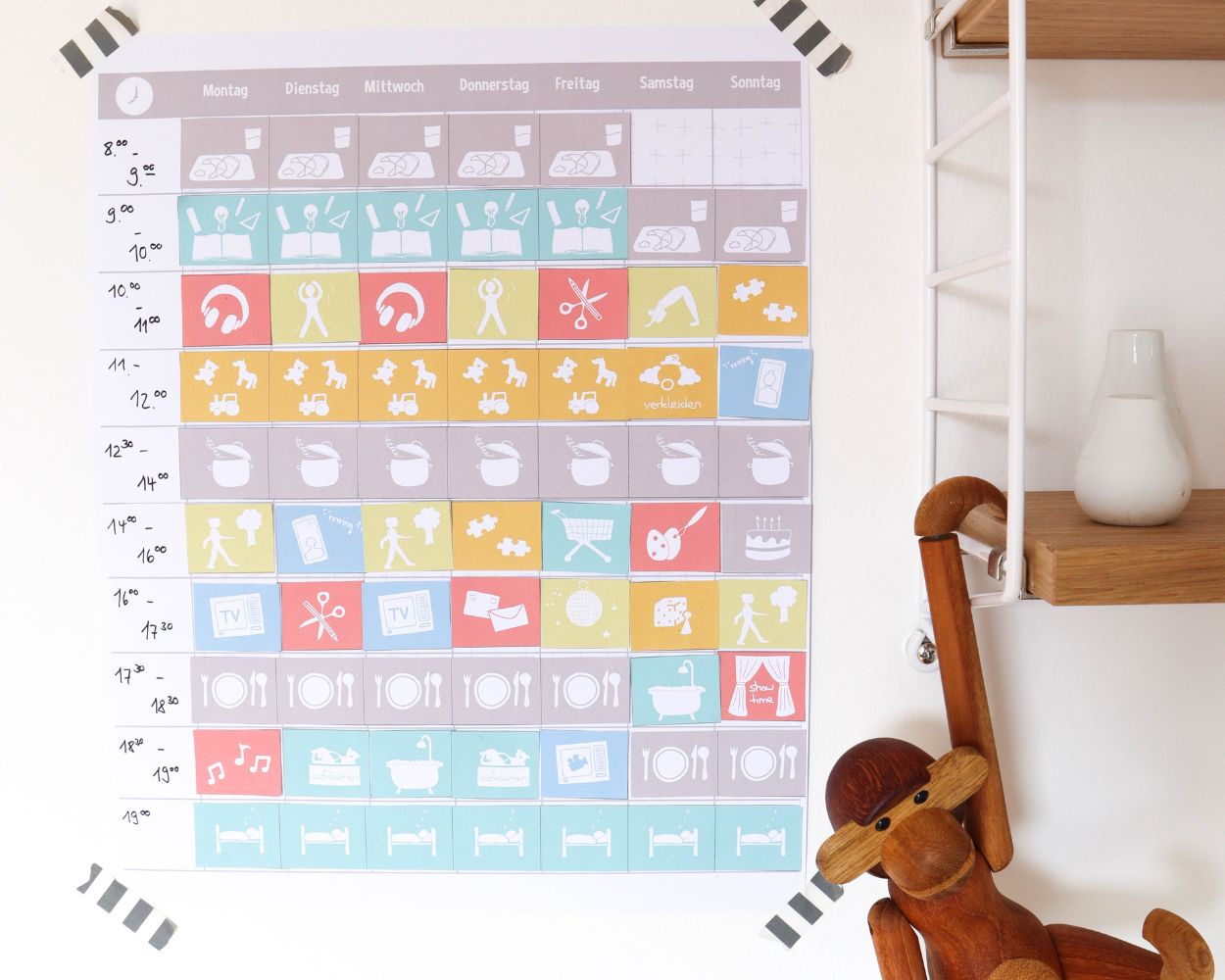
Planning is fun!
Our DIY weekly planner for the family isn’t just an organisational tool, but also a chance to spend time together. With its Montessori-inspired features, the planner playfully teaches your little ones personal responsibility and structure, without putting any pressure on them.
A well-organised daily routine also means not only less stress, but also more time for the more important things in life. Whether as a weekly planner for nursery or for the family, our RÜTMUS is incredibly versatile!
We hope you enjoy making it!
Discover even more craft ideas for children!