
Furnishing a small children’s bedroom: tips and inspiration
Often, the children’s bedroom isn’t exactly the largest room in the flat or house. Naturally, your child should still have enough space to play, learn and sleep. We’ve put together some ideas for you on how to furnish a small children’s bedroom where your little one will feel completely at home.
1. What do you really need in a small child’s bedroom?
- What does your child actually use on a day-to-day basis?
- Which pieces of furniture are essential – and which are optional?
- Are there any items that could be moved to other rooms?
Space-saving furniture for small children’s bedrooms
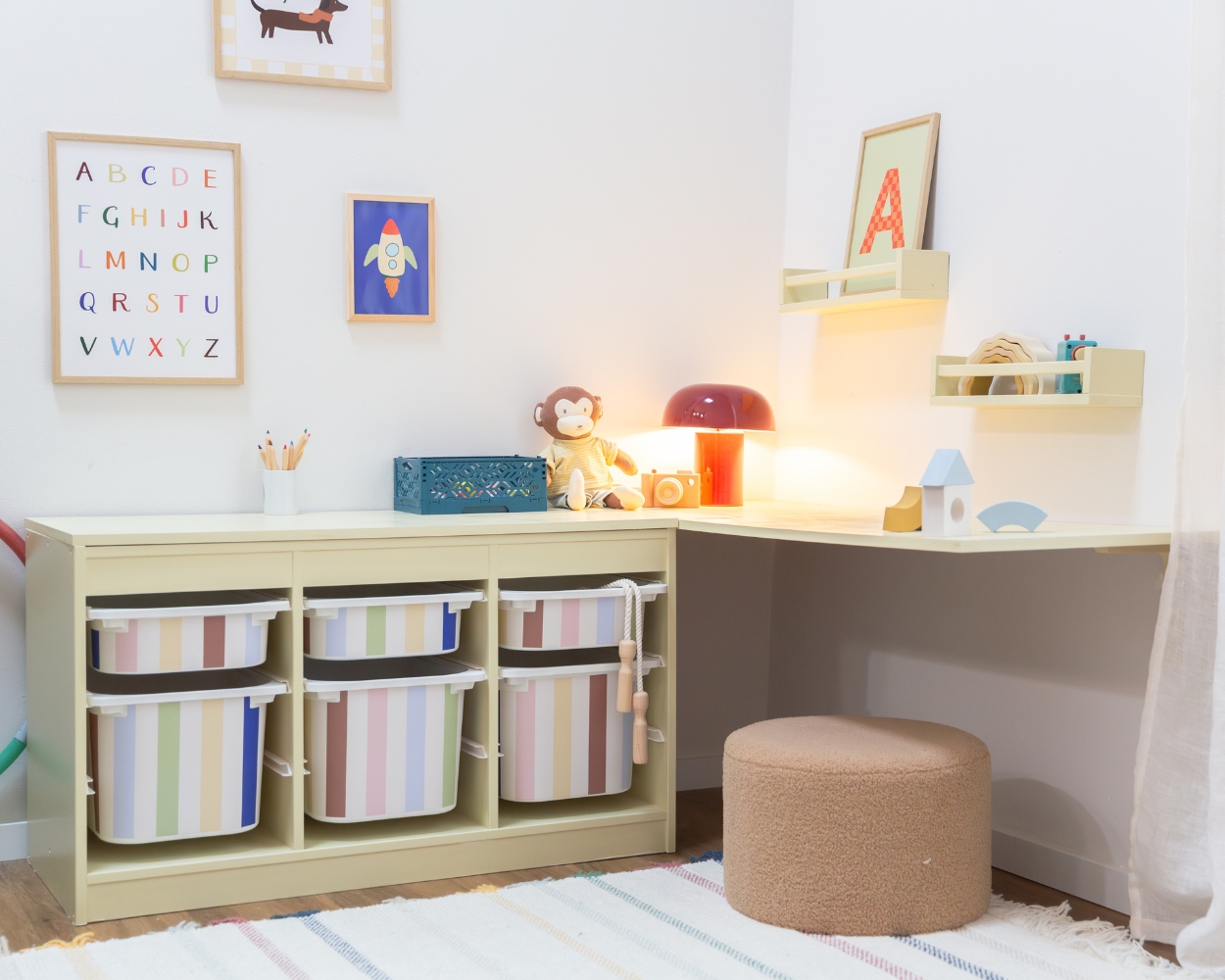
In small children’s bedrooms, every centimetre counts – so opt for furniture that combines several functions. A TROFAST desk with ‘ drawer’, for example, is the perfect solution: it offers space for drawing, crafting and playing, whilst also providing practical storage. This keeps the children’s room tidy and flexible, and grows effortlessly with your child’s needs.

Bunk bed: A space-saving solution for small children’s bedrooms
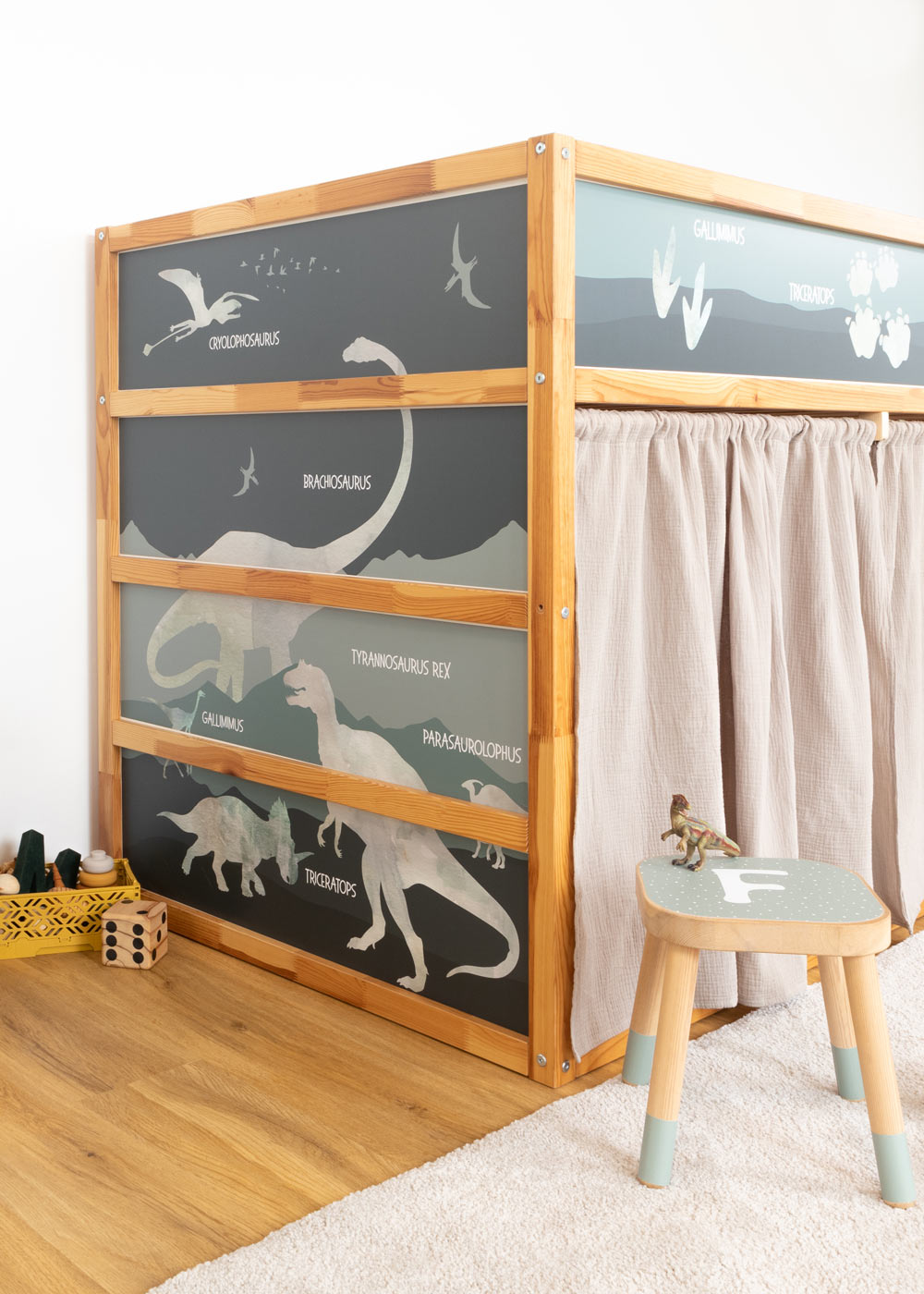
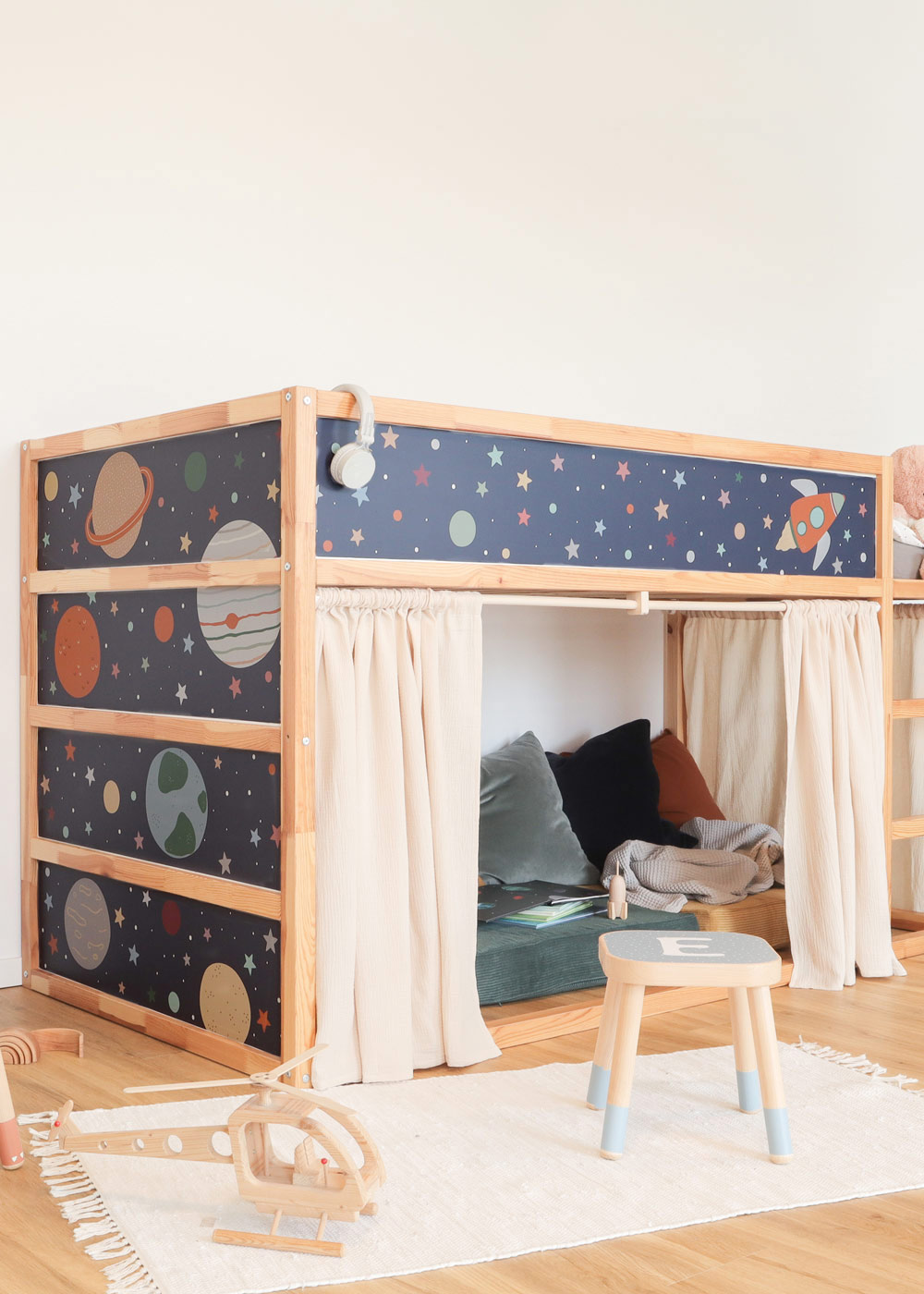
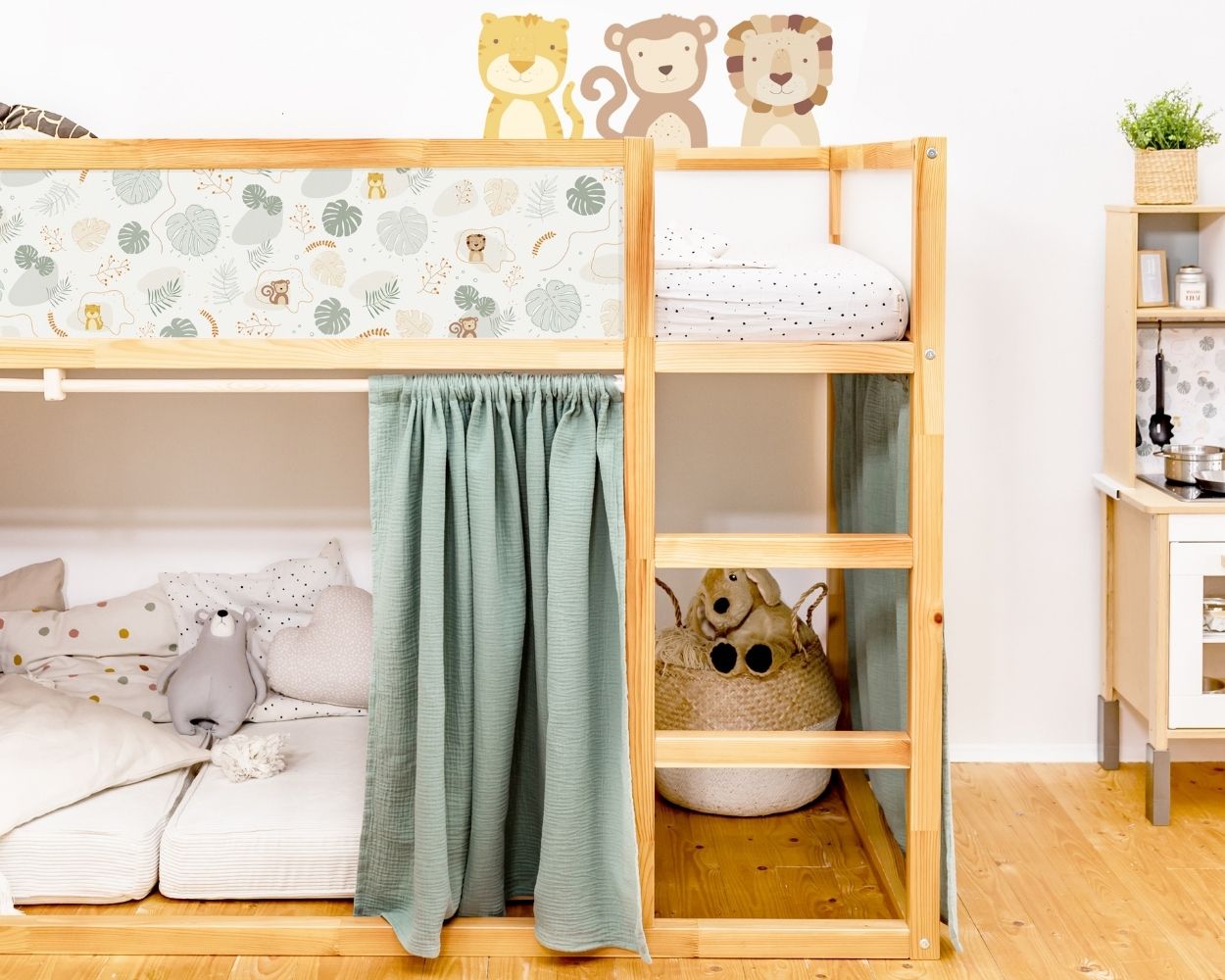
A bunk bed is ideal for furnishing small children’s bedrooms. The little ones can use the space under the bunk bed for all sorts of things. A cosy corner, space for a desk or a ‘ chest of drawers’, or a creative corner for crafts and play.
With curtains, the area under the bunk bed becomes a little ‘ cave’, where your kids can retreat in peace or create their own play worlds.


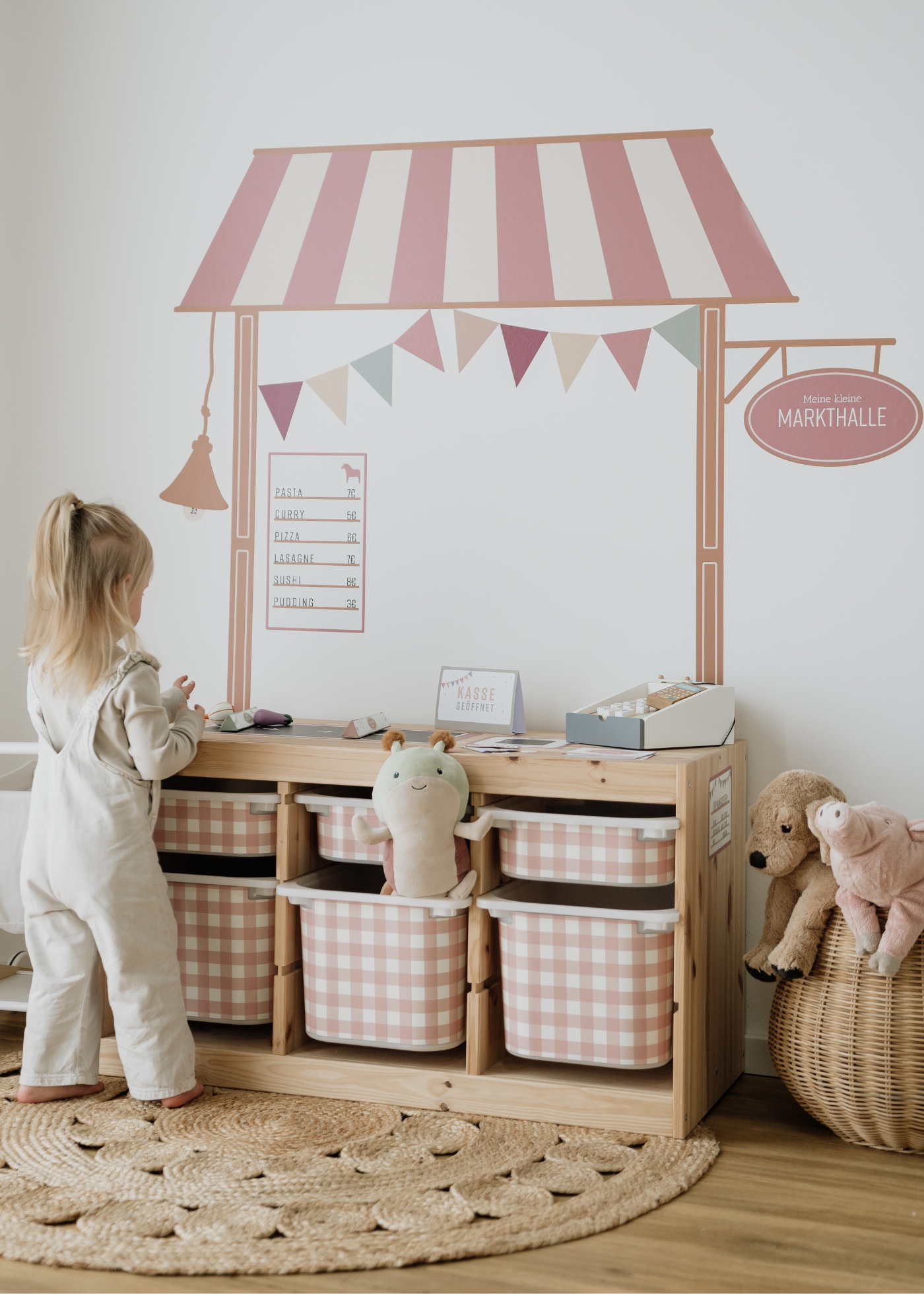
Play shop No space needed
just stick it on
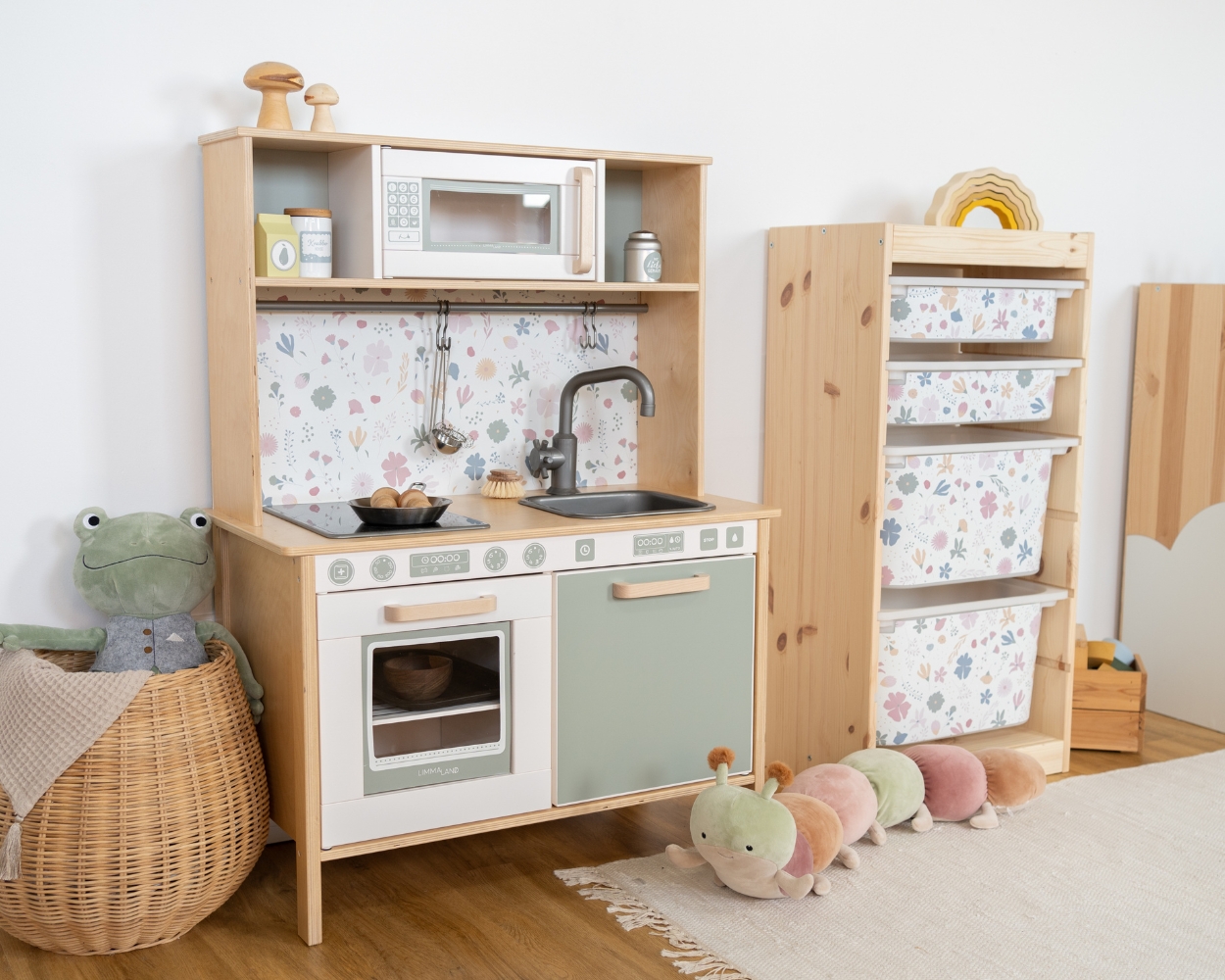
More space for play accessories with the TROFAST shelving
unit
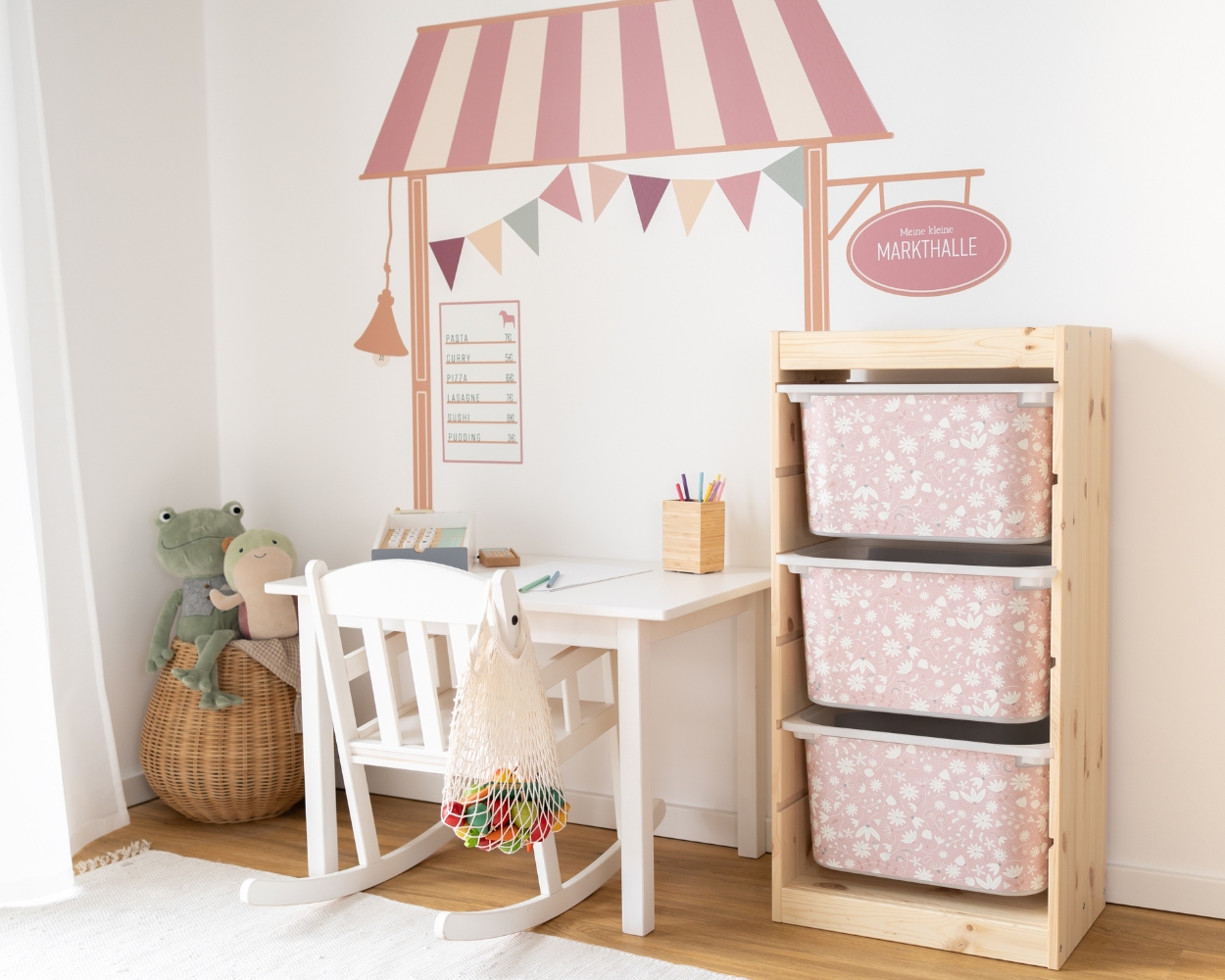
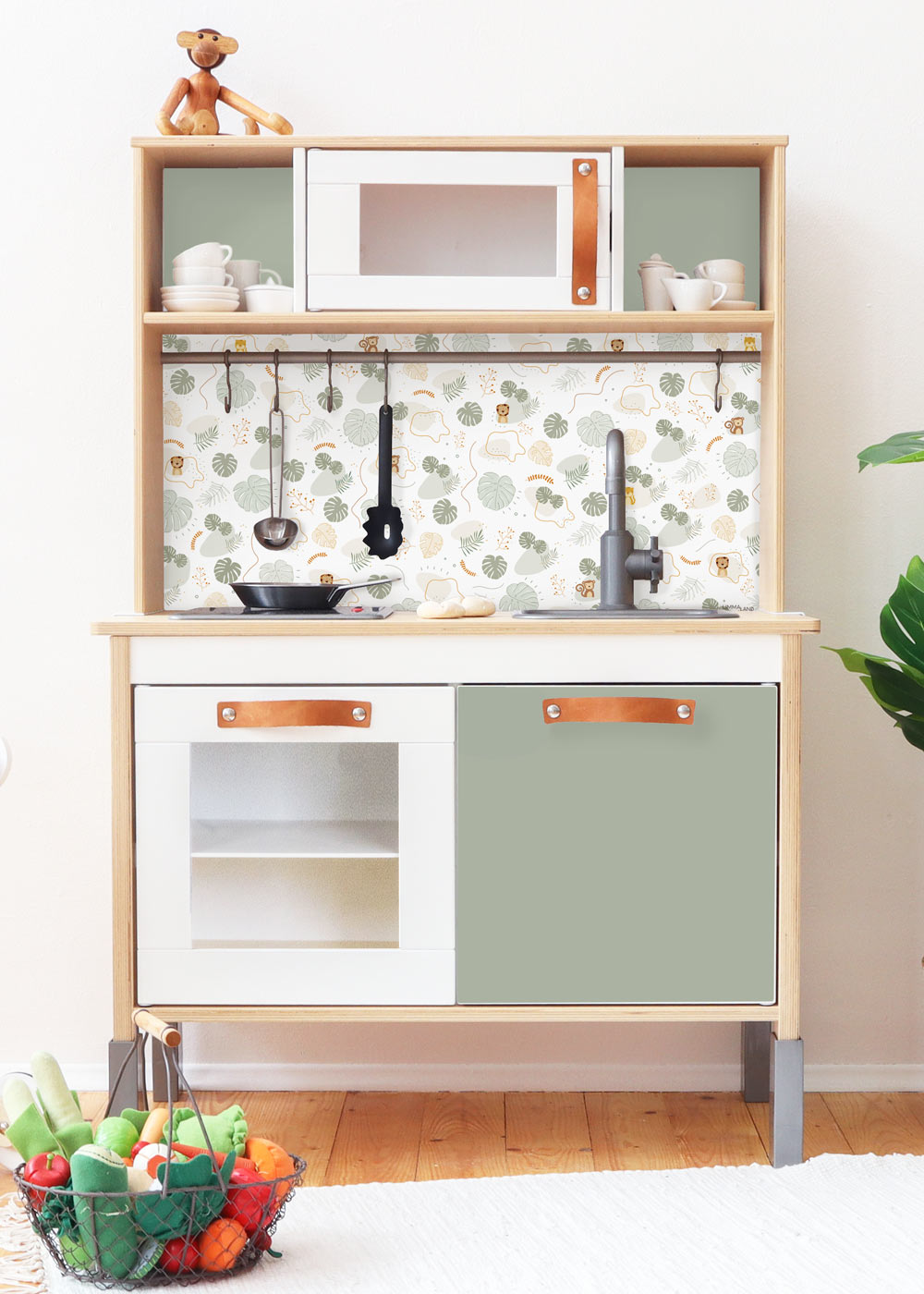
TheTROFAST shelving unit is particularly space-saving when you use the tall version. This means it takes up less floor space. You can combine it particularly cleverly with other play furniture such as the play kitchen. With its practical drawer, it offers plenty of storage space for accessories and play furniture. This means little chefs always have everything to hand. With the matching stickers, you can also customise the TROFAST shelving unit to match the play kitchen.
Multifunctional table: IKEA hack for small children’s bedrooms
Or how about a table with built-in storage? With the IKEA FLISA table, you can not only laminate the tabletop from both sides so that it serves different purposes, but you can also hang IKEA TROFAST boxes on it to create more storage space! Brilliant, isn’t it?

2. Organisation is half the battle
Children’s bedrooms fill up faster than you’d think – toys, books, clothes and ever-changing favourite items are constantly being added. At the same time, their needs and interests change rapidly. This makes it all the more important to regularly organisation . Even just tidying up every day brings a noticeable sense of calm to the room. But it’s just as crucial to have a clear-out every now and then. Anything that’s no longer used can go – even if it’s sometimes hard to let go. That way, your little one’s bedroom stays tidy, functional and easy to use.
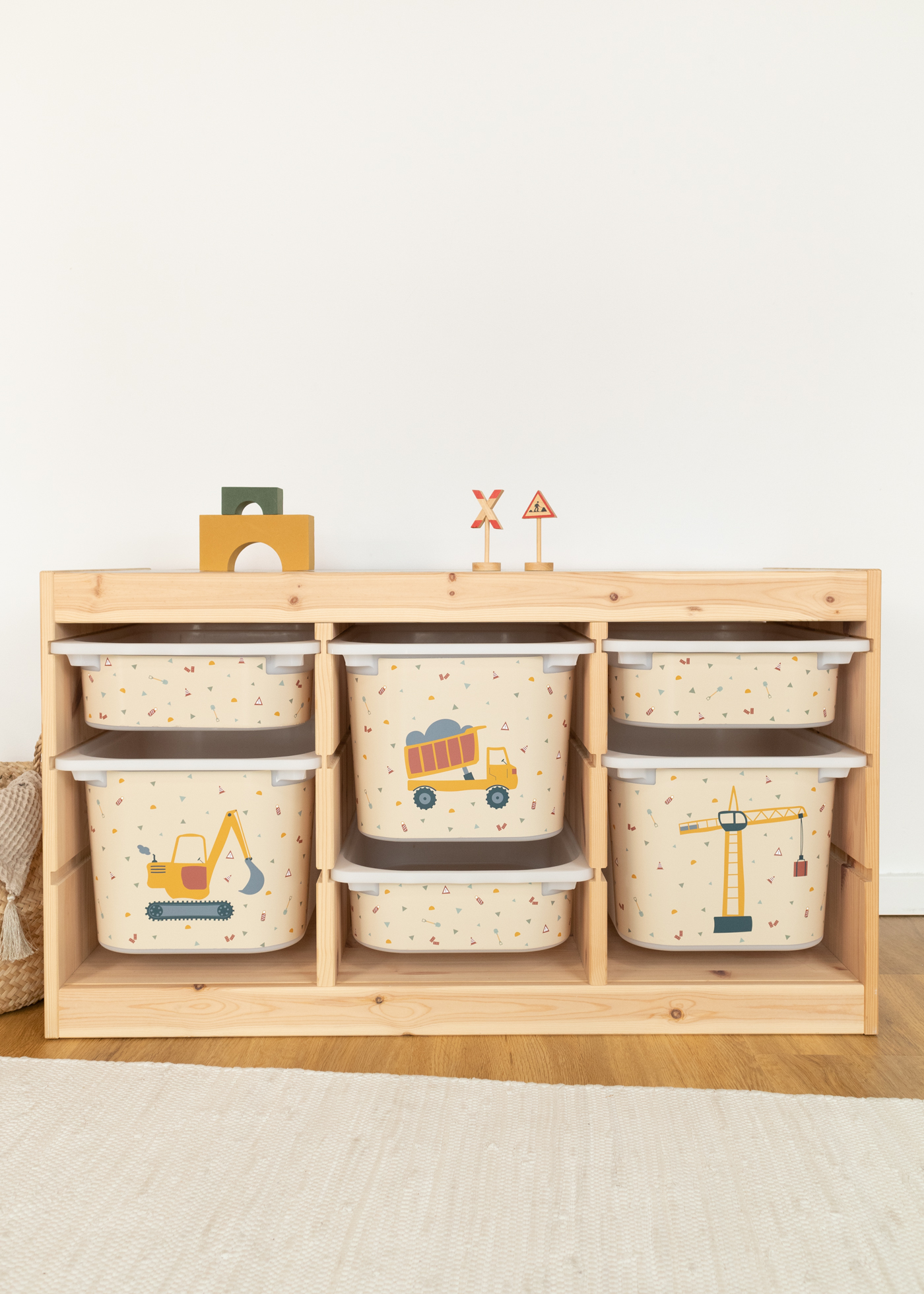
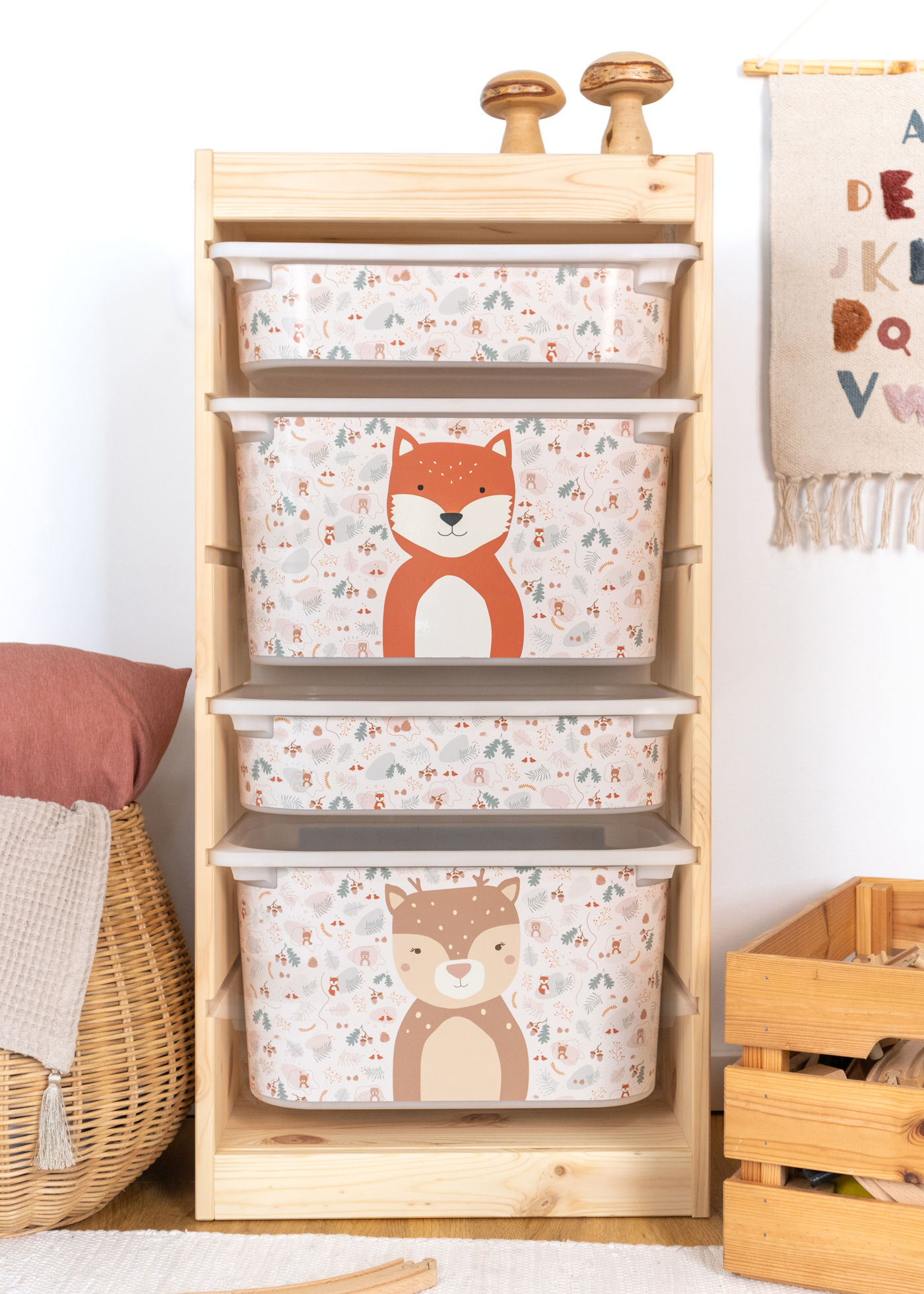
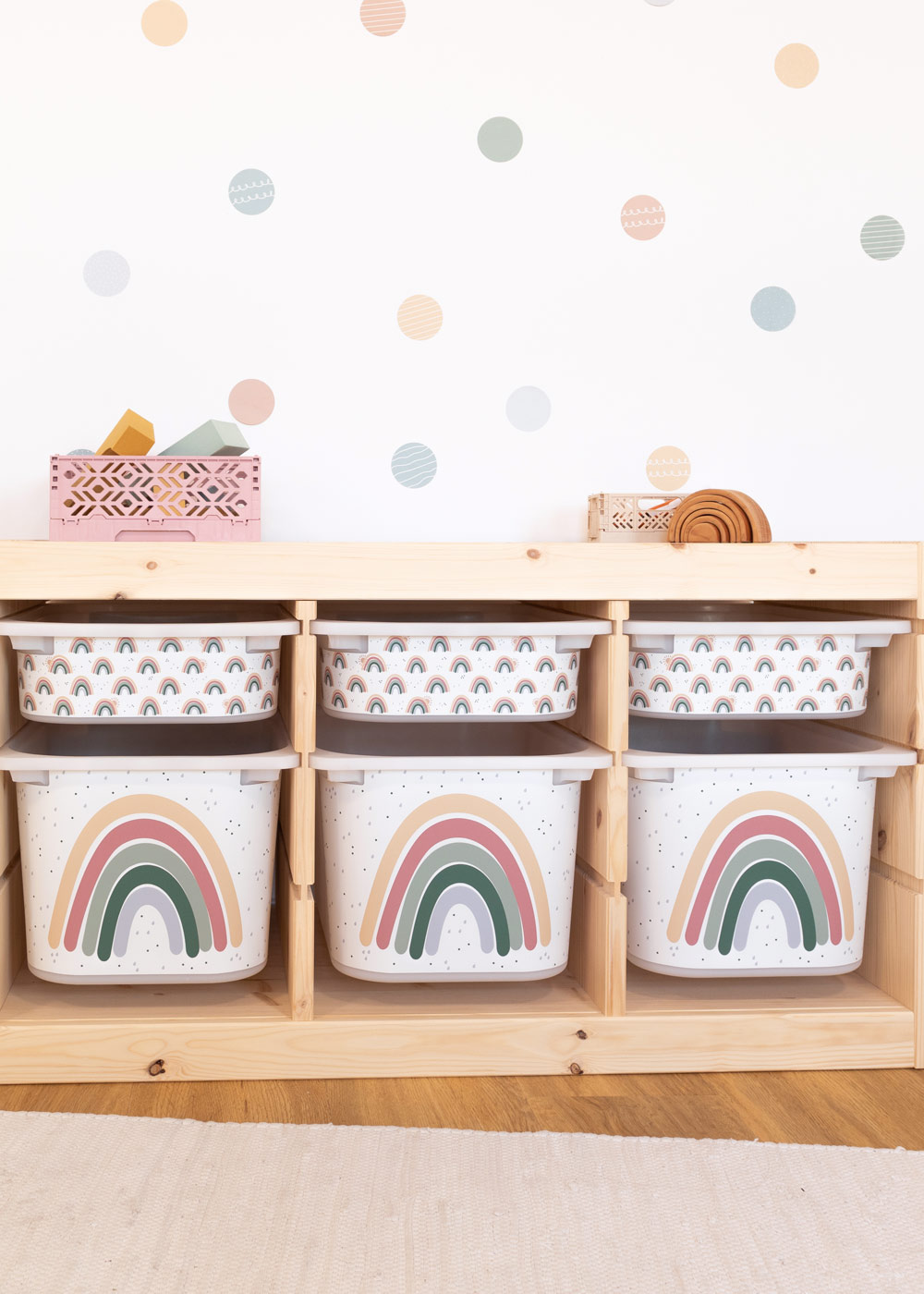
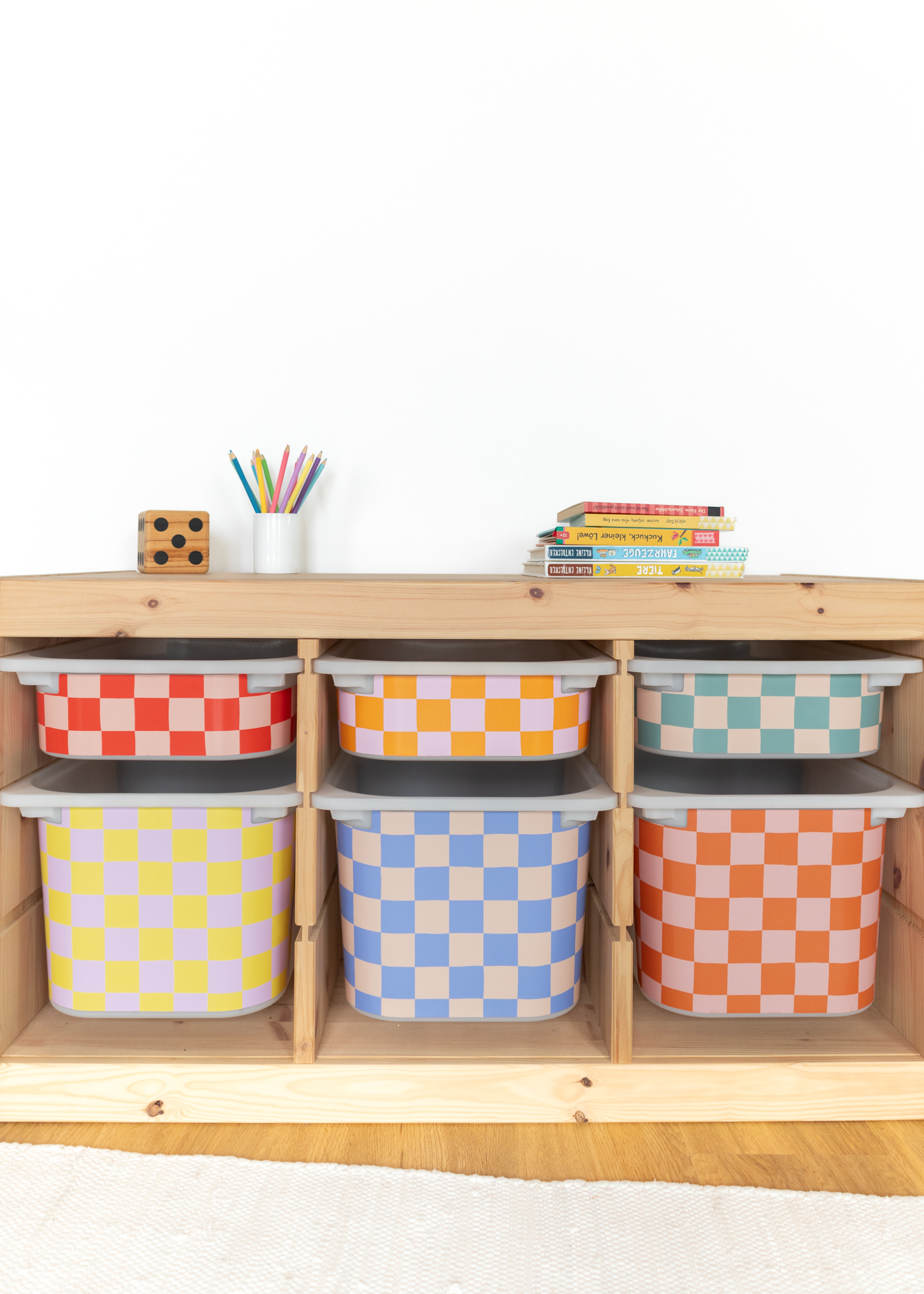
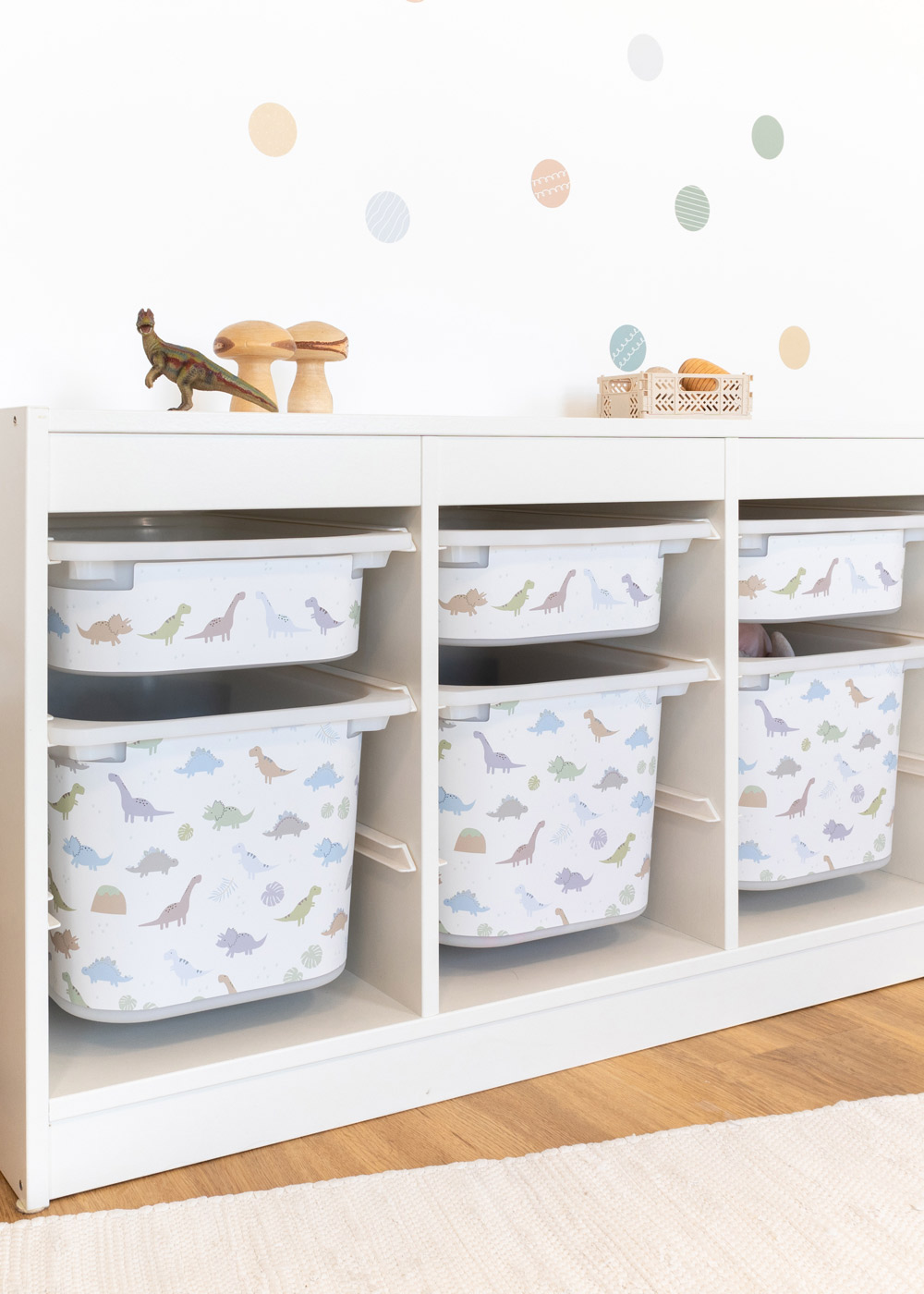
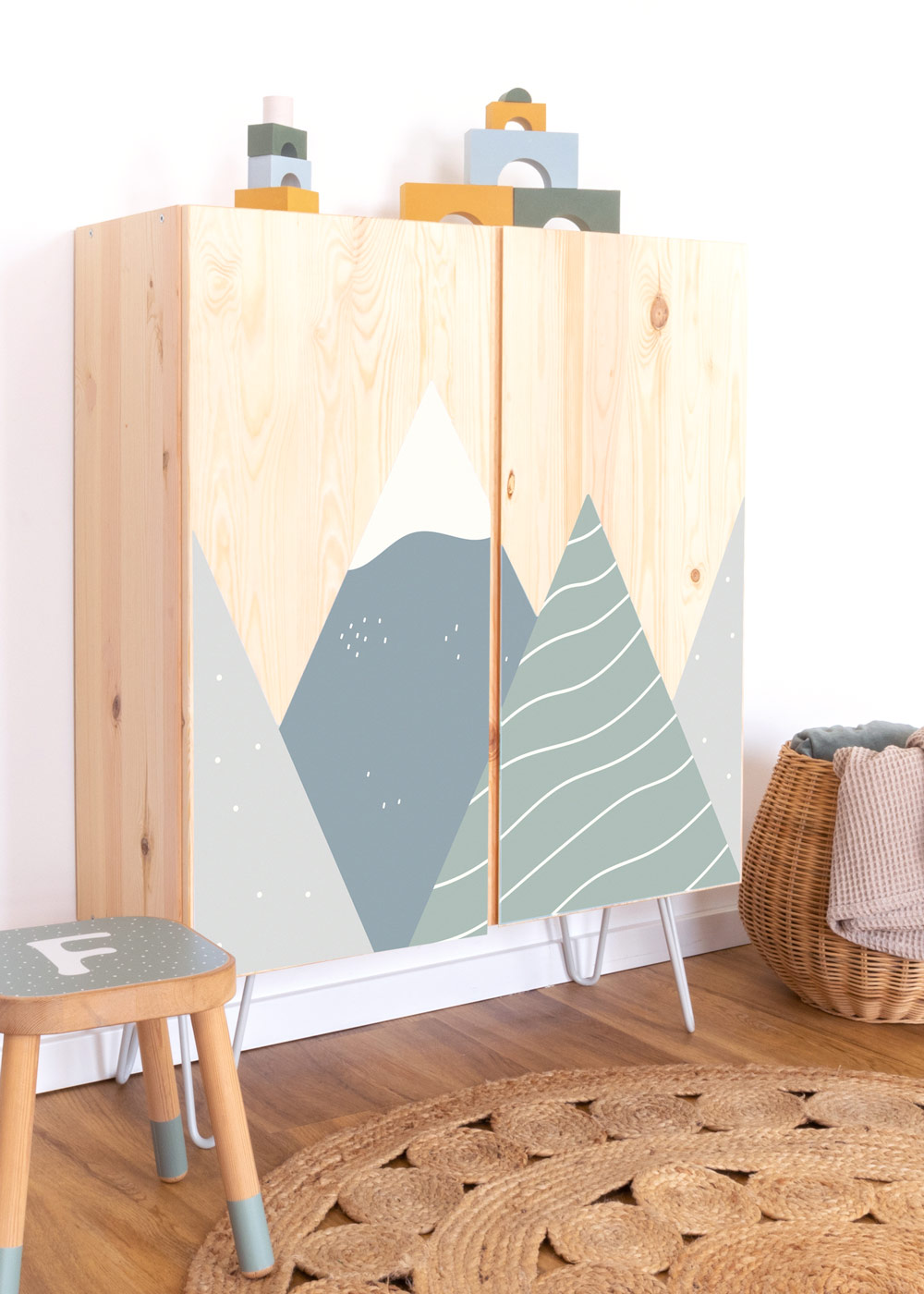

Order stickers: Everything has its place
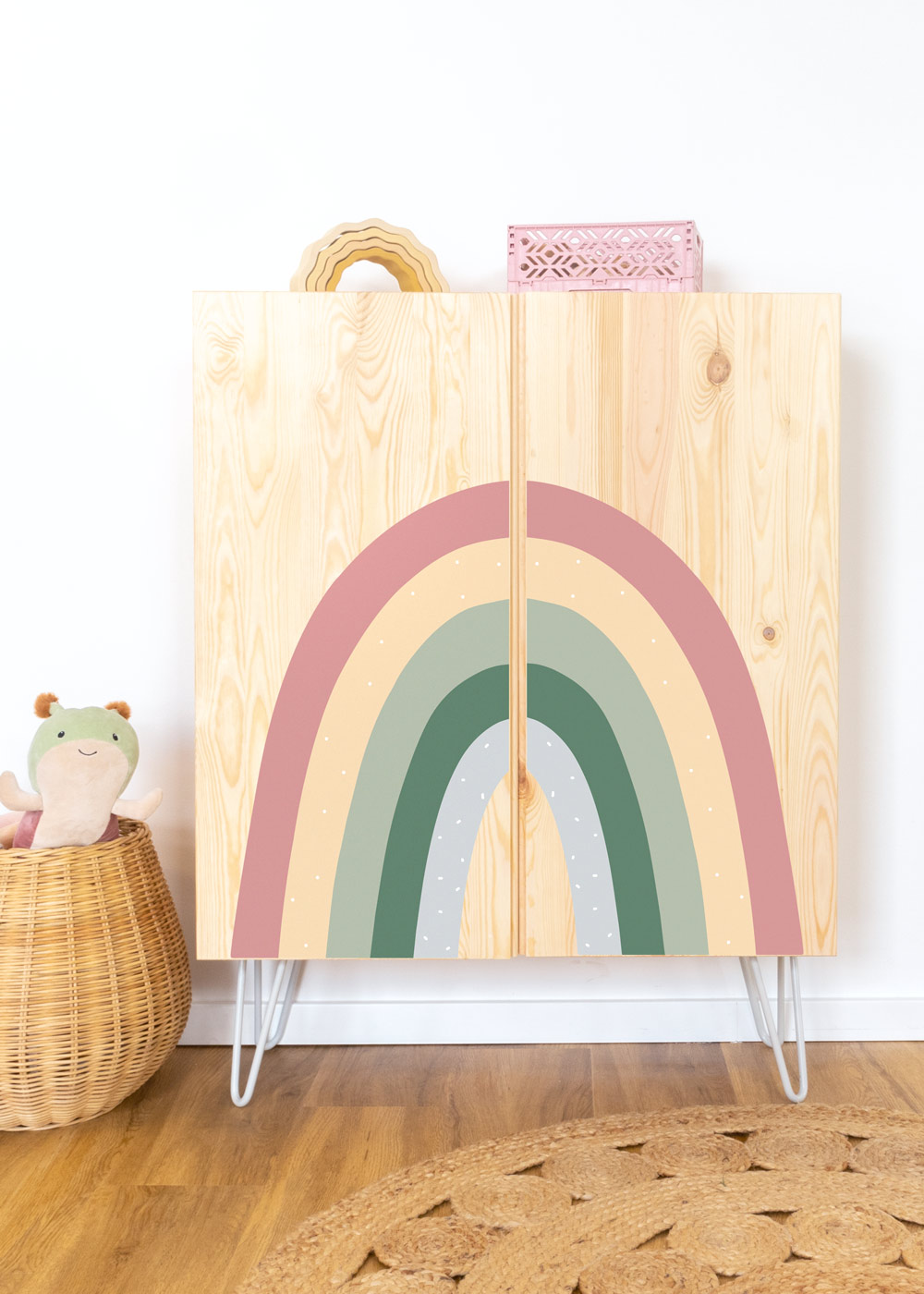
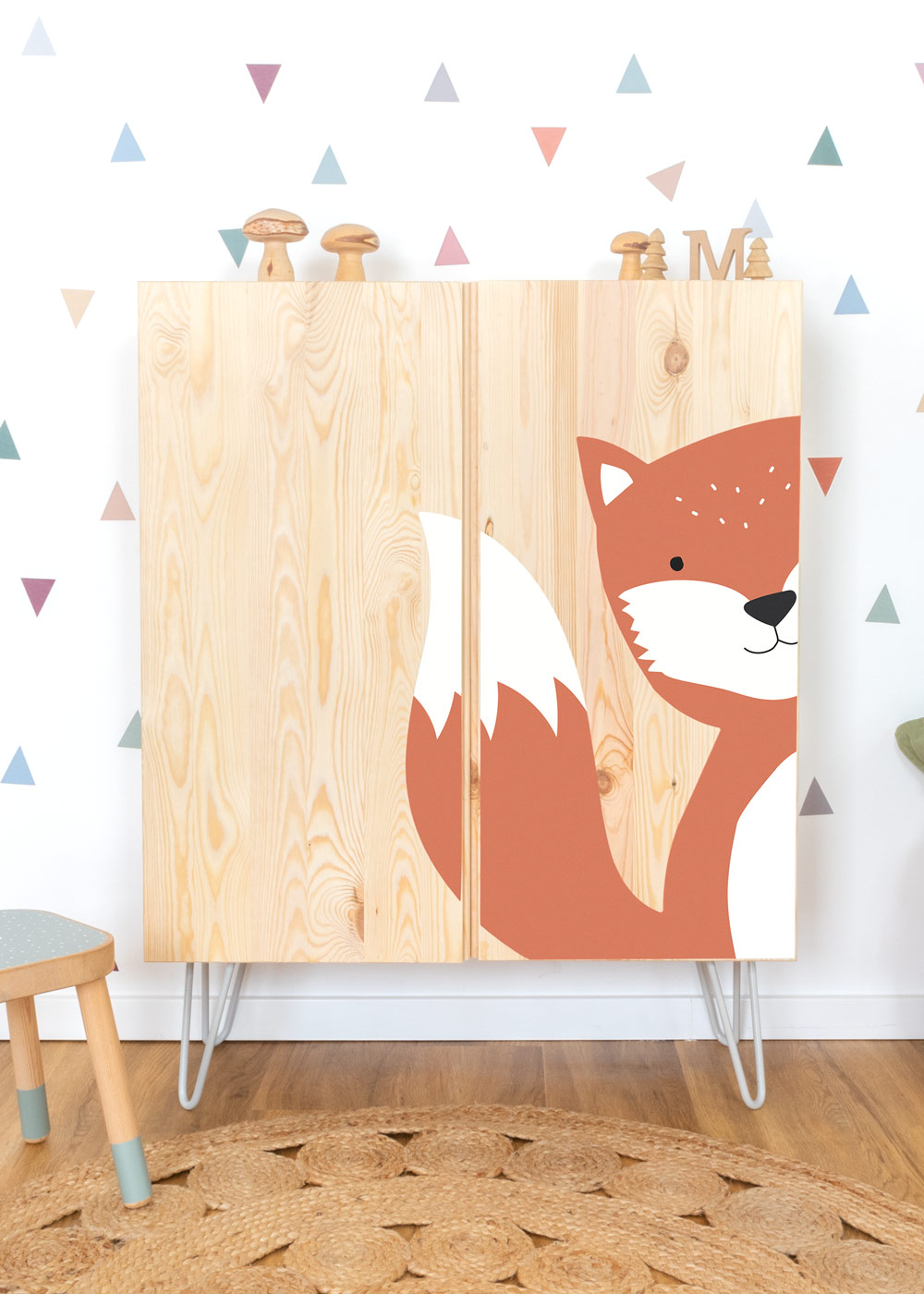
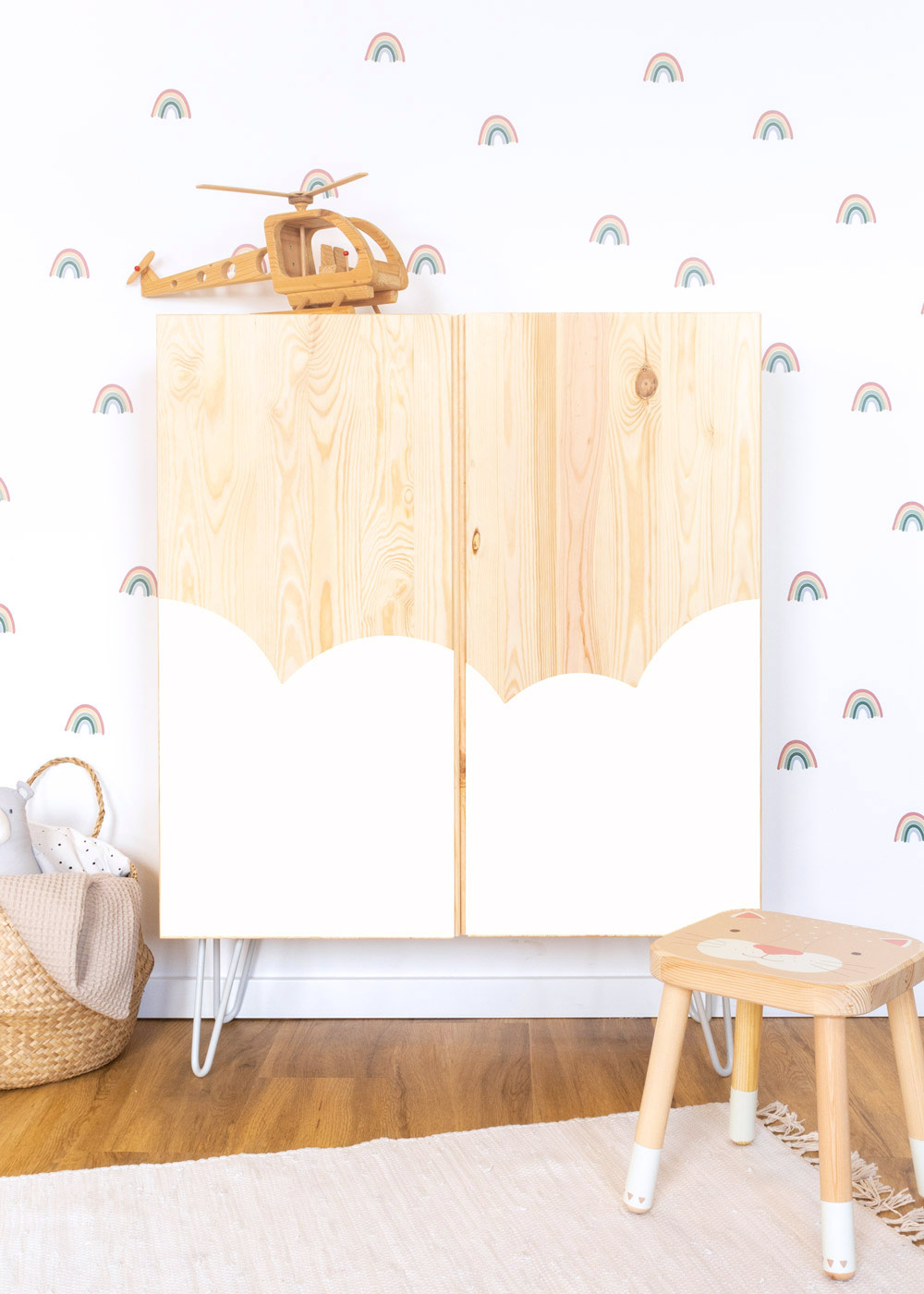
Our order stickers help children to sort their toys, craft supplies and favourite treasures with ease. The lovingly designed motifs are perfect for IKEA TROFAST drawer, but can also be used on other crates, boxes and furniture. This way, even the youngest children can see at a glance where everything belongs and learn to keep things organisation in a playful way.


Organisation in the changing table
Withour changing table topper, you can transform a standard HEMNES or MALM chest of drawers into a practical changing table. The soft padding and compartments make nappy changing easy and comfortable. The chests’ large drawer help you keep everything organisation and ensure you have plenty of time for your baby whilst changing nappies. With the organisers for the drawer, you’ll always have all your baby’s clothes at a glance and never have to search for them.
3. Colours, lighting and décor – the finishing touches
With the right colours, atmospheric lighting and the right décor, you can really enhance a small children’s bedroom and make it appear more spacious.
Light colours make small rooms appear
larger
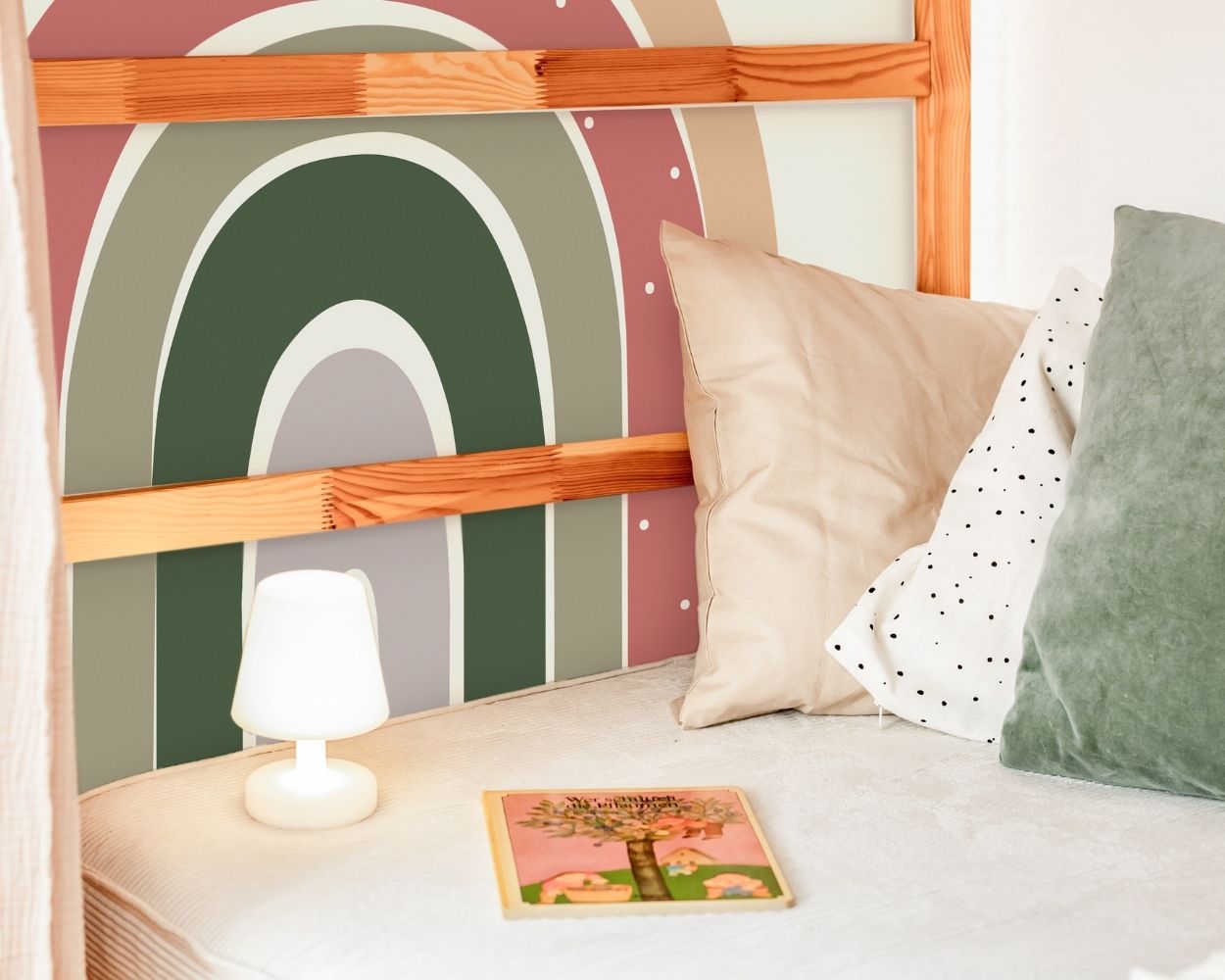
A wild mix of all sorts of colours can quickly make a children’s bedroom look cluttered. It’s therefore best to use harmonious shades from a single colour family. As a general rule, light colours make rooms appear larger – both on the walls and on furniture. To ensure the room still feels child-friendly, you can, of course, add colourful accents. If you do want to paint one wall, you should leave a white strip about 2–3 cm wide between the paint and the ceiling. This makes the wall appear longer.
Let there be light – creating space with the right lighting
Lighting isn’t necessarily the first thing that springs to mind when furnishing a child’s bedroom. However, by using lighting correctly, you can get just that little bit more out of a small child’s bedroom. When it comes to the ceiling light, it’s best not to choose a pendant light. This would draw too much attention to itself. By using indirect lighting – such as a reading lamp or a wall light – you can create a sense of space and cosiness.
Furnishing a small children’s bedroom with carefully chosen décor
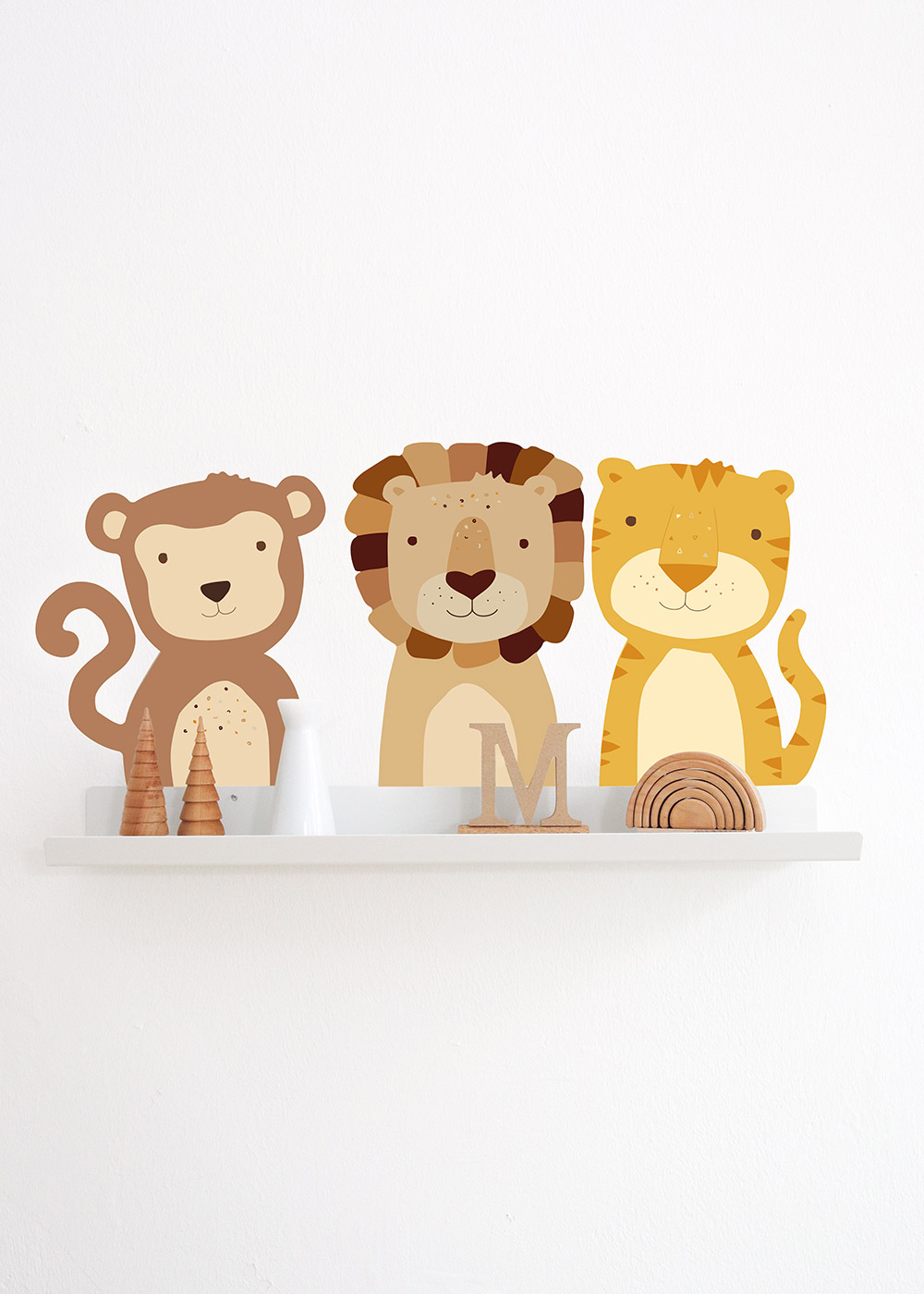
Children love colour and need it for their development. So, if you keep the walls fairly plain, you can add colourful accents with your décor. If you make sure the shades go well together, you can easily create a harmonious look.
Conclusion: How to furnish a small children’s bedroom cleverly
By reading this post, you’ve already taken the first and most important step: careful planning. Think carefully about what you need, what you might be able to store in other rooms, and how you’d like to design the space. Here’s a summary of our tips:
- Less is more – set your priorities
- Multi-functional furniture saves space
- Create storage
- space
- Organisation is half
- the battle
- Use light colours Don’t
- neglect the lighting
- A harmonious room design creates a sense of space

Montessori in the children’s bedroom
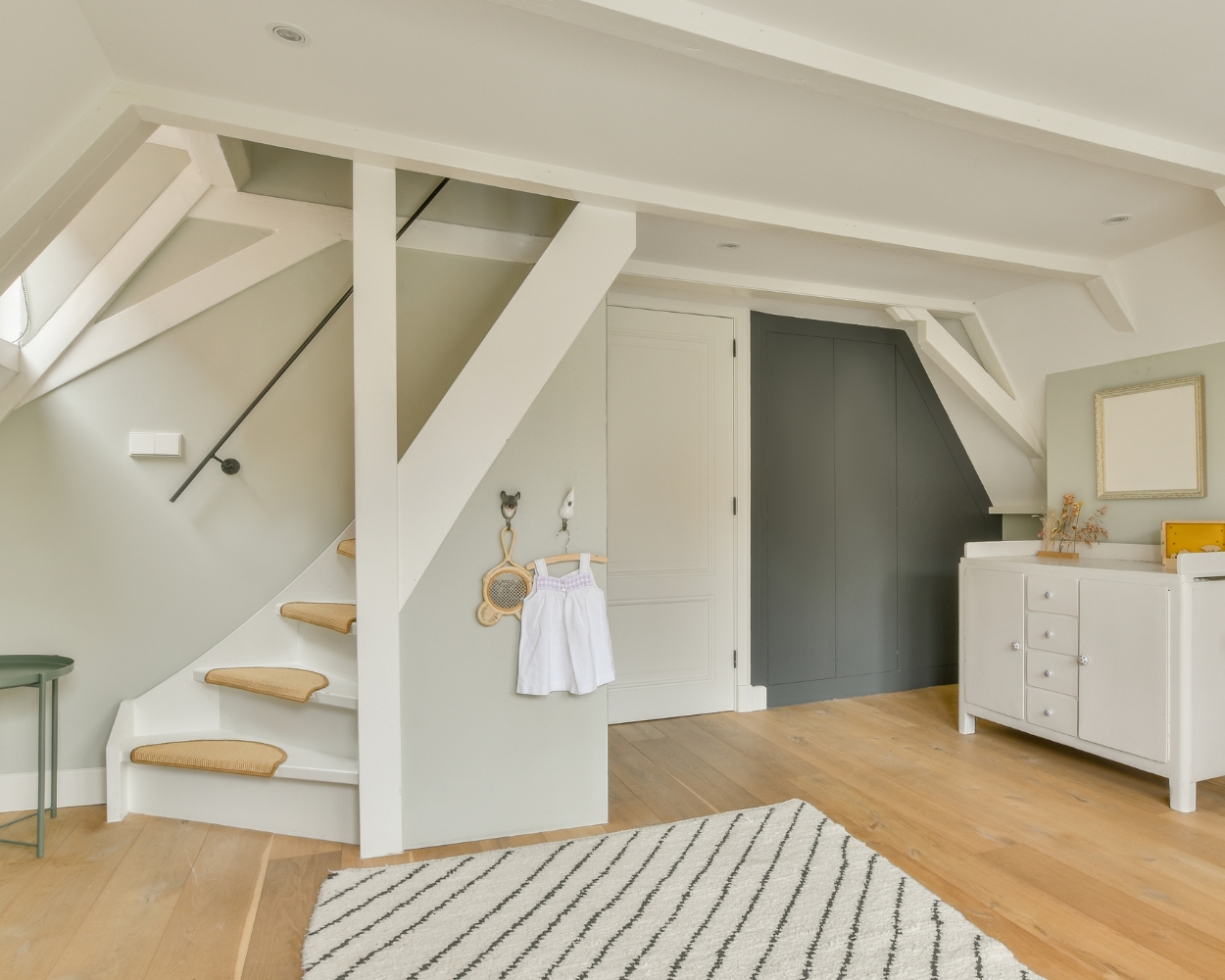
Furnishing a children’s bedroom with a sloping ceiling
