









Montessori children's room
Montessori in the nursery: Help me do it myself
What does Montessori mean?
The Italian doctor and educator Maria Montessori (1870-1952) developed the Montessori method of education. The guiding principle "Help me to do it myself" means that we provide our children with a framework for playing, living and learning. We support them in discovering their own skills and interests through their urge to explore and develop, and in learning through successes and failures.

3 reasons to introduce Montessori into your home
- Self-directed learning: Montessori promotes independent learning, allowing children to explore their individual interests and talents.
- Concentration and independence: Montessori activities help children develop independence and concentration.
- Freedom of movement: Montessori encourages children to be physically active and focuses on active learning.
How to integrate Montessori into your home
1. Self-determined choice of clothing
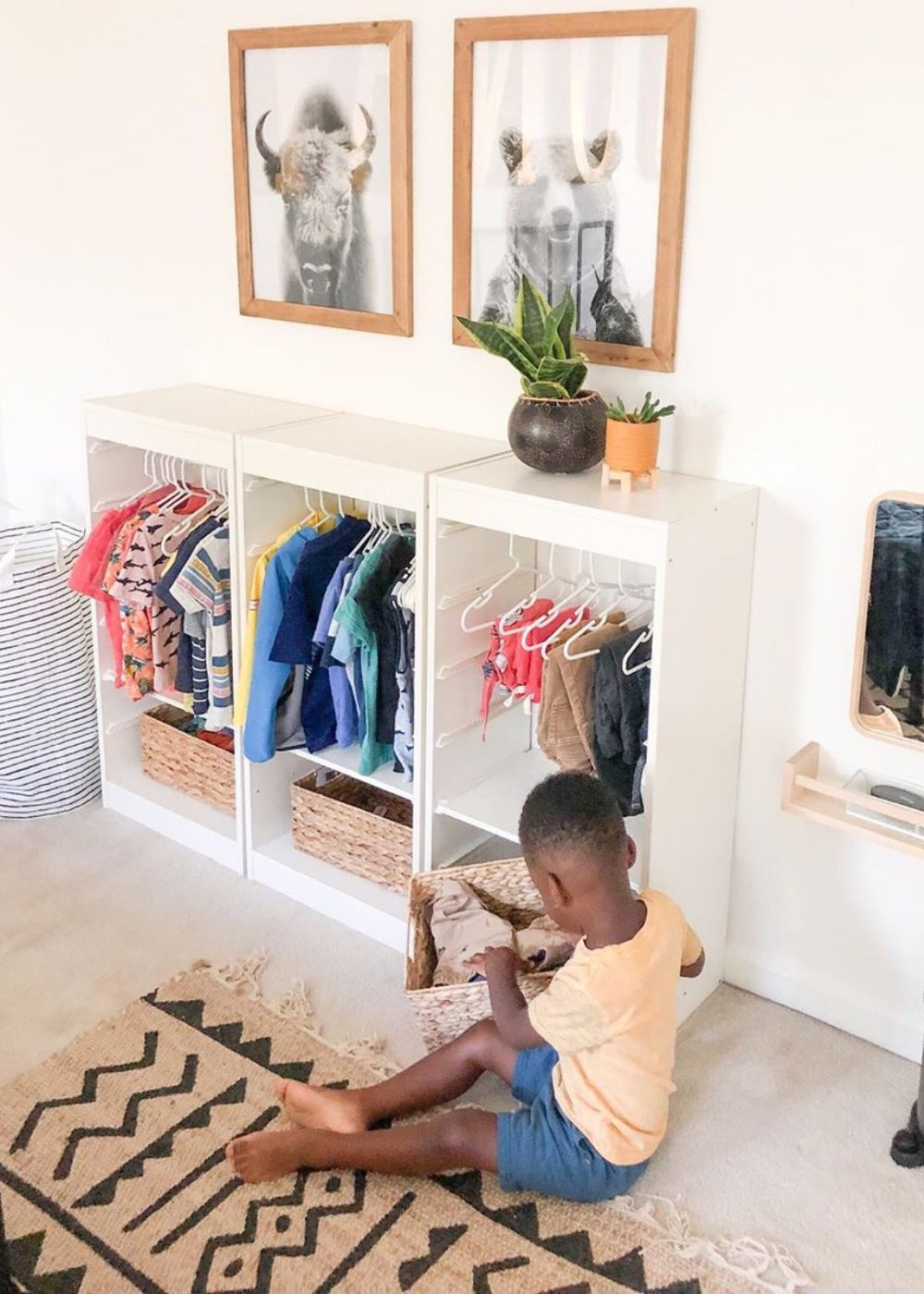
With a wardrobe at eye level, your children can learn to choose their own clothes. This could start with a small coat rack in the hallway where your child can hang up their jacket after a walk. The advanced version is the Montessori wardrobe, from which your child can put together their own outfit. Our tip: don't overload the wardrobe, but equip the mini wardrobe with selected items of clothing for the current season. This way, your child won't be overwhelmed and you'll avoid any discussions about thick woollen socks in the middle of summer.
2. Washbasin at child height
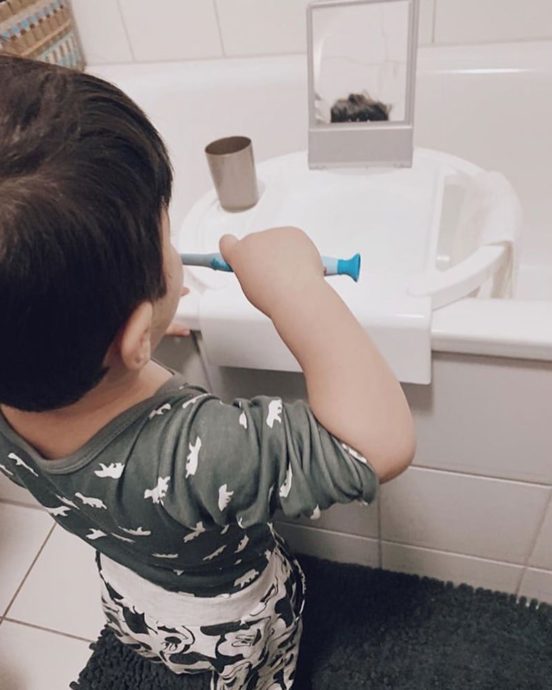
In addition to choosing clothes, brushing teeth, washing hands and combing hair are also part of the daily routine. Not exactly our little ones' favourite activities. But perhaps washing and styling themselves will become a little more popular than when Mummy or Daddy fiddle around with them. Many parents use a learning tower in the bathroom, which allows children to stand independently at the sink. But there are also other ideas that can help your kids become more independent.
3. Tidying up together
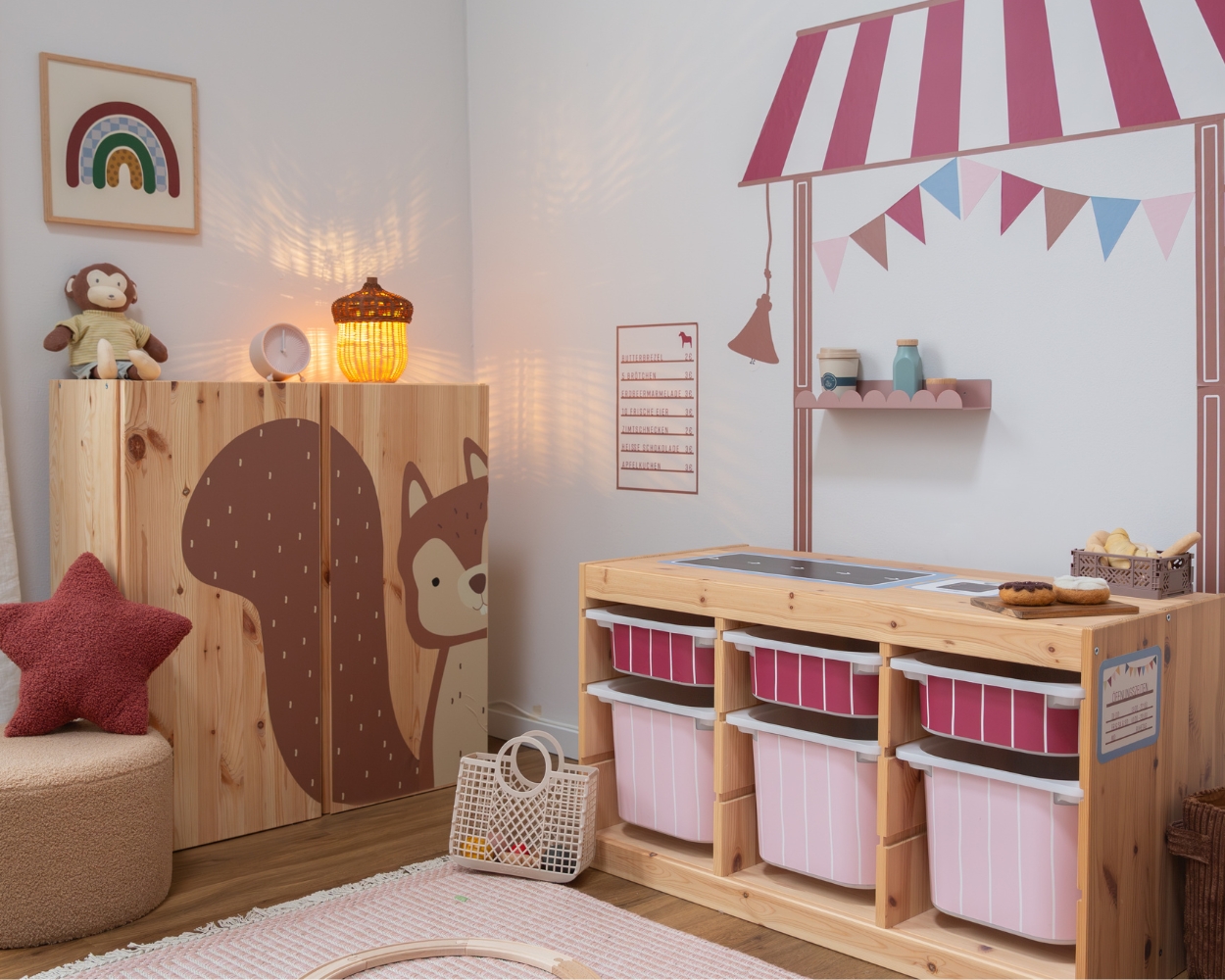
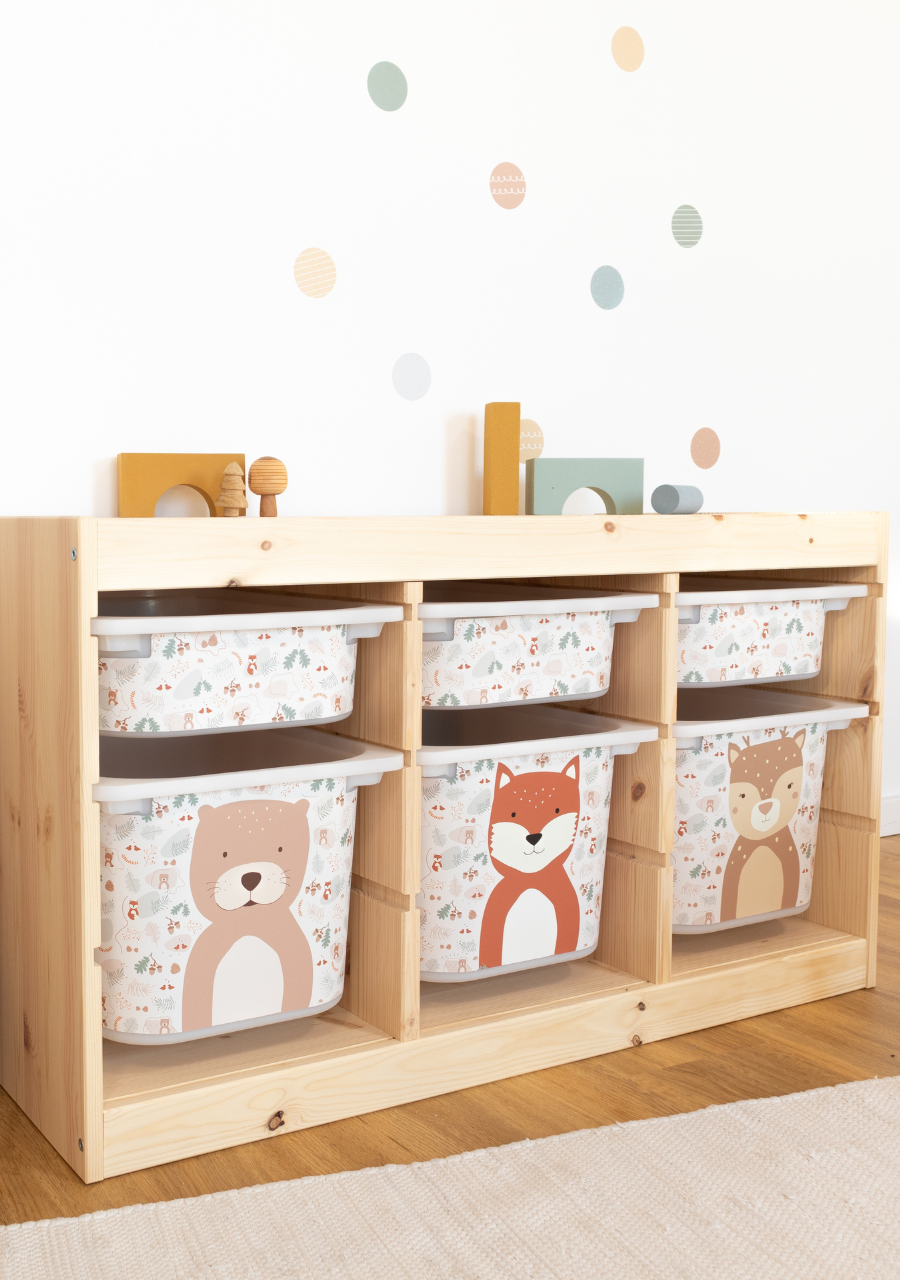
When everything has its place, even tidying up after playtime is fun. It also promotes your child's independence and sense of responsibility. This works best with storage space that children can access themselves. If you store toys in boxes, order stickers with symbols can be a great help.
4. Exploring nature in the Montessori home
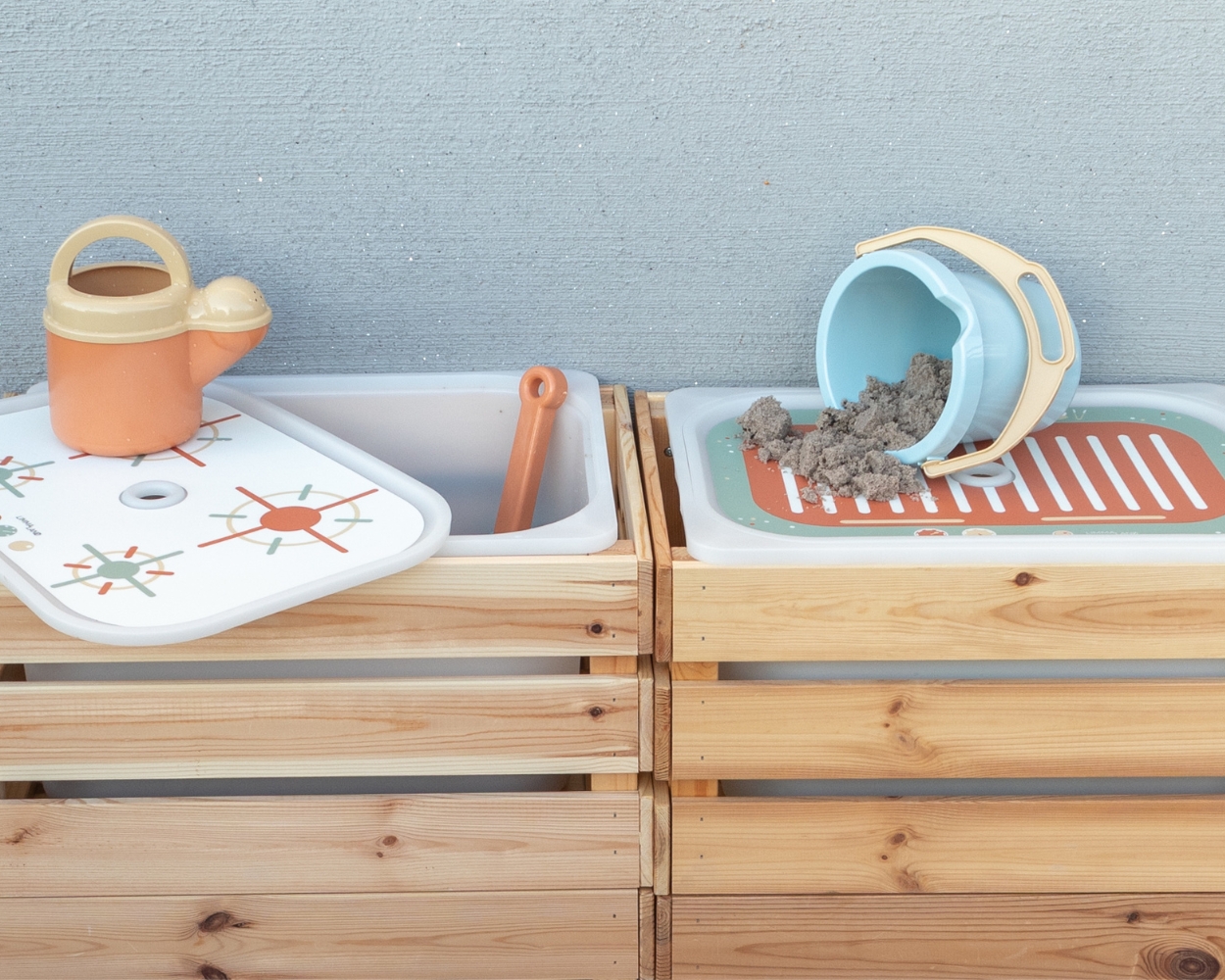
Montessori emphasises the importance of connecting with nature. Take your child outside, collect chestnuts, shells or leaves and observe animals. Independent discovery also promotes your child's individual development. Your child can dig in the sandpit or help you water and care for plants. If you don't have a garden, you can set up a mud kitchen even on the smallest balcony.
5. Imitate everyday life with role-playing games
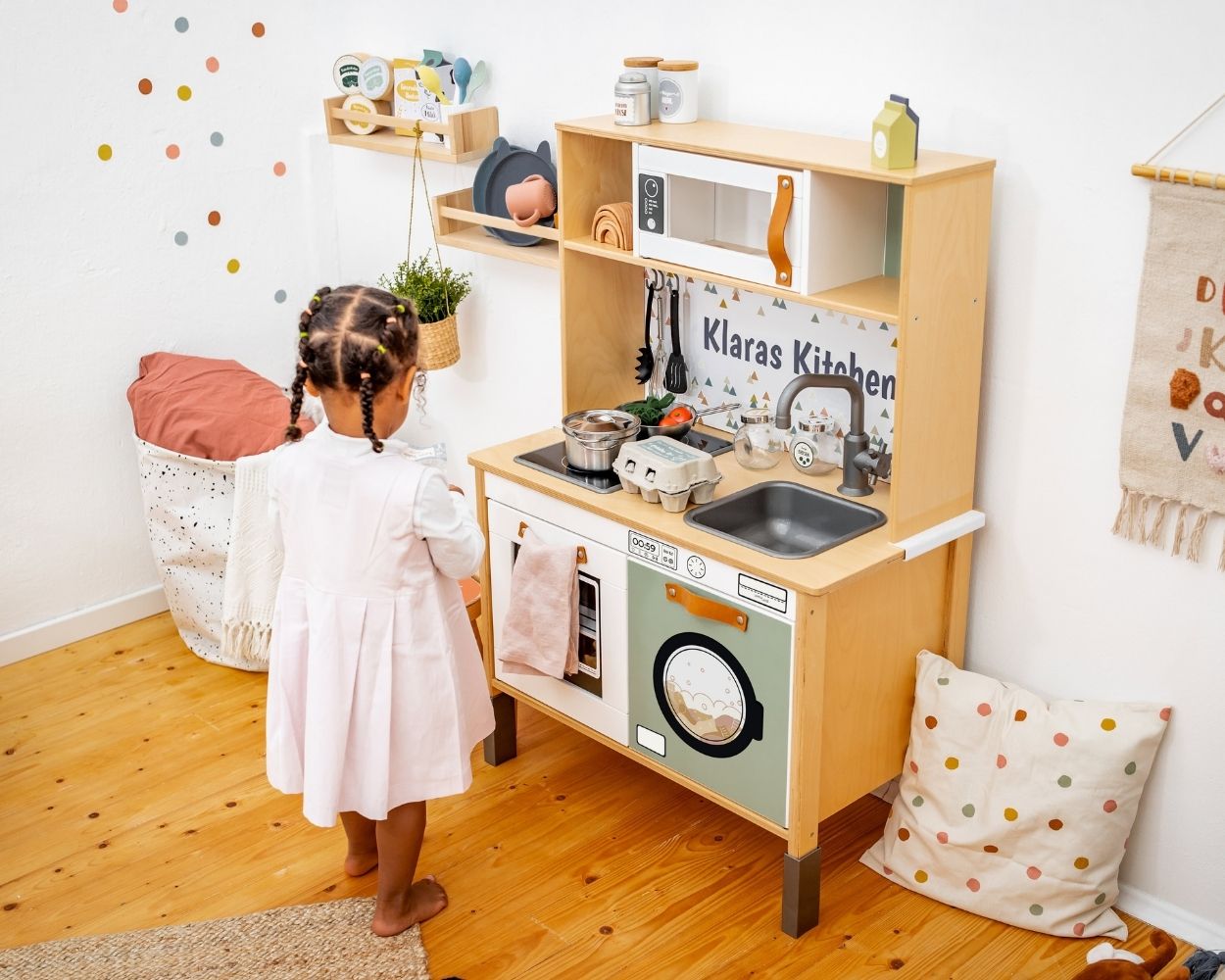
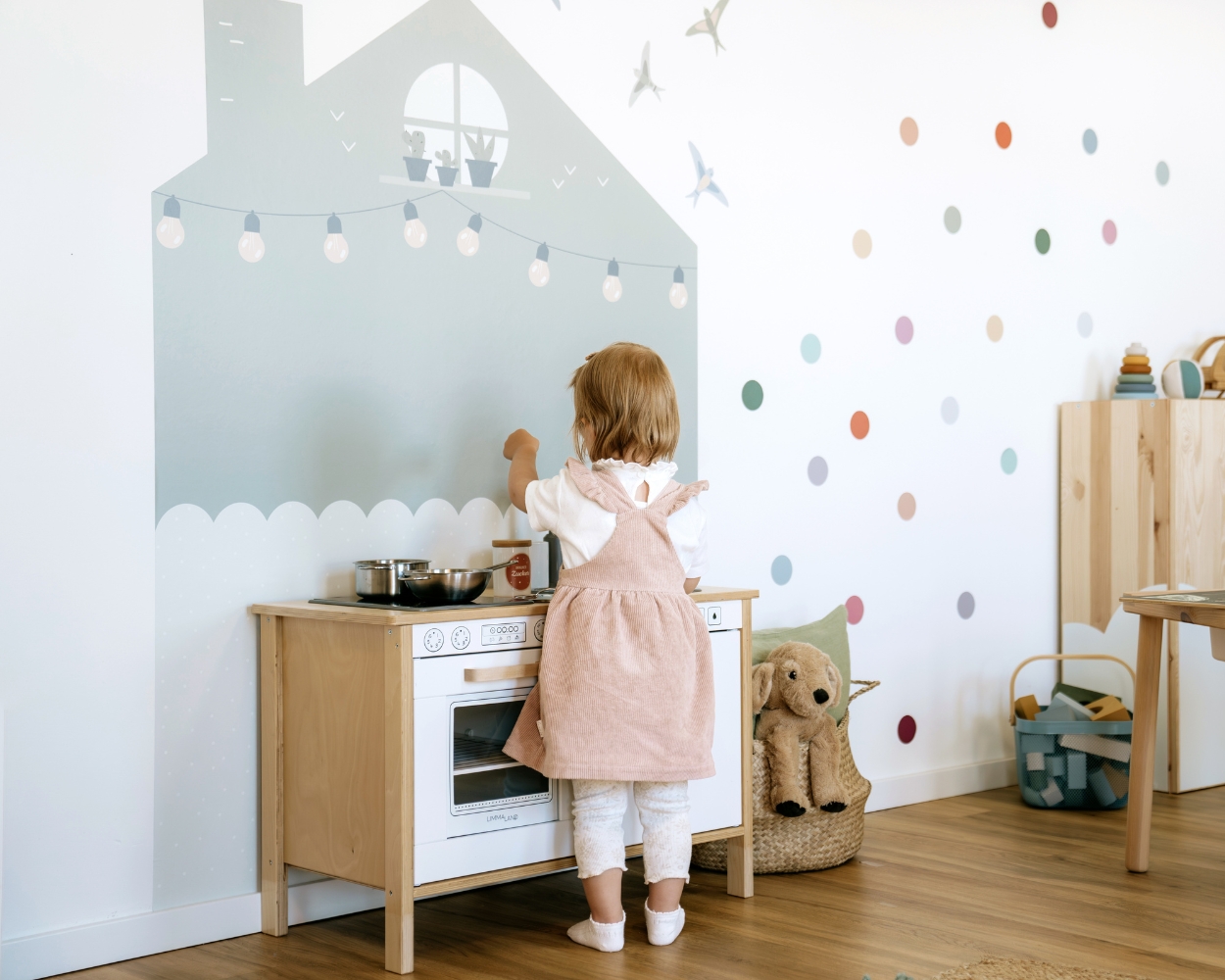
Maria Montessori observed and encouraged active imitation of everyday life. She therefore focused on imaginative games and play materials that allow children to imitate everyday life. With role-playing games such as play shop or play kitchen, you can re-enact and process everyday situations with your children. Playful preparation, such as for a visit to the vet, also helps your child to become more independent.
6. Sensory activities
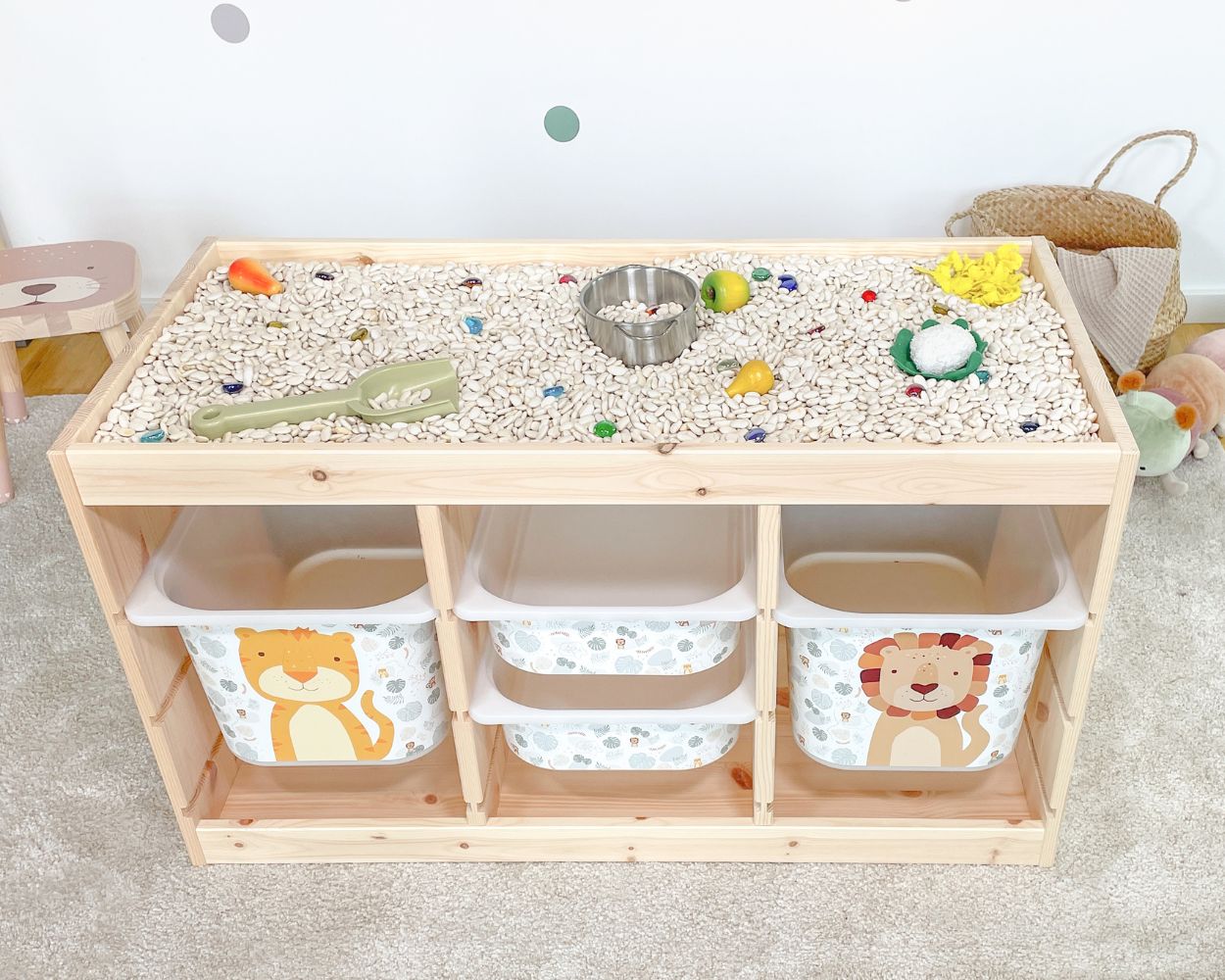
You don't play with your food! In Montessori education, that's not entirely true. Food can be examined at length. Touching different shapes and materials promotes your child's sensory skills. Sorting by colour or smelling different scents are also exciting activities for your child.
-
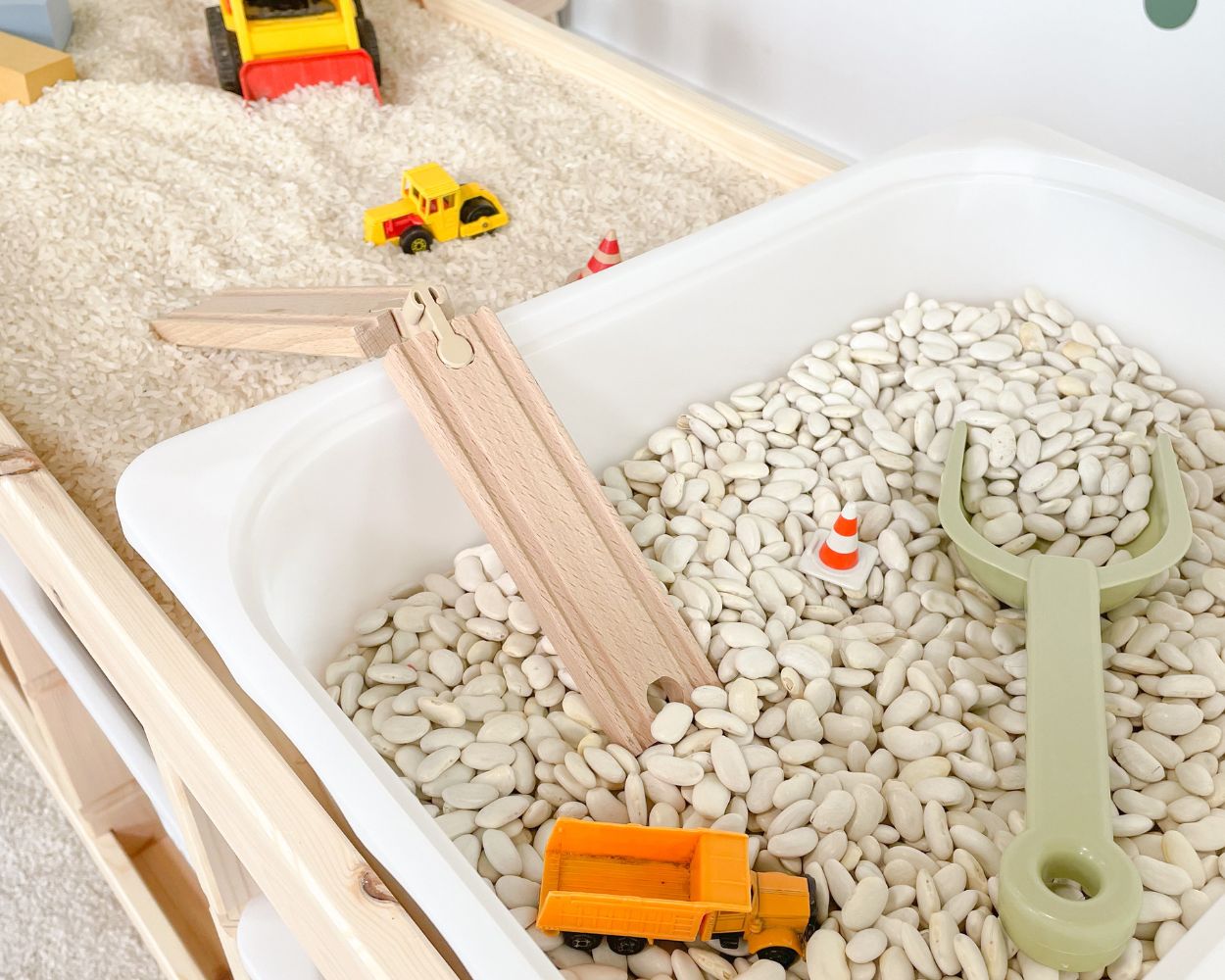 IKEA Hack: Playful learning with the Montessori sensory tableCreative ideas for your sensory table in the children's roomJetzt entdecken
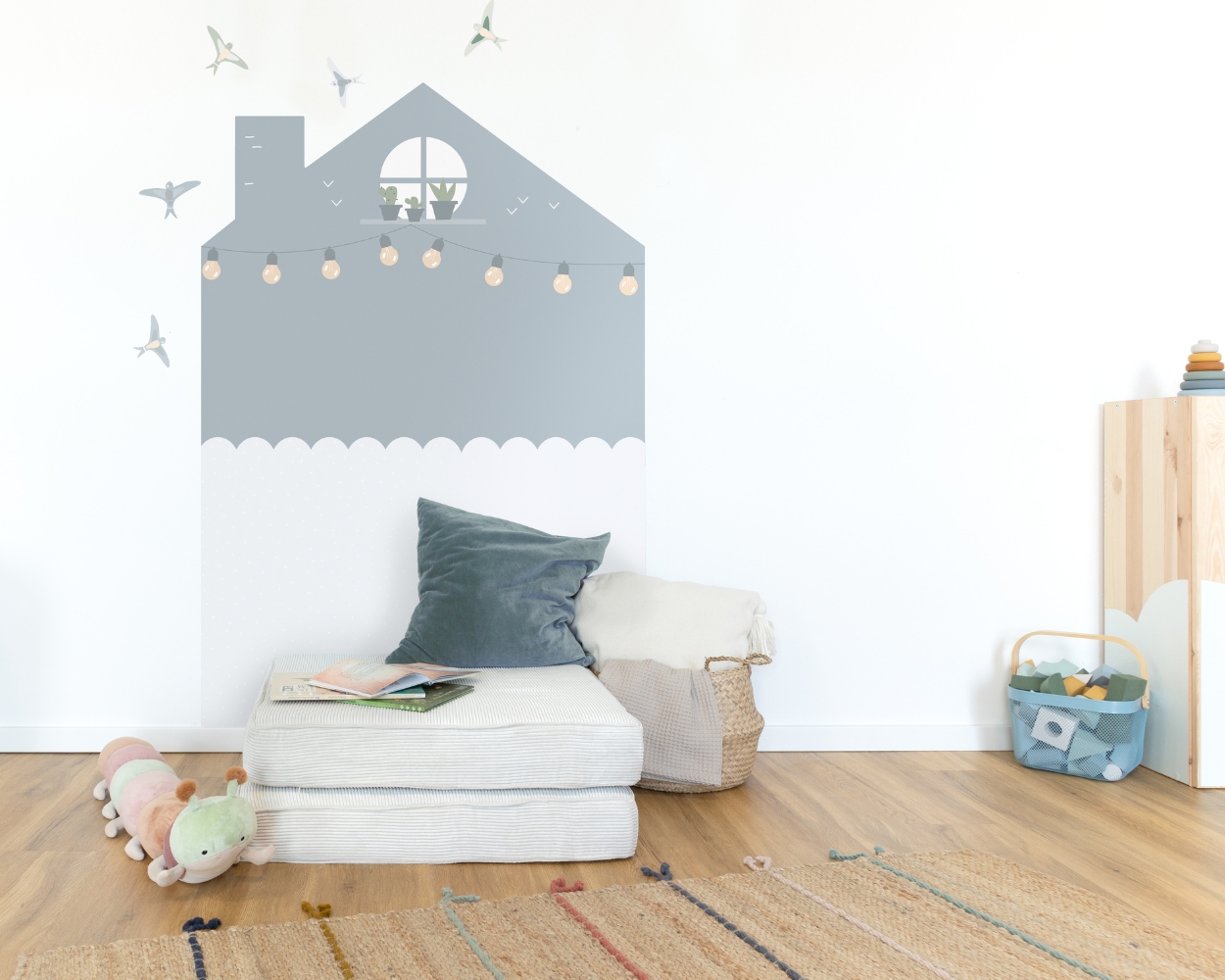
7. Creating zones in the nursery
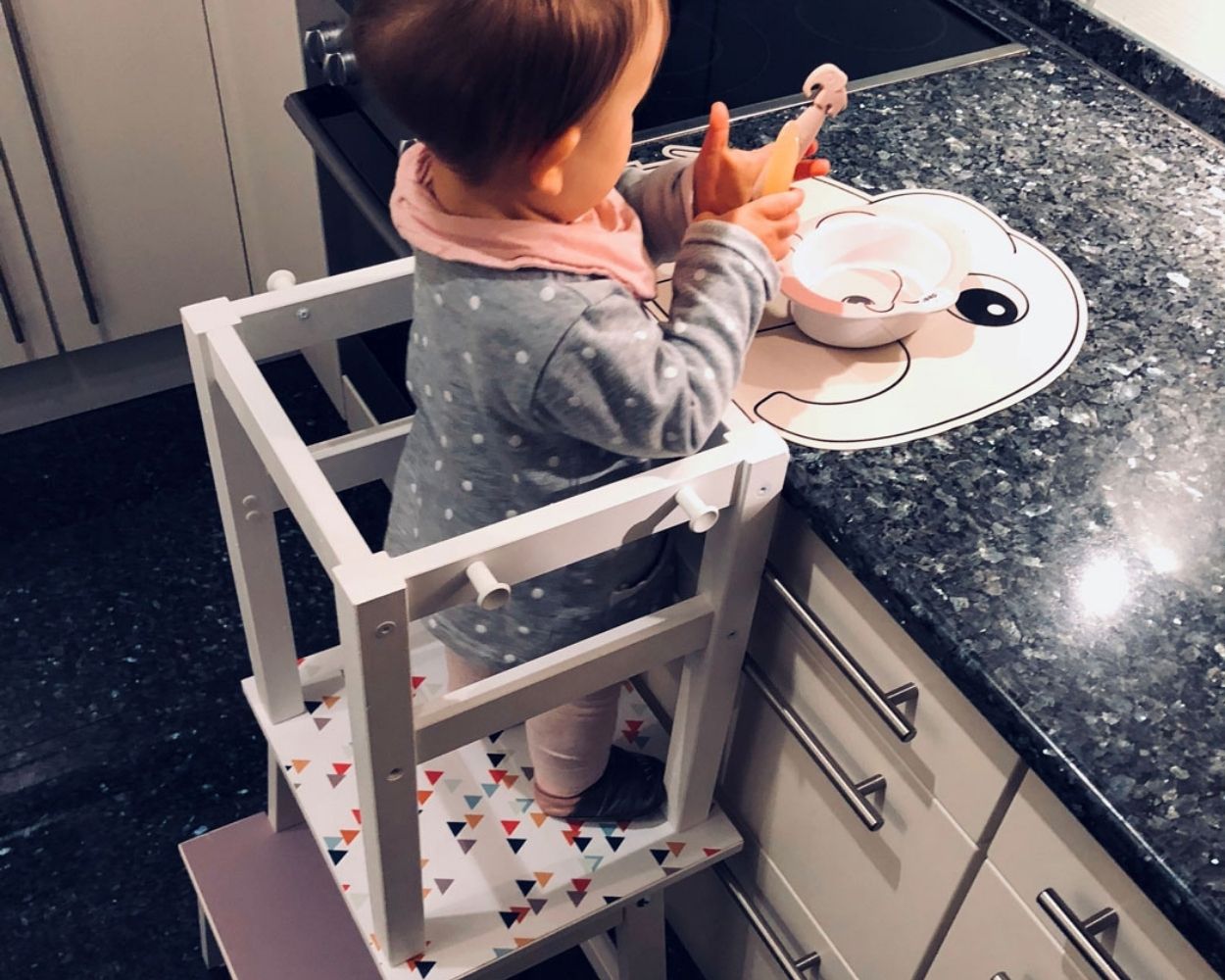
8. Simple food preparation
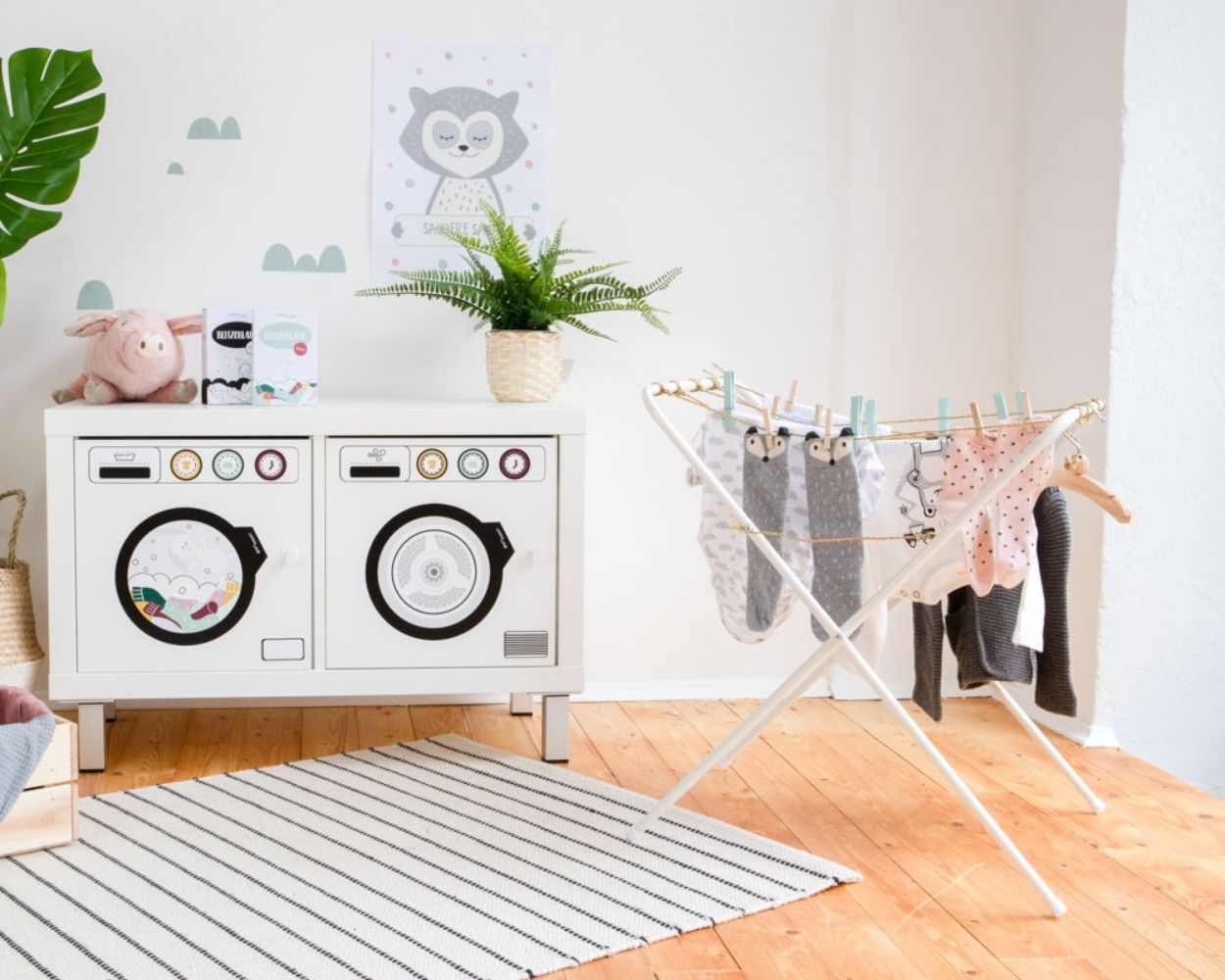
9. Sorting laundry
-
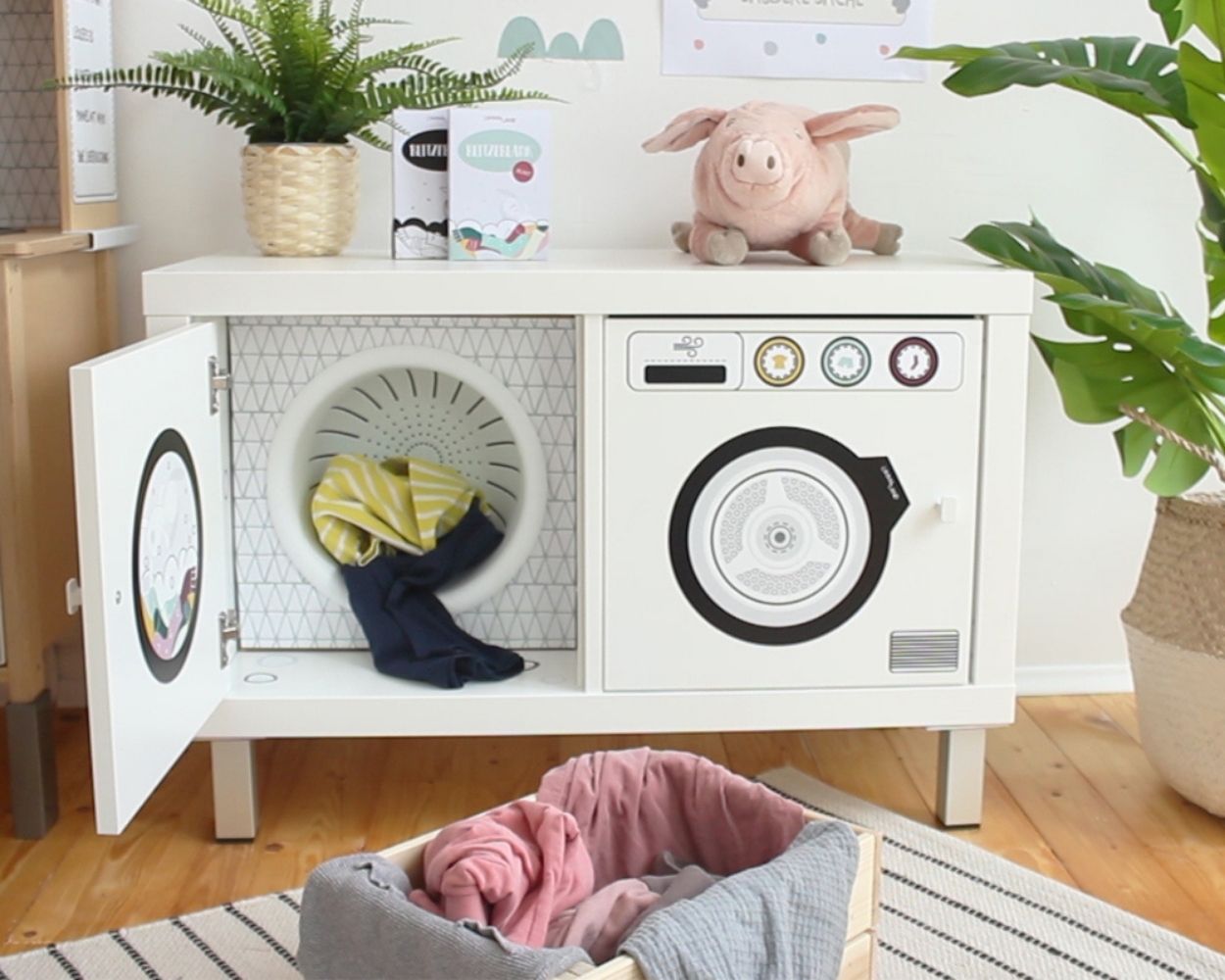 Making a washing machine with washing drum for childrenAn IKEA hack for Montessori children's roomsJetzt entdecken
 -
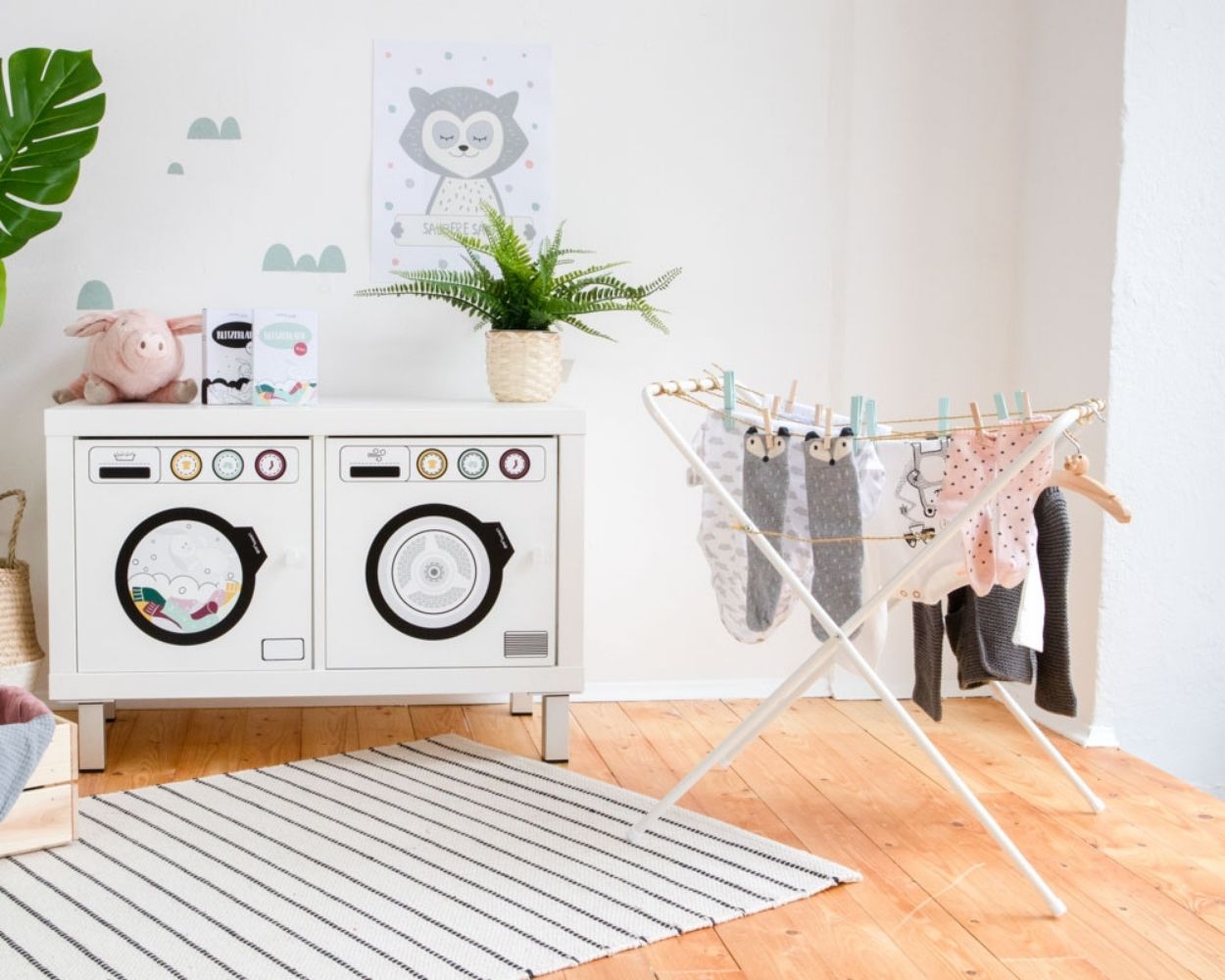 Montessori DIY clothes horse for childrenWe show you how you can easily make a clothes horse for children. True to the Montessori motto "Help me to do it myself".Jetzt entdecken
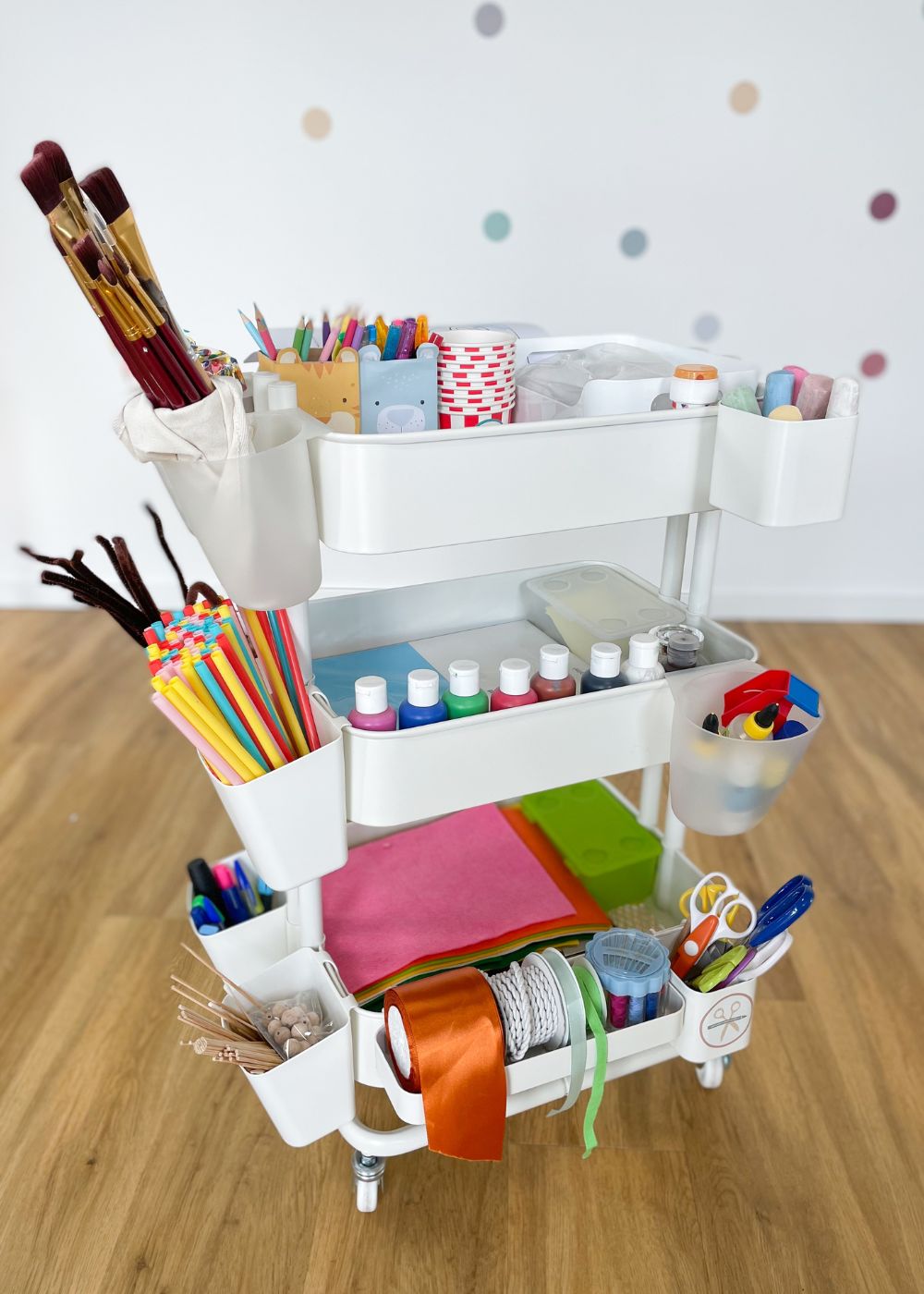
10. Encourage art and creativity
-
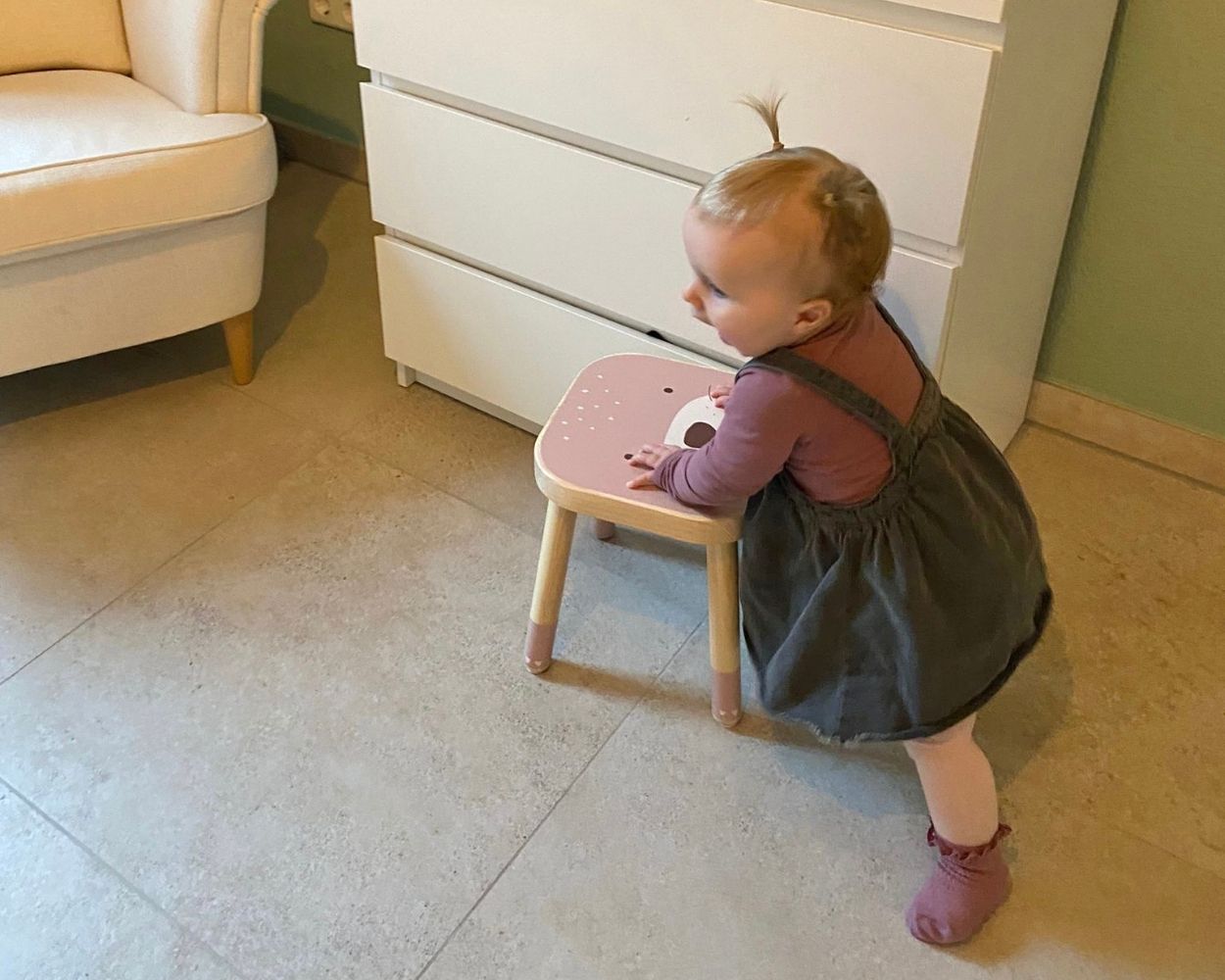 Learning to walk with the IKEA FLISAT children's stoolA useful way to help your child learn to walkJetzt entdecken
 -
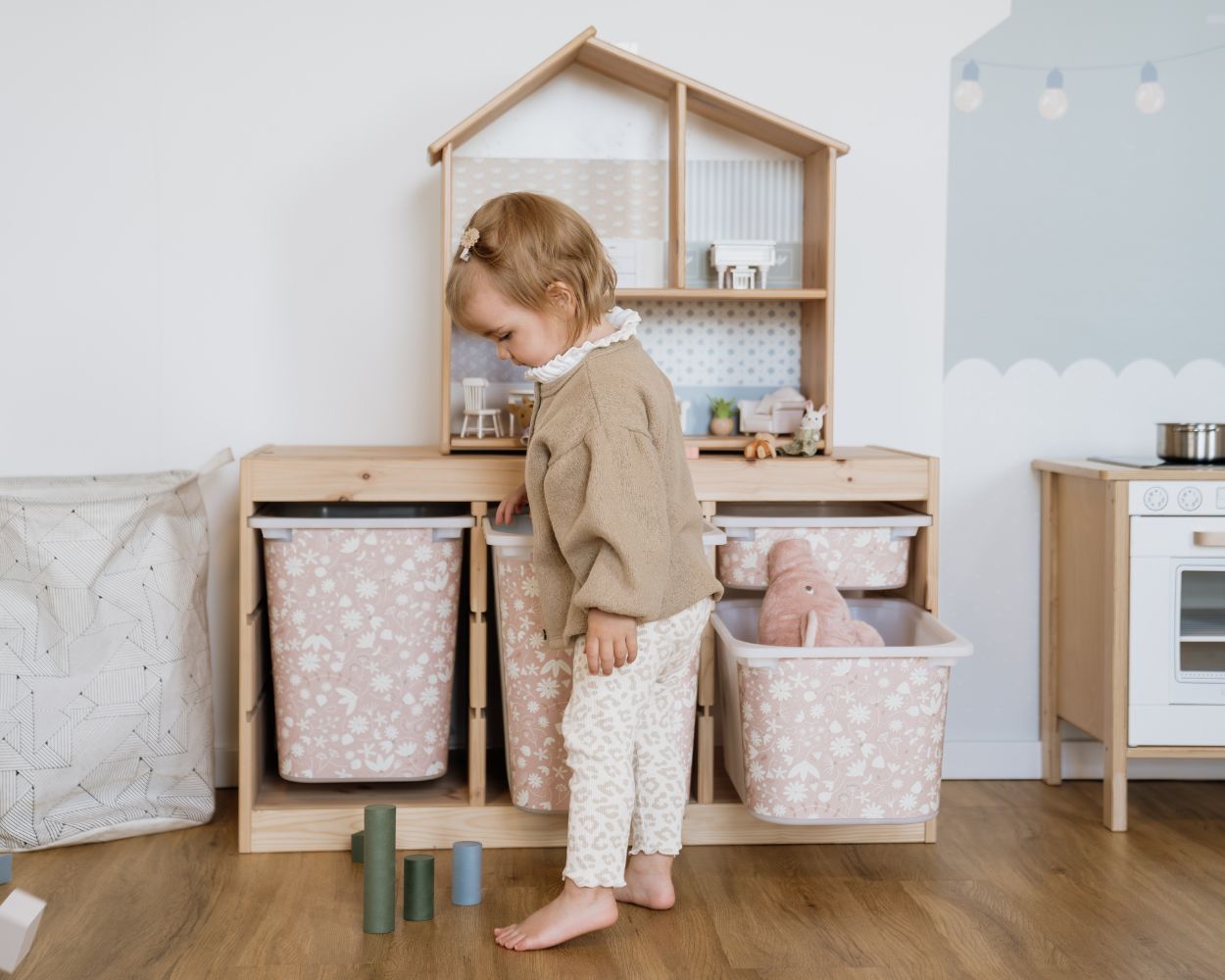 KonMarie in the children's room: tidying up according to Marie KondoTidiness, structure, organisation vs. children's room and playroom - is it even possible to combine the one with the other? We say YES!Jetzt entdecken
 -
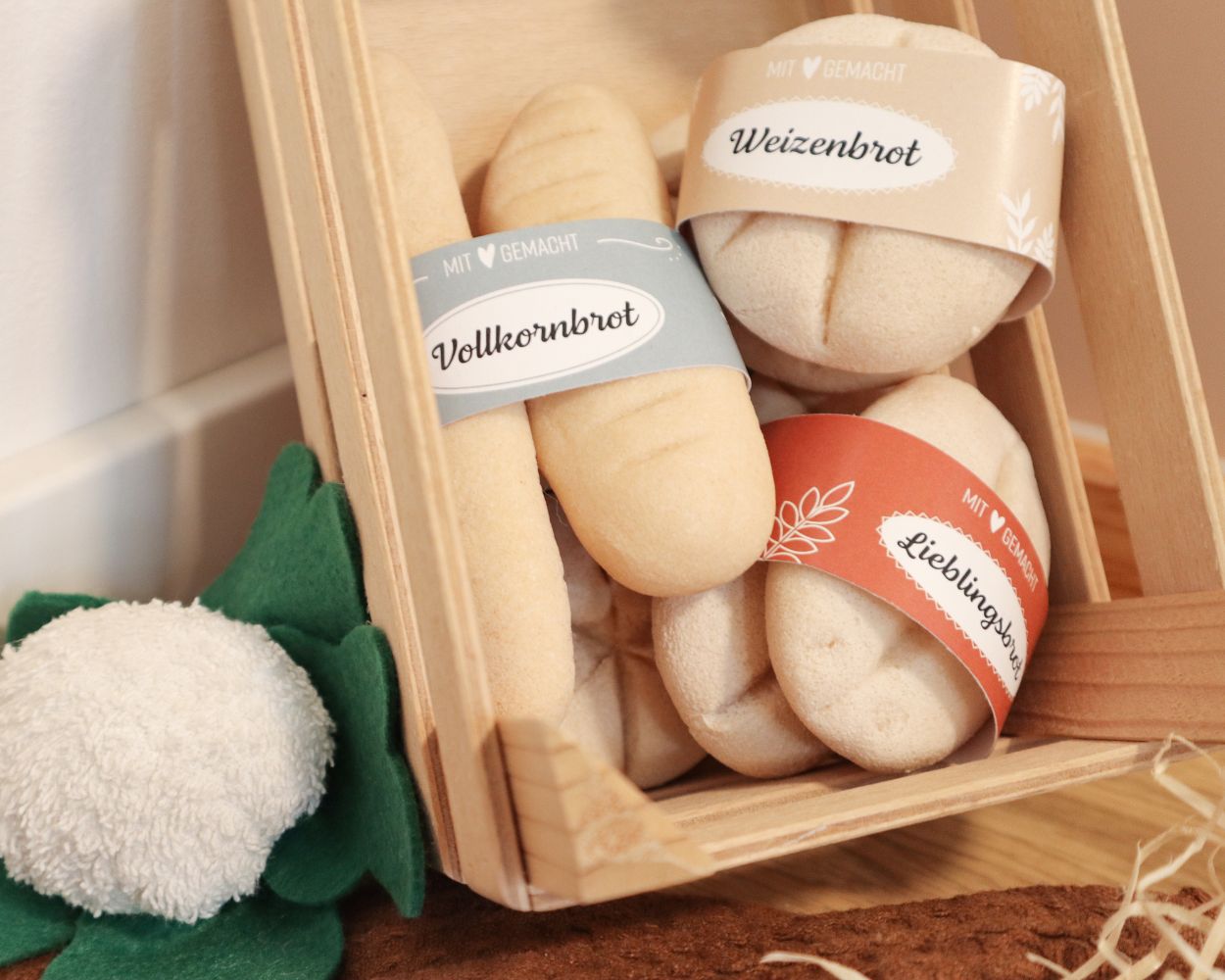 Crafting with salt dough for the shop and children's kitchenCreate baked goods with salt dough for the children's kitchen or shop.Jetzt entdecken
 -
-
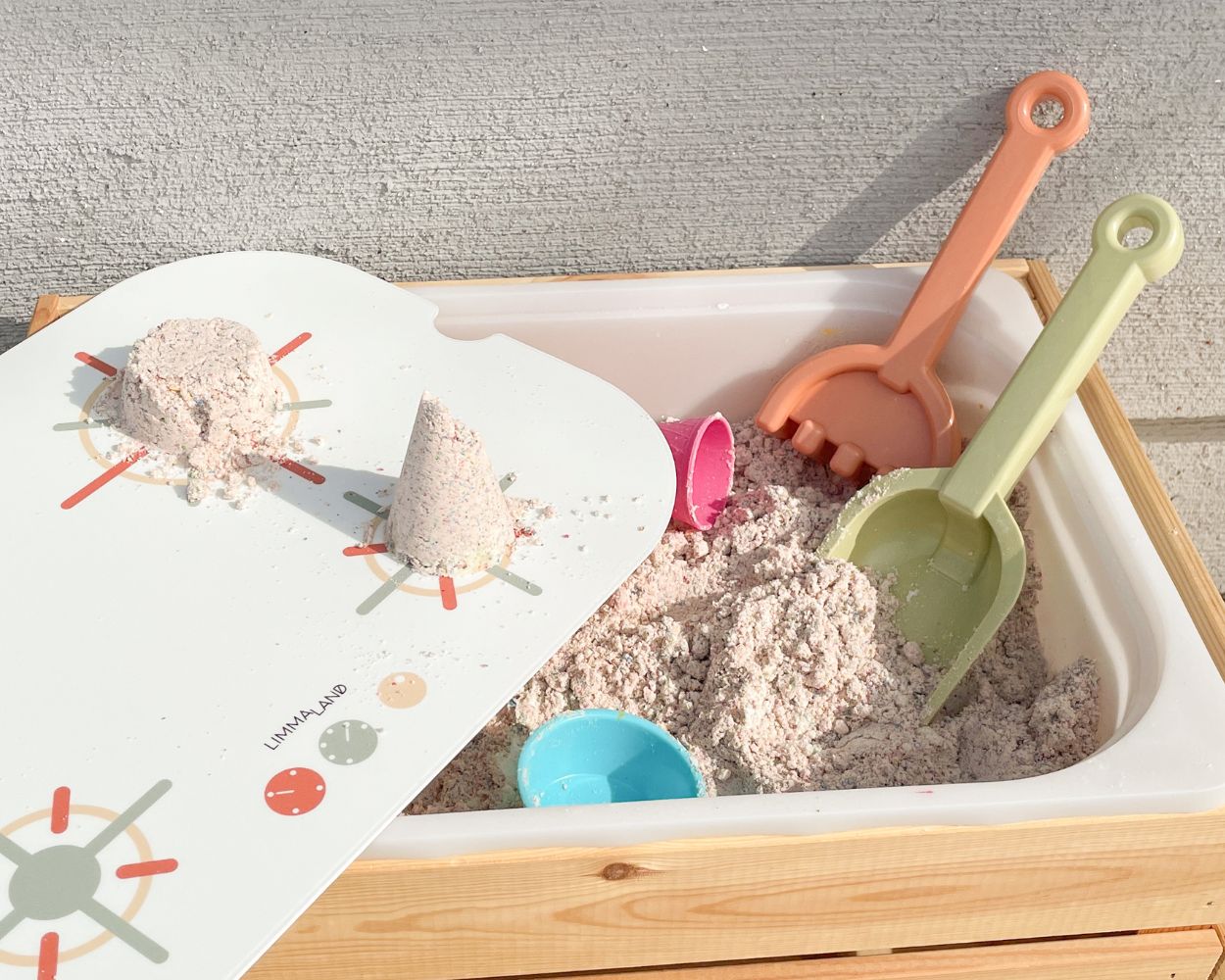 Make your own kinetic sand - DIY recipe for creative playDiscover our recipe for do-it-yourself magic sand! With just 3 ingredients, you can create sensory fun for children in no time at all. Try it out now!Jetzt entdecken
-
-
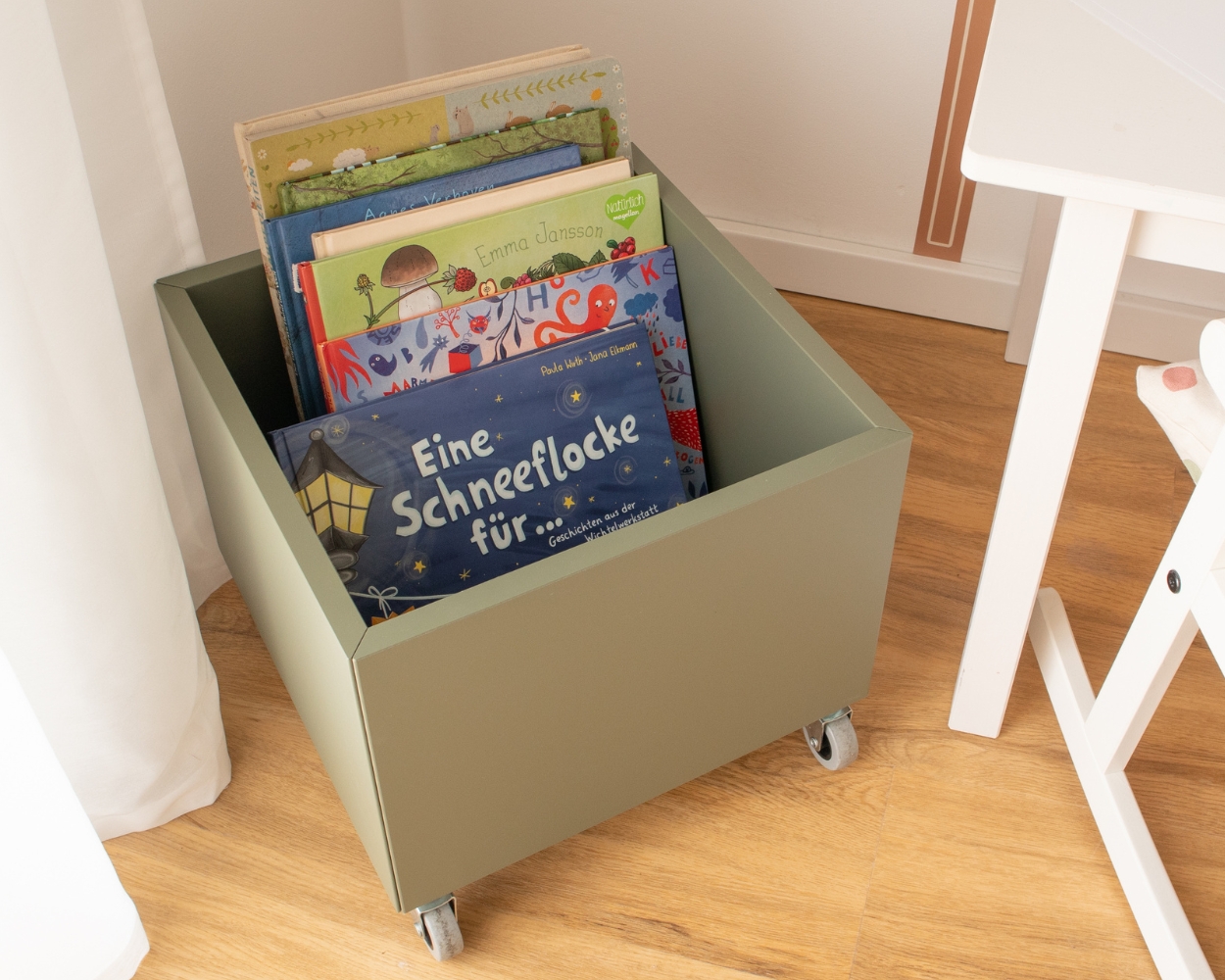 IKEA hacks for book storage in the children's roomIdeas for storing books in the children's room in a practical and child-friendly way.Mehr lesen
 -
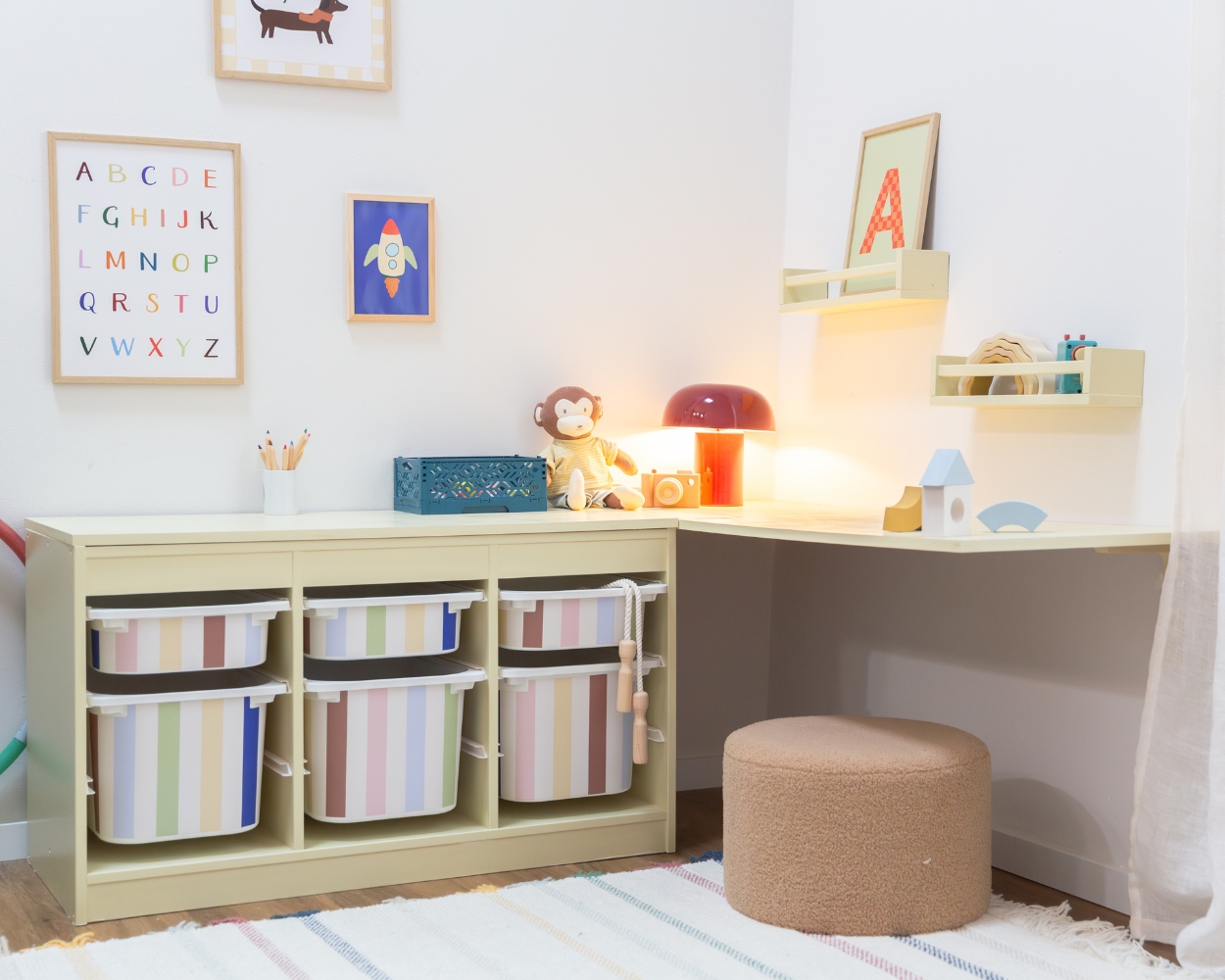 TROFAST Makeover: DIY Kids’ Corner Desk from IKEA StorageTurn your IKEA TROFAST unit into a cosy kids’ corner desk! Space-saving, creative and perfect for crafting. Get the step-by-step guide for this easy DIY makeover.Mehr lesen
 -
 Family Bed – Benefits, Tips & Co-Sleeping ExplainedLearn all about the family bed: the benefits, tips, and why co-sleeping can bring comfort, closeness, and better sleep.Mehr lesen
 -
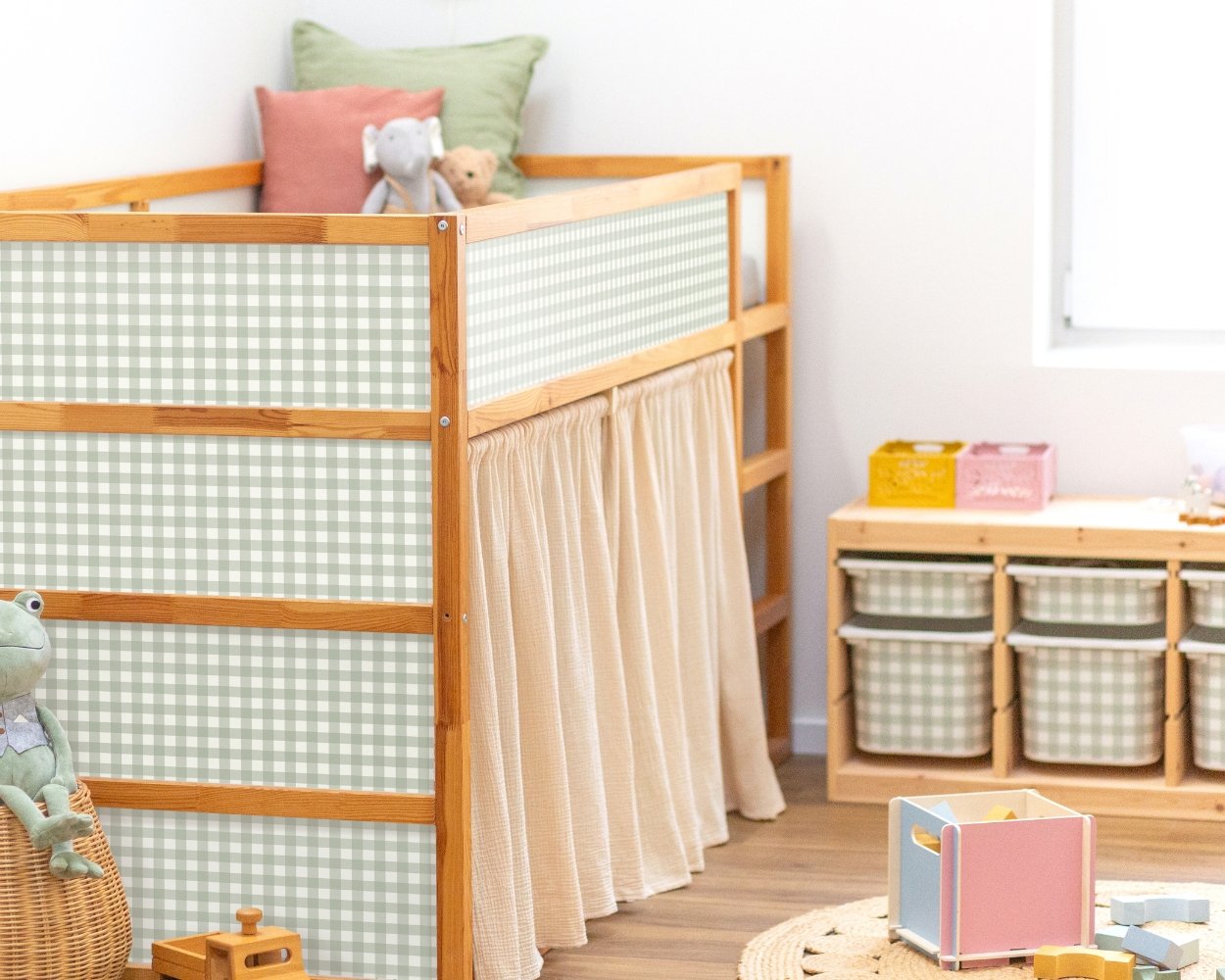 Safe Sleep in the Kids’ Room – Tips & Smart IdeasFrom bed rails to non-toxic materials – discover the best tips for safe, cozy, and worry-free sleep in the kids’ room.Mehr lesen
 -
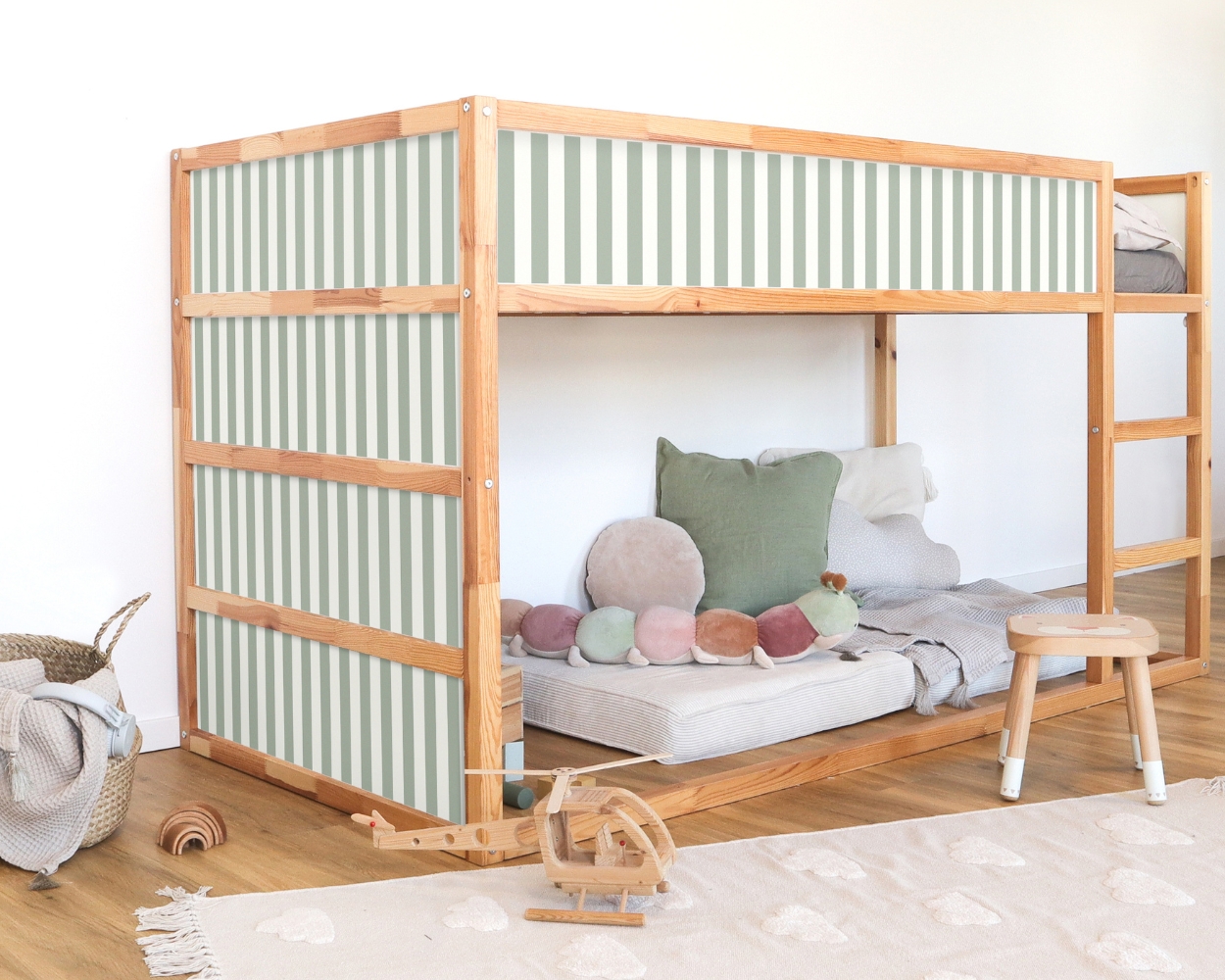 Own Bed for Kids – Smooth Transition Made EasyDiscover when it’s time for kids to move into their own bed and get tips on bunk beds, safety, and accessories for stress-free sleep.Mehr lesen
 -
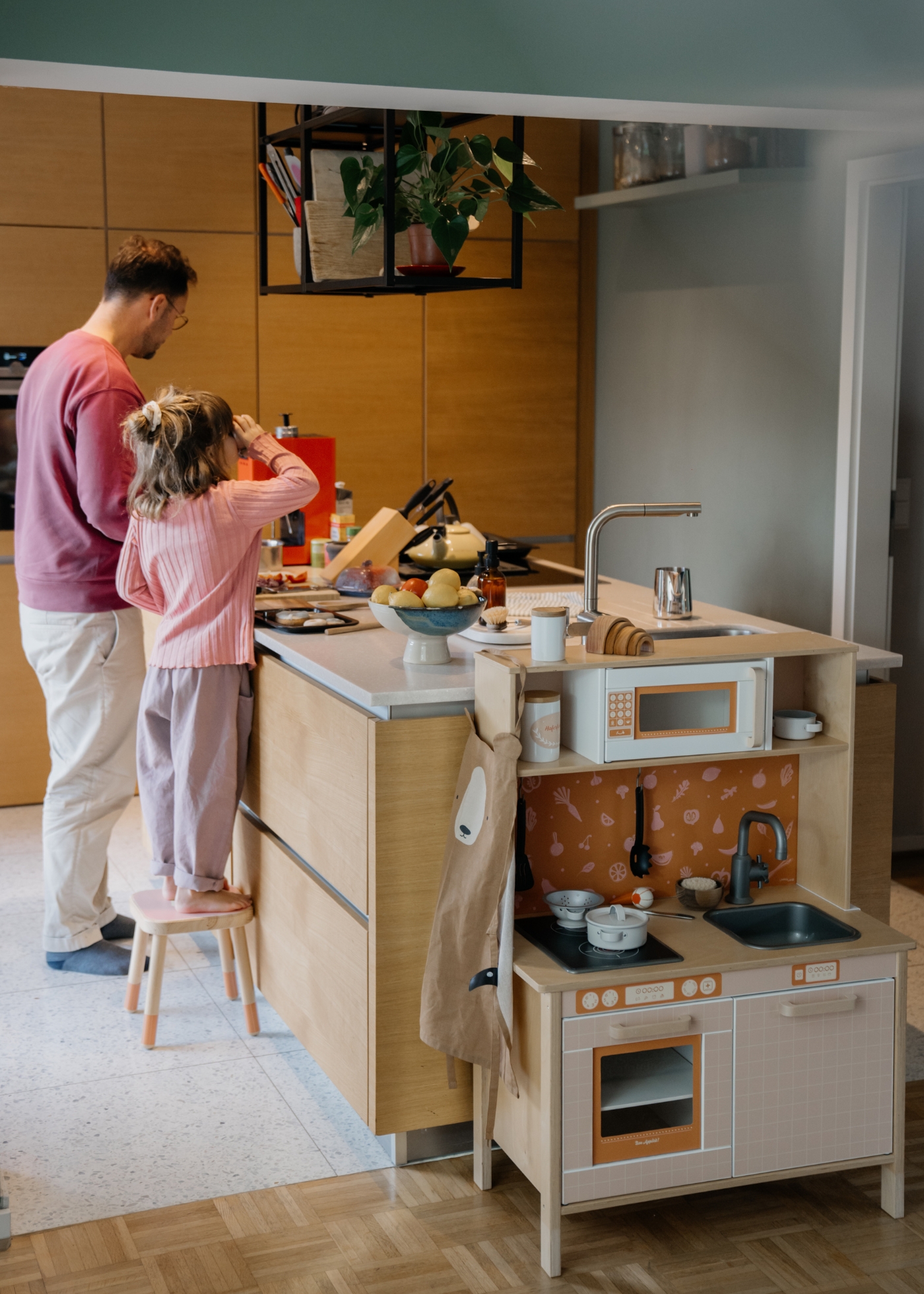 The 12 best ideas for the dark seasonFind out how you can cleverly prepare your home for winter so that nothing stands in the way of your little ones having fun despite the bad weather!Mehr lesen
 -
 Creative Kids’ Birthday Party Ideas – Crafts, Decorations & Fun GamesLooking for kids’ birthday party inspiration? Find easy DIY decorations, craft ideas and fun games to make the party special – creative, playful and stress-free!Mehr lesen
 -
Make your own kinetic sand - DIY recipe for creative playDiscover our recipe for do-it-yourself magic sand! With just 3 ingredients, you can create sensory fun for children in no time at all. Try it out now!Mehr lesen
-
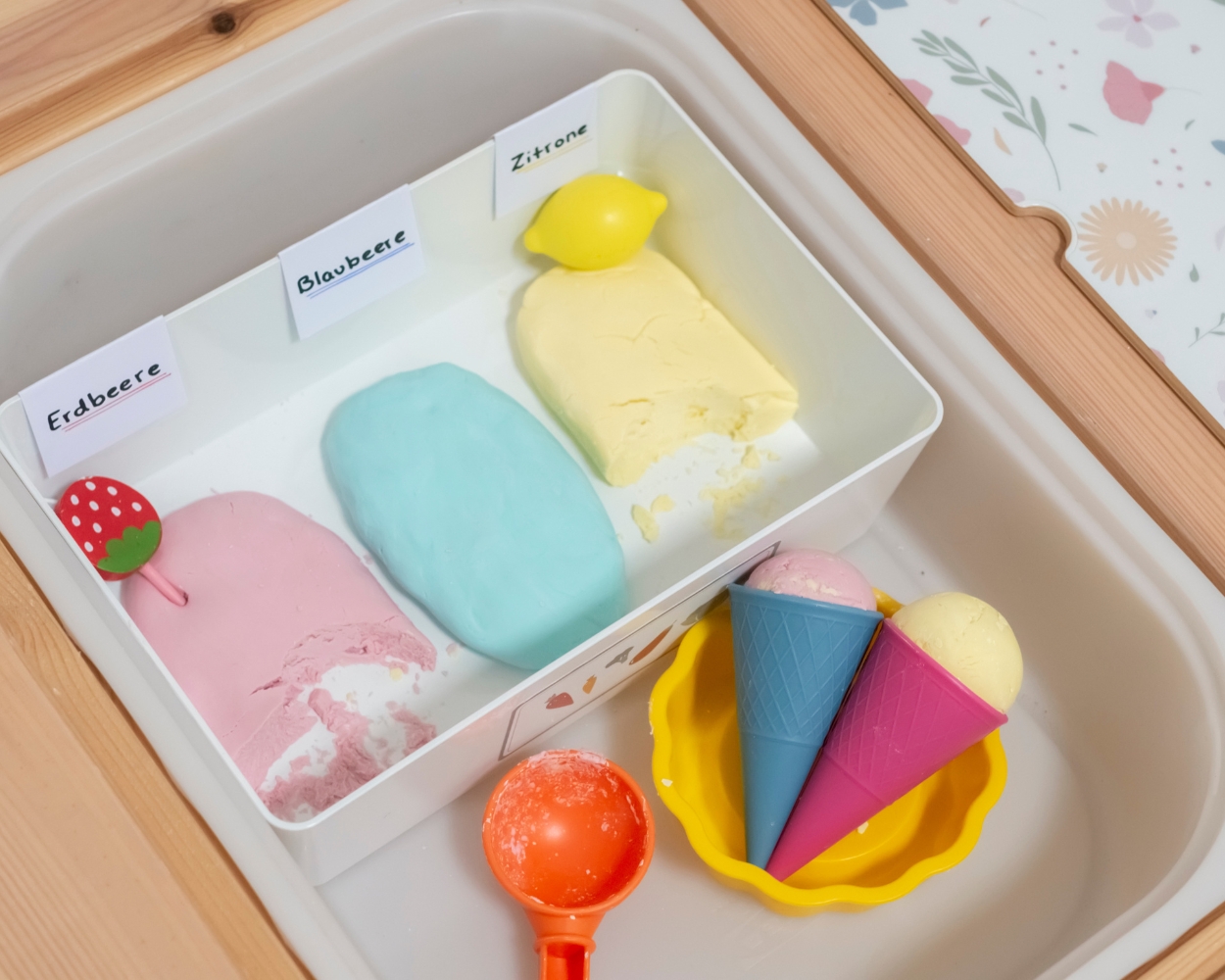 DIY Cloud Dough – Easy Recipe for KidsMake your own fluffy cloud slime with just two ingredients! A simple DIY for sensory play and creative fun – perfect for kids of all ages.Mehr lesen
 -
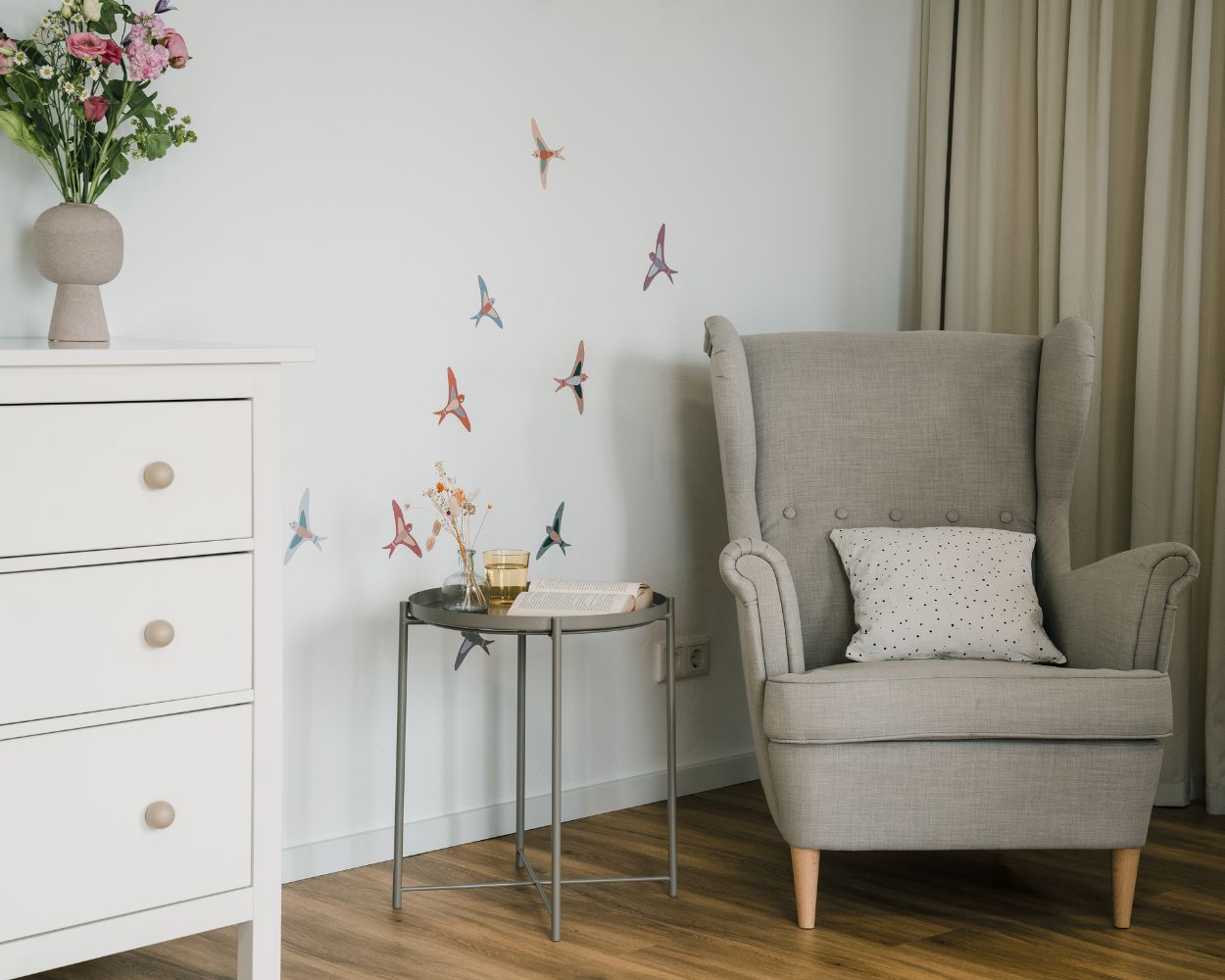 The Perfect Wall Colour for the Nursery – Tips & IdeasDiscover calming and stylish nursery colour ideas. Learn how wall colours affect your baby’s wellbeing and how to create a soothing, beautiful environment.Mehr lesen
 -
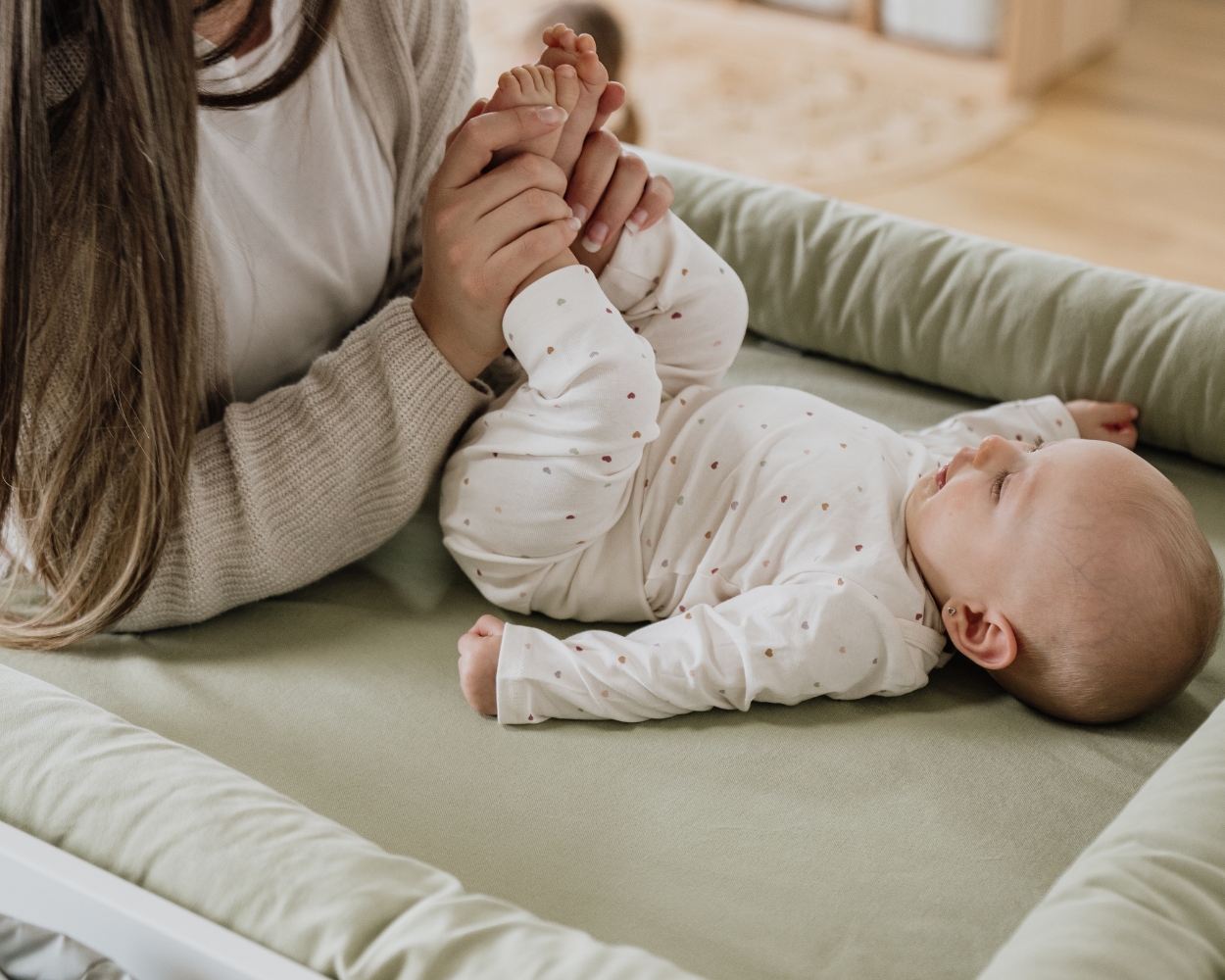 Midwife Meike’s Tips for Your Changing AreaMidwife Meike shares clever tips for setting up a safe, cozy, and practical changing area – for relaxed and happy moments with your baby.Mehr lesen
